Vehicle Model Profile: Li Auto i6
Overseas Market Vehicle Profile | Positioning, Range and Charging, Ownership Cost, Policy Fit, Competition, and Real-World Feedback
Conclusion
Model Highlights
- · The Li Auto i6 is a large five-seat battery-electric SUV aimed at global family users. Its product focus is not extreme performance, but a balanced combination of space, comfort, charging efficiency, and intelligent features.
- · The model uses an 87.3kWh lithium iron phosphate battery and supports 800V high-voltage fast charging. The rear-wheel-drive version has a CLTC range of 720km, while the all-wheel-drive version has a CLTC range of 660km.
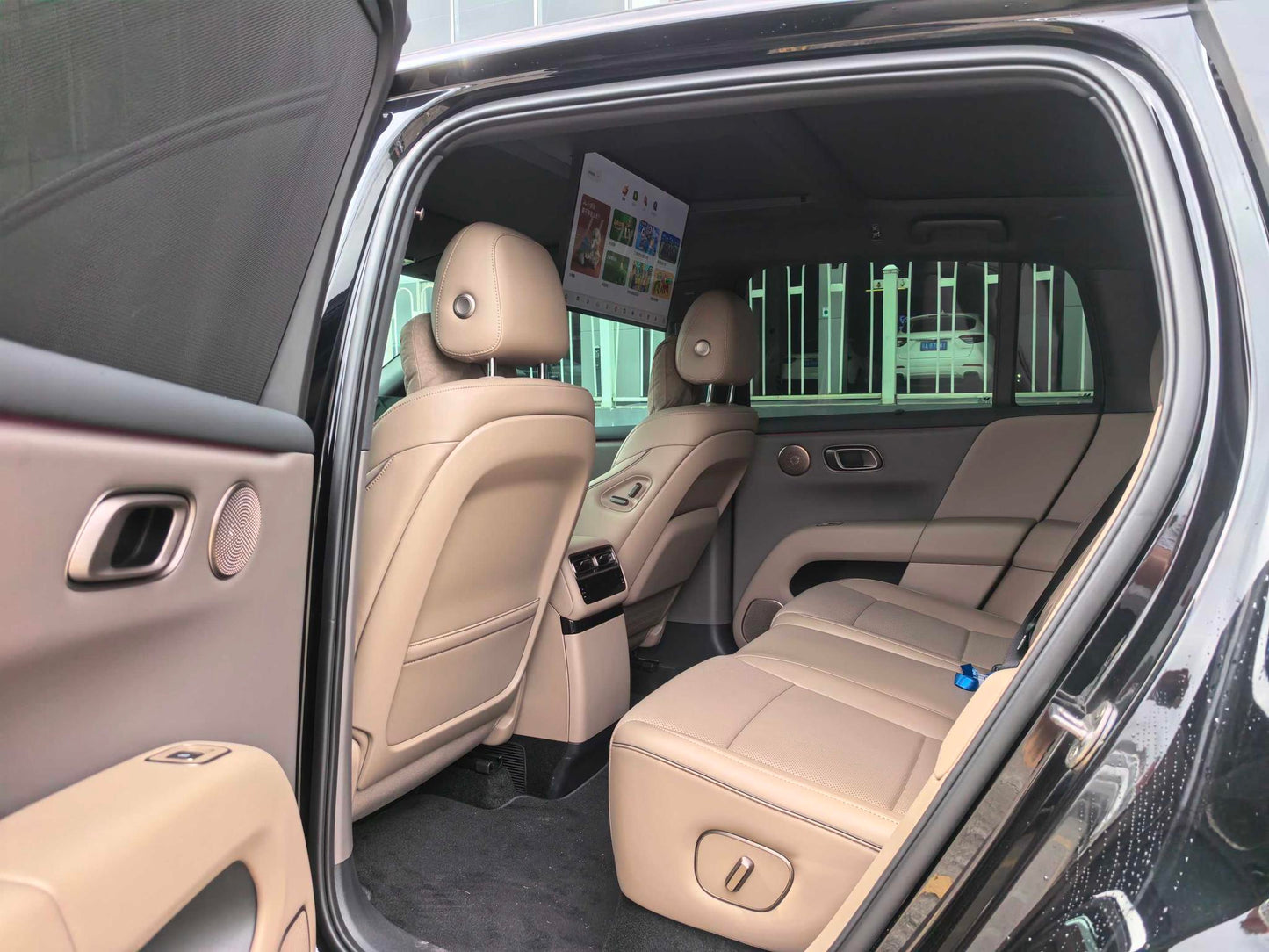
- · The cabin is strongly family-oriented, with dual 15.7-inch front screens, heated/ventilated/massaging front seats, heated and ventilated second-row seats, four-zone climate control, and generous storage space.
- · The intelligent driving hardware specification is high, including NVIDIA Drive Thor-U, 700 TOPS of computing power, one LiDAR unit, 11 cameras, 12 ultrasonic radars, and one millimeter-wave radar.
Key Points to Watch
- · Charging and energy use: 10%-80% fast charging takes about 0.18 hours, placing the i6 in the high-voltage fast-charging category. However, highway driving, low temperatures, and full-load use will usually raise real-world energy consumption above the rated figure.
- · Space trade-offs: with a 4,950mm body length, 3,000mm wheelbase, and 728L trunk, the i6 is sufficient for everyday family use. However, the five-seat layout does not cover six- or seven-seat demand, and rear backrest angle plus long-distance seating posture should still be verified in person.
- · Intelligent features: the hardware specification is strong, but city NOA, automated parking, and rainy-weather recognition depend heavily on local regulations, map coverage, software version, and road environment. Overseas capability must be validated market by market.
Model Overview
The Li Auto i6 is a key battery-electric SUV in Li Auto's product matrix, positioned as a large five-seat family EV SUV. Compared with Li Auto's earlier range-extended products, it places more emphasis on pure-EV platform efficiency, charging speed, and self-use scenarios for younger family buyers. For overseas markets, it can be understood as a family mobility product positioned between compact and mid-to-large electric SUVs, with core selling points around long range, fast charging, a comfortable cabin, and high-level intelligent hardware.
Public model information shows that the Li Auto i6 currently has two main configurations: a rear-wheel-drive standard version and an all-wheel-drive standard version. It is not a conventional multi-trim lineup with clearly separated low, mid, and high grades. The rear-wheel-drive version prioritizes range and energy efficiency, making it suitable for daily commuting, family road trips, and users who value charging convenience. The all-wheel-drive version prioritizes power performance and traction stability, making it better suited to buyers who care more about acceleration, grip, and confidence under higher-load conditions.
Version Information
|
Version |
Core Differences |
Best-Fit Users |
|
Rear-Wheel-Drive Standard |
Rear single motor, 250kW maximum power, 720km CLTC range, and 13.6kWh/100km energy consumption. |
Family users who value range, energy efficiency, and daily-use economy. |
|
All-Wheel-Drive Standard |
Dual motors, 400kW maximum power, 0-100km/h in 4.5s, and 660km CLTC range. |
Users who value stronger acceleration, wet-road stability, and higher-load driving confidence. |
Video Introductions
The following YouTube videos can be used to understand the Li Auto i6's exterior, interior, test-drive experience, long-distance use, and competitor context:
|
Category |
Video Title |
Link |
|
Full Review |
Li Auto i6 EV Review: An Exceedingly Satisfying Compact Family Car |
|
|
Long Trip |
Li Auto i6 long-distance ownership experience |
|
|
Overseas Review |
Li Auto i6 Review - China Finally Cracked Efficiency |
|
|
Competitor Comparison |
Tesla Model Y vs Xiaomi YU7 vs Li Auto i6 |
Basic Information
|
Parameter |
Information |
|
Model |
Li Auto i6 Rear-Wheel-Drive Standard / All-Wheel-Drive Standard |
|
Segment / Energy Type |
Family battery-electric SUV / Battery electric |
|
CLTC Range |
RWD 720km; AWD 660km |
|
Battery Capacity / Type |
87.3kWh / Lithium iron phosphate battery |
|
Fast-Charging Time |
10%-80% in about 0.18 hours |
|
High-Voltage Platform |
800V |
|
Energy Consumption |
RWD 13.6kWh/100km; AWD 14.8kWh/100km |
|
Maximum Power |
RWD 250kW; AWD 400kW |
|
Maximum Torque |
RWD 425N-m; AWD 660N-m |
|
0-100km/h Acceleration |
RWD 6.5s; AWD 4.5s |
|
Top Speed |
180km/h |
|
Dimensions |
4,950 x 1,935 x 1,670mm |
|
Wheelbase / Seats |
3,000mm / 5 seats |
|
Trunk Volume |
728L |
|
Vehicle Warranty |
5 years or 100,000km, subject to local market policy |
Maintenance Cost and Manufacturer Service
Charging Cost
Using a global average residential electricity price of USD 0.17/kWh, the Li Auto i6 RWD version's 13.6kWh/100km energy consumption corresponds to an estimated charging cost of about USD 2.31 per 100km. The AWD version's 14.8kWh/100km energy consumption corresponds to about USD 2.52 per 100km. Actual cost will depend on local electricity tariffs, public fast-charging fees, peak/off-peak pricing, and the share of home charging.
Maintenance Cost
Battery-electric vehicles do not require traditional internal-combustion maintenance items such as engine oil, spark plugs, or exhaust-system service. Long-term maintenance is usually concentrated on tires, braking systems, cabin filters, coolant, chassis components, and software checks. Industry experience suggests annual EV maintenance costs are usually much lower than those of combustion vehicles, although performance tires, intelligent-sensor calibration, and battery thermal-management checks can still create additional costs.
Manufacturer Service
Public specifications show a whole-vehicle warranty of 5 years or 100,000km for the Li Auto i6. For overseas markets, the key verification items are whether official sales, authorized repair, roadside assistance, software updates, traction-battery warranty, and spare-parts supply are available locally.
Subsidies and Policy
EV policy varies significantly by region. Overseas launch assessment should focus on purchase incentives, tax exemptions, charging-infrastructure support, urban access benefits, and zero-emission vehicle sales requirements.
|
Region |
Policy Example |
|
Germany |
EVs that meet emissions or electric-range requirements may receive motor-vehicle tax exemptions, while some cities provide parking or lane-access benefits. |
|
United Kingdom |
The ZEV mandate requires the share of zero-emission vehicles in new-vehicle sales to increase over time, while public charging networks continue to expand. |
|
United States |
Some regions provide tax credits for alternative-fuel refueling equipment; vehicle purchase incentives depend on production location, battery sourcing, and local policy. |
|
Thailand |
Tax reductions and industrial policy support EV deployment while encouraging local production and supply-chain development. |
|
United Arab Emirates |
The country is expanding EV charging infrastructure, and some cities are promoting green mobility and public charging access. |
|
Brazil |
Green mobility and innovation programs support low-carbon transport, with policy focus on the industrial chain and energy transition. |
Competitor Comparison
For overseas markets, the Li Auto i6 should be benchmarked first on objective factors such as dimensions, range, charging, energy consumption, cabin space, and intelligent hardware, rather than domestic pricing. The following tables use representative configurations of similar electric SUVs from public configuration pages. Overseas versions should still be checked against local homologation and launch specifications.
Core Specification Comparison
|
Parameter |
Li Auto i6 RWD Standard |
Xiaomi YU7 Long Range |
BYD Tang L EV 670km LiDAR |
Luxeed R7 BEV Max |
|
Vehicle Type |
Mid-to-large BEV SUV, 5 seats |
Mid-to-large BEV SUV, 5 seats |
Mid-to-large BEV SUV, 7 seats |
Mid-to-large BEV SUV, 5 seats |
|
CLTC Range |
720km |
835km |
670km |
667km |
|
Fast-Charging Time / Window |
0.18h, 10%-80% |
0.35h, 10%-80% |
0.10h, 10%-70% |
0.25h, 30%-80% |
|
Maximum Power / Torque |
250kW / 425N-m |
235kW / 528N-m |
500kW / 420N-m |
215kW / 396N-m |
|
0-100km/h / Top Speed |
6.5s / 180km/h |
5.88s / 240km/h |
6.9s / 240km/h |
5.9s / 200km/h |
|
Dimensions / Wheelbase |
4,950 x 1,935 x 1,670mm / 3,000mm |
4,999 x 1,996 x 1,608mm / 3,000mm |
5,040 x 1,996 x 1,760mm / 2,950mm |
4,982 x 1,981 x 1,650mm / 2,950mm |
|
Trunk Volume |
728L |
678-1,758L |
1,960L |
837-2,130L |
|
Battery / Energy Use |
87.3kWh / 13.6kWh |
96.3kWh / 13.3kWh |
100.5kWh / 17.4kWh |
82kWh / 13.1kWh |
Feature and Experience Comparison
|
Dimension |
Li Auto i6 |
Xiaomi YU7 |
BYD Tang L EV |
Luxeed R7 |
|
Intelligent Hardware |
LiDAR, 11 cameras, 12 ultrasonic radars, one millimeter-wave radar; NVIDIA Drive Thor-U with 700 TOPS. |
LiDAR and 800V platform, with emphasis on in-car ecosystem, sporty positioning, and long-range variants. |
LiDAR and 1000V high-voltage platform; strong power and charging figures, with a three-row layout for larger families. |
LiDAR and HarmonyOS cockpit ecosystem; low energy consumption and large cargo capacity are key comparison points. |
|
Comfort Features |
Heated, ventilated, and massaging front seats; heated and ventilated second-row seats; dual 15.7-inch screens. |
Visible front-seat heating, ventilation, massage, and related comfort features; rear cabin focuses on basic comfort and large space. |
Strong front-seat comfort configuration and a more flexible three-row layout, but energy use and curb weight are higher. |
Front comfort configuration is relatively complete; some second-row comfort functions depend on the exact version. |
|
Differentiation |
Strengths are fast charging, family comfort, cabin configuration, and 3,000mm wheelbase. Watchouts are local intelligent-driving availability and service network maturity. |
Strengths are CLTC range, energy consumption, and sporty performance. Cabin tone is more technology- and performance-oriented. |
Strengths are seven seats, output, and high-voltage platform. Trade-offs are higher energy consumption and curb weight. |
Strengths are cargo expansion and low energy consumption. Coupe-like styling and rear-seat comfort should be checked against target-user needs. |
Real-World Testing
Strengths
· Long-distance testing videos commonly focus on highway range, ride comfort, and charging efficiency, suggesting that the Li Auto i6 is better suited to family road trips and mixed daily use than to a single performance-car scenario.
· In test-drive videos, voice interaction, front screens, cabin quietness, seat comfort, and suspension filtering are frequent experience points. The overall product direction is relaxed, comfortable, and well equipped.
· Dynamic testing of the AWD version shows sufficient acceleration and more traction reserve than the RWD version on wet roads and under higher-load conditions.
Areas to Improve
· Some reviews focus on highway energy consumption and range reduction in long-distance use. Overseas markets especially need WLTP, EPA, or local-standard range data.
· Intelligent-driving experience depends on maps, regulation, and road environment. Chinese-market city NOA capability should not be assumed to transfer directly overseas; local feature availability must be confirmed.
· Chassis-structure and body-material teardown videos can help validate safety and repair-cost assumptions, but overseas insurance, labor, and parts availability still require separate assessment.
Test Scenarios
· Long-distance experience: 3,700km to 6,000km-class long-term videos are useful for observing charging rhythm, cabin fatigue, real-world energy use, and family cargo performance.
· Rainy-weather test drive: rainy-weather assisted driving, cabin quietness, and voice-interaction videos help evaluate comfort and intelligent features in more complex conditions.
· Competitor comparison: videos comparing the i6 with Tesla Model Y and Xiaomi YU7 help place it against reference vehicles that overseas consumers are more likely to recognize.
Real User Feedback
Based on public owner feedback and media/video experience content, real-world sentiment around the Li Auto i6 can be summarized into the following positive and negative themes. The quoted excerpts below are translated short comments from users or media and are intended for early overseas-market product understanding; formal launch research should still add local samples.
Positive Feedback
· Space and storage: one owner said, "I am very satisfied with the i6's space; it has a huge trunk and also a front trunk," and also noted that "rear legroom is also very large."
· Comfort and cabin: owners commented, "It is really comfortable to sit in" and "the seats are soft, like a big sofa." Another user said, "The cabin is spacious and comfortable, and both the driving experience and loading capability are excellent."
· Range and energy use: one user recorded, "I drove 300km, including 100km on the highway, and energy consumption was only 13.2kWh per 100km." Another comment said, "Charging is extremely fast and solves range anxiety."
· Intelligent experience: users mentioned that "voice control is also smart," "the front passenger entertainment screen is used very often," and "U-turns and parking are effortless."
Negative Feedback
· Range reduction: one owner said, "The range is still a bit optimistic; in reality it can do around 470 to 480km." Another user mentioned that in low temperatures, "range is slightly optimistic."
· Intelligent-driving boundaries: a user reported that in complex ramp scenarios, "its judgment can be very slow," while another comment said, "the driver-assistance functions still have room for improvement."
· Brake feel: one owner said, "The initial brake pedal feels soft; light braking feels ineffective, so I have to press harder." Another user said, "Braking tends to cause nodding."
· Seats and convenience: one user said, "The queen seat is basically unusable for someone over 175cm tall," and another complained that "the front trunk is not electric, so it is inconvenient to close when the car is dirty."
Summary
The Li Auto i6 is suitable for evaluation as a comfort- and intelligence-oriented family electric SUV candidate in overseas markets. Its strength is not a single extreme parameter, but the integration of long range, fast charging, intelligent hardware, and a family-oriented cabin in a large five-seat SUV form. If it enters overseas markets, communication should de-emphasize domestic pricing and domestic-platform narratives, and instead focus on energy consumption, charging, space, warranty, policy fit, and local service-network readiness.
References
· Global Petrol Prices - Electricity Prices
· Li Auto i6 Long Trip Experience