AVATR 11 2025 Max AWD Electric Vehicle Profile: 800V Platform Smart Luxury SUV Review

AVATR 11 2025 Max AWD Electric Vehicle Profile: 800V Platform Smart Luxury SUV Review
1. Verdict: Three Highlights and Three Caveats
Highlight 1: Full-domain 800V platform + 3.9s sprint, performance and charging in one
The AVATR 11 2025 Max AWD is built on a full-domain 800V silicon-carbide platform. Its dual-motor AWD system delivers a combined 402kW (547hp) and 687N·m of torque, sprinting from 0-100km/h in just 3.9 seconds (official). Paired with a 116.79kWh CATL ternary lithium battery, it fast-charges from 30% to 80% in about 25 minutes — putting both performance and refueling efficiency at the front of its class.
Highlight 2: Huawei Qiankun ADS + dual zero-gravity seats, intelligence and luxury together
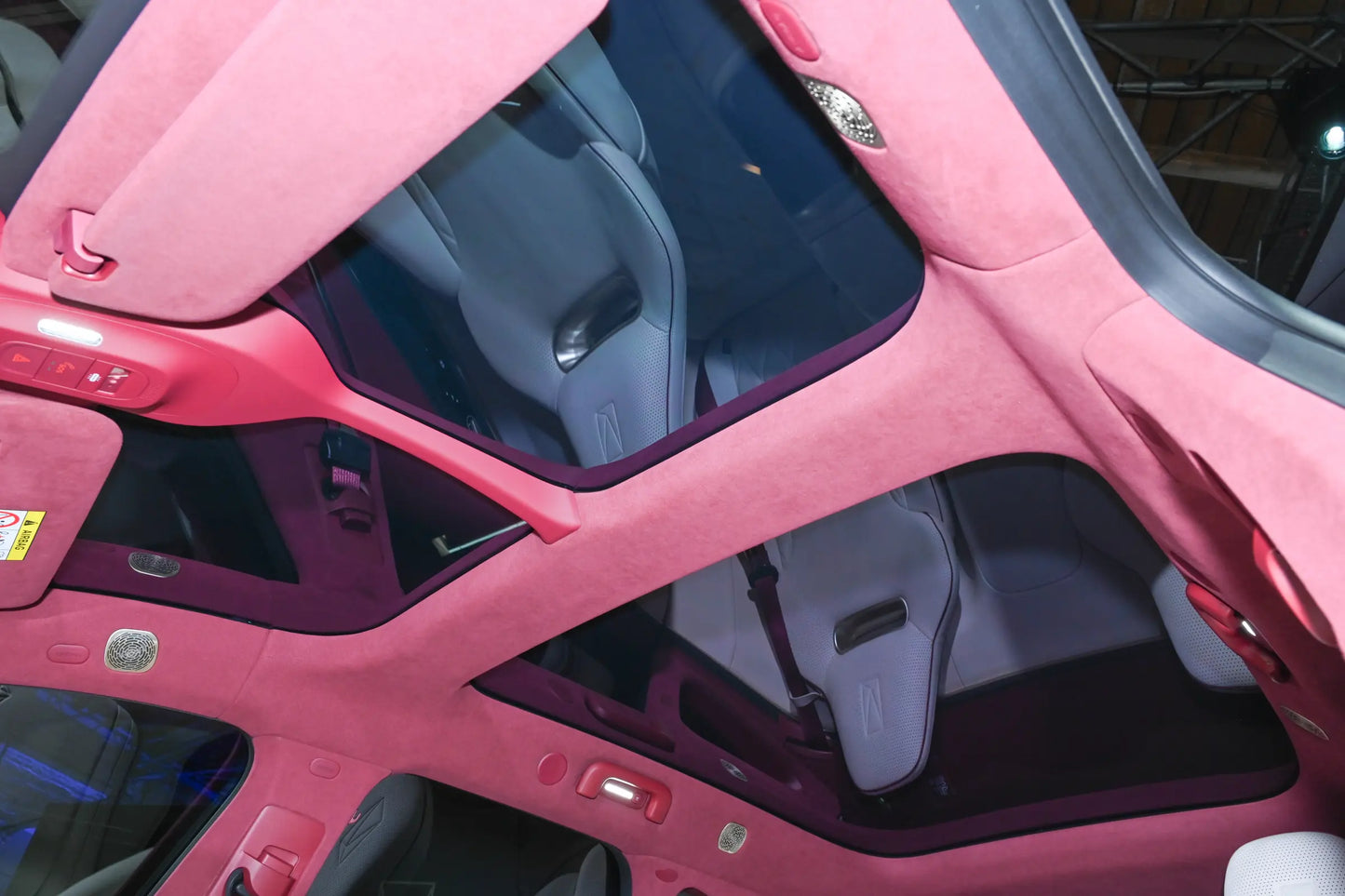
It comes standard with 34 intelligent-driving sensors including 3 LiDAR units, running Huawei's advanced assisted-driving system with full-scenario navigation assistance and valet parking. The cabin features dual front zero-gravity seats (three-stage ventilation, three-stage heating, massage), a 25-speaker Meridian audio system and 256-color ambient lighting — a standout combination of intelligence and comfort.
Highlight 3: CLTC 760km long range, more confident for cross-city travel
The 116.79kWh high-capacity ternary lithium battery delivers an official CLTC range of 760km (source: AVATR official website), one of the best in the pure-electric mid-to-large SUV segment, giving it real confidence for long-distance travel.
Caveat 1: Average driving position and rear headroom
Affected by the fastback roofline, rear headroom is only middling, with some owners reporting a somewhat cramped rear head area; as a mid-to-large SUV, interior space utilization does not clearly lead its class (owner feedback, source: Xinchuxing long-term owner review).
Caveat 2: Noticeable brake nose-dive
Several media and owner reviews report noticeable front-end "nose-dive" under initial braking, which requires some getting used to and affects smoothness during low-speed city driving (source: 42how in-depth test).
Caveat 3: NVH is neither excellent nor poor
Although active noise cancellation suppresses some road noise, overall NVH sits in the mid-pack of its class, and high-speed cabin quietness does not reach the top tier (source: 42how in-depth test).
2. Model Overview: Market Position & Credibility
AVATR is a smart electric vehicle brand jointly built by Changan Automobile, Huawei and CATL. The AVATR 11 is its first mass-produced model, positioned as a mid-to-large intelligent luxury pure-electric SUV. The 2025 Max AWD variant went on sale in April 2025, adopting a forward-looking original design by the brand's Munich global design center, with a disc-wing front face, F-shaped headlights, vertical fluid rear wing windows and an active rear spoiler creating a highly distinctive silhouette.
As the flagship product of the CHN (Changan-Huawei-CATL) deep cooperation, the AVATR 11 deeply integrates Huawei's intelligent driving and cockpit technology, CATL's battery technology, and Changan's manufacturing capability. The 2025 Max AWD is powered by Huawei DriveONE 800V silicon-carbide electric drive plus DriveONE iTRACK intelligent chassis, and features the HarmonySpace cockpit and Huawei Qiankun ADS, positioned around "emotional intelligence, future luxury."
Dimensions are 4895×1970×1601mm with a 2975mm wheelbase, in a 5-door/5-seat layout with a 2410kg curb weight. It uses a front double-wishbone / rear multi-link independent suspension with an available adjustable air suspension (soft-hard, height). By the first 10 months of 2025, the AVATR brand had cumulative sales of over 100,000 units, with growing market recognition.
You can view the model's exterior and interior design in this video:
3. Core Specifications
|
Item
|
Specification
|
|
Model
|
AVATR 11 2025 Max AWD
|
|
Powertrain
|
Pure electric
|
|
Drivetrain
|
Dual-motor all-wheel drive
|
|
Motor Power
|
402kW (547hp)
|
|
Peak Torque
|
687N·m
|
|
Top Speed
|
200km/h
|
|
EV Range
|
760km (CLTC)
|
|
Battery Type/Capacity
|
Ternary lithium 116.79kWh (CATL)
|
|
Charging Time
|
Fast ~25min (30%-80%), slow ~13.5h
|
|
4895×1970×1601mm
|
|
|
Wheelbase
|
2975mm
|
|
Body/Seats
|
5-door 5-seat SUV
|
|
Curb Weight
|
2410kg
|
|
Energy Consumption
|
about 16.7kWh/100km
|
|
Vehicle Warranty
|
5 years or 120,000km
|
|
Battery Warranty
|
8 years or 160,000km
|
Maintenance and manufacturer service: As a pure-electric model, the AVATR 11 has no engine oil or filter services; routine maintenance centers on electric-drive checks, cabin-filter replacement and brake-system upkeep, with long service intervals and annual costs well below a petrol SUV of similar size. Backed by Changan's mature manufacturing system and a growing service network, parts and after-sales support are reliable. (Source: AVATR official parameters and owner feedback)
Incentives policy: New-energy vehicle purchase subsidies and tax benefits vary by country/region. The following is an overview of representative markets (source: IEA Global EV Policy Explorer):
|
Market
|
Policy Highlights
|
|
China
|
Purchase subsidies gradually phasing out; purchase tax exemption continues; charging and plate incentives in many regions
|
|
Europe (example)
|
Many countries offer purchase subsidies and tax relief linked to vehicle price, gradually phasing out
|
|
United States
|
Federal clean-vehicle tax credit, subject to battery sourcing and price caps
|
4. Ownership Costs & Service
Warranty policy: 5-year or 120,000km vehicle warranty (non-commercial), and an 8-year or 160,000km battery warranty covering core three-electric components, which helps reduce long-term ownership risk. (Source: AVATR official)
Maintenance cost: As a pure-electric model, there are no engine oil or filter items; routine maintenance centers on three-electric checks, cabin-filter and brake-system upkeep, with annual costs well below a petrol SUV of comparable size.
Real ownership cost analysis: As a large pure-electric SUV, daily usage costs center on electricity, plus low maintenance expenses, giving it an overall ownership-cost advantage over a similarly sized petrol vehicle.
Charging cost: Using the Global Petrol Prices world-average residential electricity price of about US$$0.17/kWh, combined with roughly 16.7kWh/100km consumption, each 100km of driving costs about U$$2.84 — far below the fuel cost of a comparable petrol SUV.
Incentives and policy tables: see the subsidy table in Stage 3 (source: IEA Global EV Policy Explorer).
5. Competitors Comparison
Intro: How to choose among four premium pure-electric SUVs?
These four premium pure-electric SUVs differ in platform, configuration and focus. Once you grasp a few core dimensions, the choice becomes clear.
Power performance diverges clearly: the AVATR 11 leads with a 402kW (547hp) dual-motor AWD system and a 3.9s sprint, outpacing the NIO ES6's 360kW (490hp); the XPeng G9 is a single-motor RWD with 230kW (313hp) and a 6.4s sprint, more moderate; the Luxeed R7 offers 365kW (496hp) dual-motor AWD with a 3.9s sprint, equally strong.
Charging approaches differ greatly: the AVATR 11, XPeng G9 and Luxeed R7 all sit on 800V platforms with efficient fast charging (AVATR ~25min, XPeng ~20min, Luxeed ~15min, to about 80%); the NIO ES6 uses a 400V platform with a slower ~36min fast charge (to 80%), but gains flexibility through its battery-swap network.
Range strategies differ: the AVATR 11 leads with 760km CLTC; the Luxeed R7 follows at 736km; the XPeng G9 offers 702km; the NIO ES6 (100kWh) delivers 650km but differentiates through battery swapping.
Intelligent configuration differs: the AVATR 11 runs Huawei Qiankun ADS with 3 LiDAR units, the fullest configuration; the Luxeed R7 runs Huawei ADS with 2 LiDAR units (192-line), also in the HarmonyOS ecosystem; the XPeng G9 runs XNGP on dual NVIDIA Orin X chips (508 TOPS); the NIO ES6 runs NOP on the Shenji NX9031 chip — each brand's ADAS approach has its own strengths.
|
Dimension
|
AVATR 11 2025 Max AWD
|
XPeng G9 2024 702 Max
|
Luxeed R7 2026 Ultra EV
|
NIO ES6 2025 100kWh
|
|
Body Type
|
Mid-to-large SUV
|
Mid-to-large SUV
|
Mid-to-large SUV
|
Mid-size SUV
|
|
Dimensions (mm)
|
4895×1970×1601
|
4891×1937×1680
|
4982×1981×1634
|
4854×1995×1703
|
|
Wheelbase (mm)
|
2975
|
2998
|
2950
|
2915
|
|
Seats
|
5
|
5
|
5
|
5
|
|
Drivetrain
|
Dual-motor AWD
|
Single-motor RWD
|
Dual-motor AWD
|
Dual-motor AWD
|
|
Max Power
|
402kW (547hp)
|
230kW (313hp)
|
365kW (496hp)
|
360kW (490hp)
|
|
Peak Torque
|
687N·m
|
430N·m
|
673N·m
|
700N·m
|
|
EV Range
|
760km (CLTC)
|
702km
|
736km
|
650km
|
|
Battery
|
Ternary Li 116.79kWh
|
Ternary Li 98kWh
|
Ternary Li 100kWh
|
Ternary Li 100kWh
|
|
Voltage Platform
|
800V
|
800V
|
800V
|
400V
|
|
Fast Charge
|
~25min (30-80%)
|
~20min (10-80%)
|
~15min (30-80%)
|
~36min (10-80%)
|
|
0-100km/h
|
3.9s
|
6.4s
|
3.9s
|
4.5s
|
|
Top Speed
|
200km/h
|
200km/h
|
200km/h
|
200km/h
|
|
Energy Consumption
|
16.7kWh/100km
|
15.2kWh/100km
|
14.4kWh/100km
|
16.1kWh/100km
|
|
Curb Weight
|
2410kg
|
2225kg
|
2320kg
|
2336kg
|
|
Front/Rear Trunk
|
155L / —
|
145L / 660-1576L
|
151L / 837-2130L
|
165L / 582-1496L
|
|
ADAS Solution
|
Huawei Qiankun ADS
|
XNGP
|
Huawei ADS
|
NOP
|
|
Driving Chip
|
Huawei ADS platform
|
NVIDIA Orin X×2
|
Huawei ADS platform
|
Shenji NX9031
|
|
LiDAR
|
3
|
2
|
2 (192-line)
|
1
|
|
Ultrasonic Radar
|
12
|
12
|
12
|
12
|
|
Millimeter-Wave Radar
|
3
|
3
|
3
|
3
|
|
Cockpit System
|
HarmonySpace
|
XOS Tianji
|
HarmonyOS
|
Cedar Xuesong
|
|
Cockpit Chip
|
Huawei platform
|
Snapdragon 8155P
|
Huawei platform
|
Snapdragon 8295
|
|
Center/Co-driver Screen
|
15.6in / 14.96in
|
14.96in / 10.25in
|
16.1in / —
|
15.6in / —
|
|
Digital Cluster
|
10.25in
|
10.25in
|
12.3in
|
10.25in
|
|
Air Suspension
|
Soft-hard + height
|
Optional
|
Soft-hard + height
|
Soft-hard + height
|
|
Sunroof
|
Segmented fixed
|
Panoramic canopy
|
Opening panoramic
|
Opening panoramic
|
|
Seats
|
Dual front zero-gravity (vent/heat/massage)
|
Nappa leather (vent/heat/massage)
|
Nappa leather (vent/heat/massage)
|
Nappa leather (vent/heat/massage)
|
|
Audio
|
Meridian 25 speakers
|
20 speakers
|
HUAWEI SOUND 21 speakers
|
23 speakers 1000W
|
|
Ambient Lighting
|
256-color
|
Multi-color
|
Multi-color
|
256-color
|
|
Refrigerator
|
No
|
No
|
Standard (heat/cool)
|
No
|
|
Wireless Charging
|
Front 50W
|
Front 50W
|
Front 50W
|
Front 50W
|
|
Vehicle Warranty
|
5y/120,000km
|
5y/120,000km
|
4y/100,000km
|
3y/120,000km
|
|
Battery Warranty
|
8y/160,000km
|
8y/160,000km
|
8y/160,000km
|
First owner 10y unlimited
|
Summary: These four premium smart pure-electric SUVs each have their own focus. The AVATR 11 stands out overall with its 760km range, 800V fast charging, fully equipped Huawei Qiankun ADS with 3 LiDAR units and its dual zero-gravity luxury cabin, balancing performance, charging and intelligence most comprehensively; the Luxeed R7, also in the Huawei ecosystem, offers strong 800V fast charging and air suspension with a useful built-in refrigerator; the XPeng G9's single-motor variant leans toward comfort and value with excellent space; the NIO ES6 excels through battery swapping, an opening panoramic sunroof and premium brand service. For those wanting long range, strong performance and top-tier intelligent driving, the AVATR 11 is the most balanced all-round choice.
6. Expert Test Drive — Pros and Cons
Pros (sources: 42how in-depth test, AVATR official):
-
Strong performance — in Sport mode the dual-motor setup delivers obvious push-in-the-back acceleration, with linear output from the 425kW-class peak power and confident high-speed re-acceleration; the 3.9s sprint is genuine;
-
Solid chassis — the front double-wishbone structure and air suspension control body roll well, provide strong support on landing after high-speed dips, and offer precise steering with good rear-end follow, handling better than most rivals;
-
Leading ADAS — Huawei Qiankun ADS enables full-scenario navigation assistance and valet parking, handling cut-ins and merges calmly, placing it at the front of the industry's first tier.
To improve (sources: 42how in-depth test, Xinchuxing long-term owner review):
-
Brake nose-dive — the noticeable front-end "nose-dive" under initial braking affects smoothness in low-speed city driving;
-
Average NVH — overall NVH is neither good nor bad; high-speed cabin quietness does not reach the top tier;
-
Cabin details — some owners report firm seats and a short co-driver cushion, with room to improve long-distance comfort.
Real-world scenarios (sources: 42how in-depth test, Xinchuxing long-term owner review):
-
Highway cruising: real-world WLTC tests show well-controlled range decay at highway speeds, with stable high-speed chassis behavior and active noise cancellation effectively reducing transmission of road noise from the 22-inch wheels;
-
Urban charging: the 800V platform restores 30%-80% in about 25 minutes, and combined with the 760km range, cross-city travel is highly efficient, easing both range and charging anxiety.
7. Real Owner Reviews
Positive Feedback
Summary: Powertrain and performance are widely praised; the dual-motor AWD responds quickly and accelerates hard yet remains linear for relaxed daily driving.
"The power delivery is very linear; it never kicks you like some cars with a sudden surge of power."
Summary: Chassis quality and handling earn strong reviews; the suspension feels springy yet controlled, with stable high-speed behavior and confident cornering support.
"The AVATR 11 feels substantial to drive; the suspension is springy and capable, very well tuned."
Summary: Intelligent driving and cabin atmosphere stand out; the Huawei ADS handles full-scenario situations with composure, and the cabin design and tech are widely praised.
"Huawei ADS is very capable; it handles cut-ins and complex junctions calmly, very reassuring to drive."
Summary: Space and practicality meet family needs, with functional rear seats more than adequate for daily family use.
Negative Feedback
Summary: Brake nose-dive is the most-cited owner complaint, affecting smoothness in low-speed city driving and requiring a period of adjustment.
"The brake nose-dive is my biggest gripe with the AVATR 11; easing off just before a full stop helps a lot."
Summary: Seat comfort and some cabin details need improvement; firm seats and a short cushion affect long-distance ride comfort.
"The seats are too firm, causing back and hip pain on long drives; the co-driver seat is too short, and there's no comfortable position to rest in the car at noon."
Summary: The ADAS still lacks finesse in some scenarios, with occasional large steering corrections that undermine confidence.
"When another car cuts into the lane, it often makes a large steering correction; although it stays in lane, the big steering movement makes the driver lose confidence."
8. References
-
Global Petrol Prices (2025). World Average Electricity Prices, USD / kWh. Retrieved from https://www.globalpetrolprices.com/electricity_prices/
-
IEA. Global EV Policy Explorer. Retrieved from https://www.iea.org/data-and-statistics/data-tools/global-ev-policy-explorer
-
AVATR (阿维塔) official product information and specifications, Retrieved from https://www.avatr.com/11
-
AVATR 11 model introduction video, Retrieved from https://youtu.be/eZyNQ6MXHDw
-
42how (AVATR 11 in-depth test review)
-
Xinchuxing (AVATR 11 10,000 km ownership experience)