AITO Wenjie M7 2026 EREV Ultra AWD (192-Line LiDAR) Vehicle Profile: Huawei ADAS, Big-Space Midsize & Full Pros/Cons

1. Vehicle Overview: What Is This Car?
The AITO Wenjie (Seres) M7 is a large premium smart SUV co-developed by Seres and Huawei. The 2026 EREV (Extended-Range Electric) Ultra AWD 5-seat variant comes with a 192-line LiDAR, positioned as a large extended-range SUV launched in September 2025 with a guide price of 339,800 RMB. It’s the high-spec AWD version of the M7 lineup, with Huawei’s Qiankun ADAS smart driving, HarmonyOS cockpit, and punchy dual-motor AWD as its core selling points. Against rivals, its edge is a well-balanced blend of big space, strong intelligence, and the full Huawei ecosystem — one of the most complete “tech-luxury + family space” packages in China’s large EREV SUV segment.
2. Key Specs at a Glance (vs. 3 Large EREV SUVs)
| Item | Wenjie M7 EREV Ultra AWD (192L) | TaiTAN 700 Qiankun Flagship | Zhijie R7 EREV Ultra (896L) | BAIC BJ60 EREV Zhufeng Adv. |
|---|---|---|---|---|
| Guide price (RMB) | 339,800 | 329,800 | 319,800 | 304,800 |
| Segment | Large SUV | Large SUV | Large SUV | Large SUV |
| Drivetrain | EREV (533 hp) | EREV (532 hp) | EREV (520 hp) | EREV (548 hp) |
| EV range (CLTC) | 315 km | 220 km | 331 km | 152 km |
| Combined range (CLTC) | 1,625 km | 1,340 km | 1,551 km | 1,200 km |
| Max motor power | 392 kW (533 hp) | 391 kW (532 hp) | 382 kW (520 hp) | 403 kW (548 hp) |
| Max motor torque | 563 N·m | 625 N·m | 550 N·m | 655 N·m |
| 0–100 km/h | 5.1 s | 4.9 s | — | 5.8 s |
| L×W×H (mm) | 5080×1999×1780 | 5040×1959×1926 | 4982×1981×1634 | 5040×1955×1925 |
| Wheelbase (mm) | 3030 | 2820 | 2950 | 2820 |
| Battery | 53.4 kWh (NMC) | 49.4 kWh (NMC) | 53.4 kWh | 40.3 kWh (NMC) |
| Drivetrain config | Dual-motor AWD | Dual-motor AWD | Dual-motor AWD | Dual-motor AWD |
| Motor type | F: induction / R: PMSM | F: induction / R: PMSM | F: induction / R: PMSM | F/R: PMSM |
| Fuel tank | 65 L | 82 L | 67 L | 82 L |
Source: compiled from configuration comparison screenshots (OCR); main-car specs cross-verified with official/auto-portal data.
3. Exterior & Space: Top-Tier Big 5-Seater, the Family Choice
The Wenjie M7 wears a tall large-SUV silhouette at 5080×1999×1780 mm with a 3,030 mm wheelbase — the longest and most spacious of the four. With generous rear space, a roomy trunk in 5-seat layout, and a quiet, well-insulated cabin, it’s ideal for family use. By contrast, the TaiTAN 700 and BJ60 are also ~5,040 mm long but ride on shorter 2,820 mm wheelbases (tighter rear legroom and packing), while the BJ60’s off-road focus gives it a taller 1,926 mm body. The M7 weighs in at 2,680 kg with 140 mm clearance — a clear city-luxury-SUV orientation where comfort and space are core strengths.
4. Performance & Range: Strong AWD, Balanced Worry-Free Range
The M7 EREV Ultra AWD pairs a 1.5T four-cylinder range extender (HQ15T, 160 hp) with front induction async + rear permanent-magnet dual motors for AWD — 392 kW (533 hp) and 563 N·m, hitting 0–100 km/h in 5.1 s with a 200 km/h top speed. EV range is 315 km (CLTC) and combined range 1,625 km, backed by a 65 L tank — electric for daily driving, fuel for long trips. DC fast charge from 20%–80% takes about 15 min, with 6 kW V2L vehicle-to-load and 13 kW V2V vehicle-to-vehicle discharge for camping and rescue. By comparison, the TaiTAN 700 delivers more torque (625 N·m) and quicker 0–100 (4.9 s) but only 220 km EV range; the Zhijie R7 has the longest EV range (331 km) and best efficiency (20.3 kWh/100 km); the BJ60 is most powerful (548 hp) but only 152 km EV and highest fuel use (1.43 L/100 km), geared toward off-road.
5. Smart Driving & Cockpit: Huawei Qiankun ADAS + HarmonyOS, Premium Intelligence
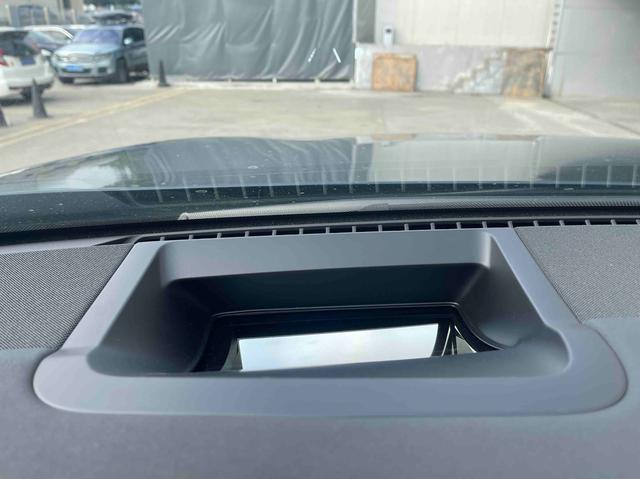
The M7’s soul is Huawei’s Qiankun ADAS (Ultra runs the high-tier ADS) with HarmonyOS cockpit. The 192-line LiDAR plus cameras and radar enables L2 driver assistance — adaptive cruise, lane keep, highway pilot assist, auto parking, transparent chassis / 360° camera, door-open warning (DOW), and front/rear collision warning. Voice assistant XiaoYi recognizes speech precisely with whole-cabin zone wake, and flows seamlessly between phone, watch, and car. Cabin kit includes a 10.25-inch cluster + center screen, head-up display (HUD), electronic gear stalk, heated/ventilated front seats, and NFC/RFID/UWB digital key. For Huawei users, the “car as phone extension” experience is hard for rivals to match.
6. Safety & Quality: Good Reputation, Full Active Safety
The M7 is comprehensively equipped: ABS, ESP, tire pressure monitoring, 360° camera, lane-departure warning, front collision warning, and AEB (automatic emergency braking) are standard or optioned, with soft/high adjustable suspension and optional air suspension. The passenger cell uses high-strength and hot-formed steel, with a 4-year/100,000-km vehicle warranty. Owner ratings rank in the upper-middle tier for large SUVs. Points to note: Huawei advises cautious use of smart driving in complex/off-road weather and conditions, some owners report interior odor and higher fuel consumption when the battery is depleted. Overall reliability reputation is positive.
7. Real Owner Feedback: Praised for ADAS & Space, Criticized for Fuel Economy & Details
Across Sohu and Autohome feedback: owners most appreciate the great ADAS, roomy interior, smooth non-laggy HarmonyOS, quiet cabin, and strong power. As a family car, the rear space and large trunk draw praise, and long trips are worry-free on a full tank plus charge. Most complaints center on: higher fuel economy when the battery is depleted, some mediocre auto-assist features (auto high beam / auto wipers), occasional interior detail odors, and a fairly high price tag. Overall, the M7 is a family car with a very clear “big space + Huawei ADAS” focus, whose main shortcoming is running-cost economy.
8. Buying Advice & Summary: Who Should Buy It? What to Check?
The Wenjie M7 2026 EREV Ultra AWD 5-seat (192-line LiDAR) suits buyers who value smart driving, want the Huawei ecosystem, and need a large family space — especially Huawei phone/watch users and multi-generation households.
Four things to check before buying:
- Space strength: the most spacious rear and trunk of the four — the clear family pick; choose the BJ60 only if you need hardcore off-road capability.
- Range & economy: 315 km EV suits daily commutes plus occasional long trips (1,625 km combined is worry-free). The Zhijie R7 (331 km) has slightly longer EV range; budget for higher fuel use on depleted-battery long drives.
- Performance & kit: 5.1 s AWD acceleration is punchy and the dual-motor AWD handles rain/snow well; the LiDAR version has stronger ADAS but costs nearly 35,000 RMB more than the BJ60.
- Intelligence & safety: ADAS is driver assistance — take over in complex situations; the LiDAR version has strong future OTA potential.
Bottom line: for “top-tier ADAS, spacious interior, and seamless Huawei ecosystem” in a large EREV SUV, the Wenjie M7 is a benchmark worth benchmarking against. If budget matters or you favor off-road capability, compare the TaiTAN 700, Zhijie R7, and BJ60. From a resale standpoint, the M7 enjoys strong Huawei brand backing, high sales volume, and decent value retention, making it a sound used-car choice.
Compiled from configuration comparison screenshots and public sources; specs subject to official delivery.