AVATR 12 2025 Ultra AWD EV Vehicle Profile: Huawei ADS + 800V Fast Charging Flagship Review

AVATR 12 2025 Ultra AWD EV Vehicle Profile: Huawei ADS + 800V Fast Charging Flagship Review
1. Conclusion: Three Highlights & Three Caveats
Highlight 1: Class-Leading Huawei Qiankun ADS Smart Driving
The AVATR 12 Ultra AWD is equipped as standard with Huawei Qiankun ADS high-level driver assistance, featuring three LiDAR units and 32 perception sensors, supporting door-to-door assisted driving in all scenarios. Its usability and reliability on both highways and in complex urban traffic place it in the top tier among similarly priced rivals — this is the vehicle's most distinctive selling point.
Highlight 2: Ultra-Fast Recharging on an 800V High-Voltage Platform
Thanks to the 800V silicon-carbide high-voltage platform, the battery can be charged from 30% to 80% in around 20 minutes. Combined with the 94.53kWh ternary lithium battery from CATL and excellent thermal management, long-distance recharging is remarkably efficient, effectively easing range anxiety.
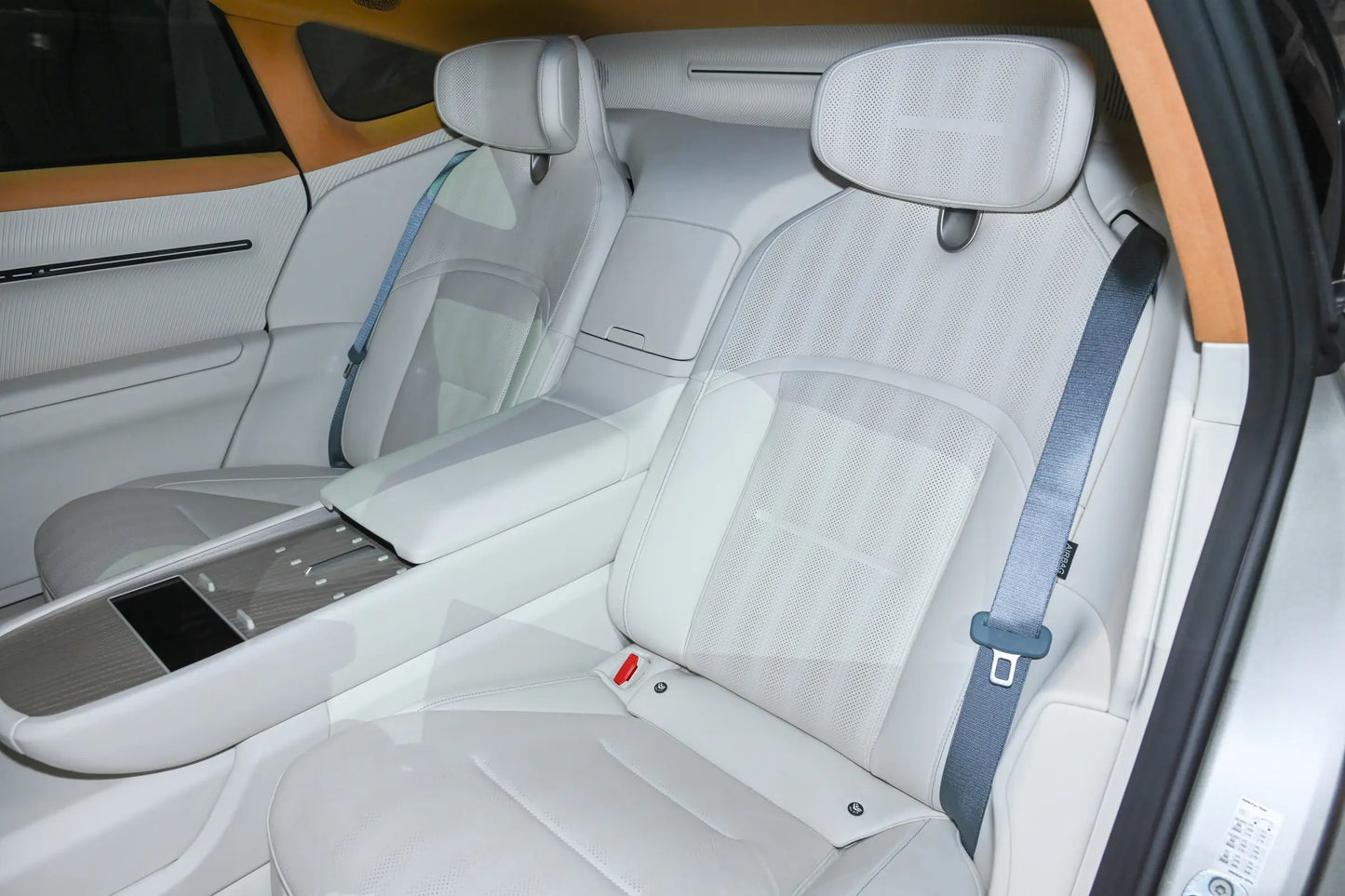
Highlight 3: Next-Level Cabin Luxury and Comfort
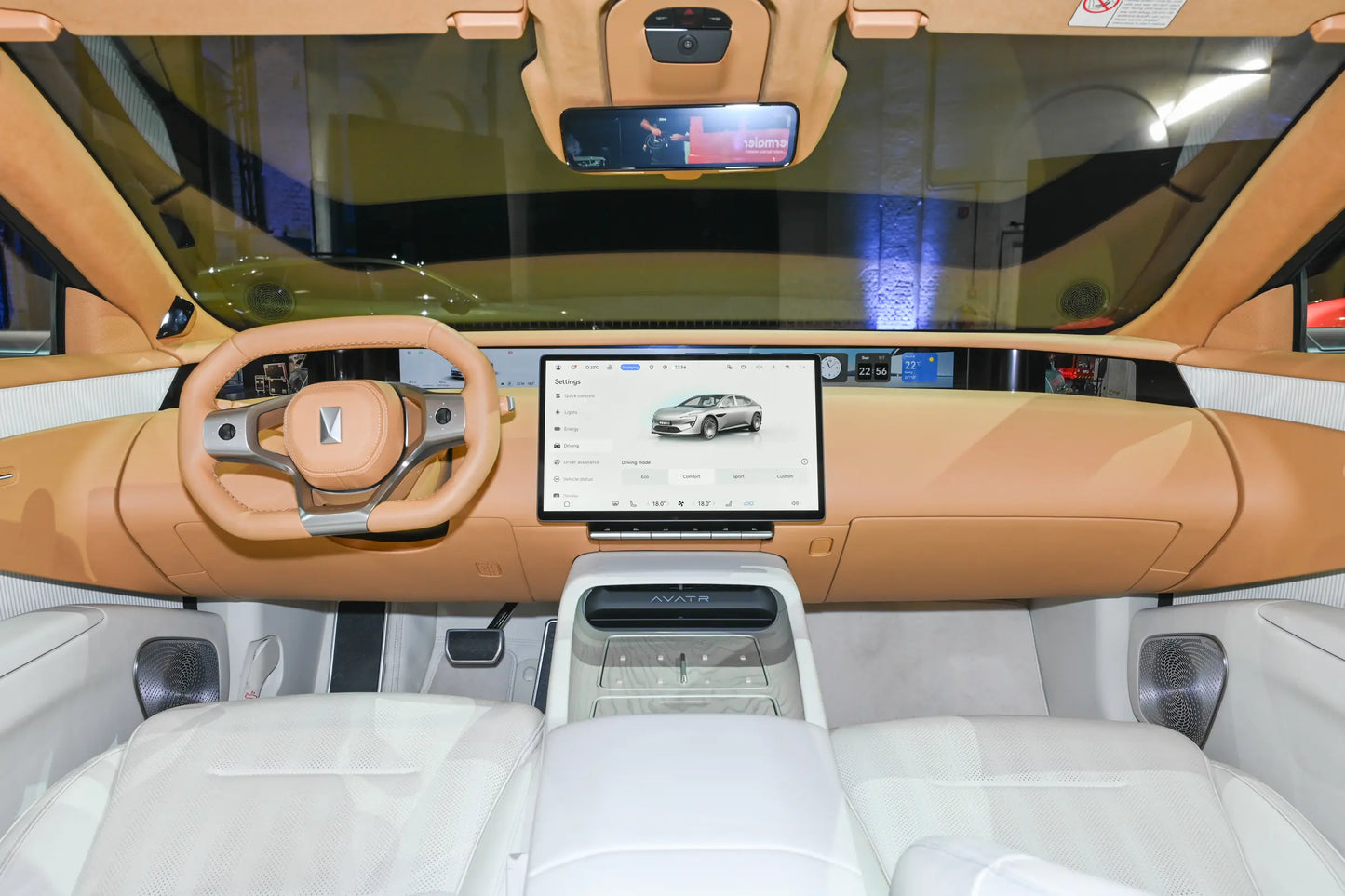
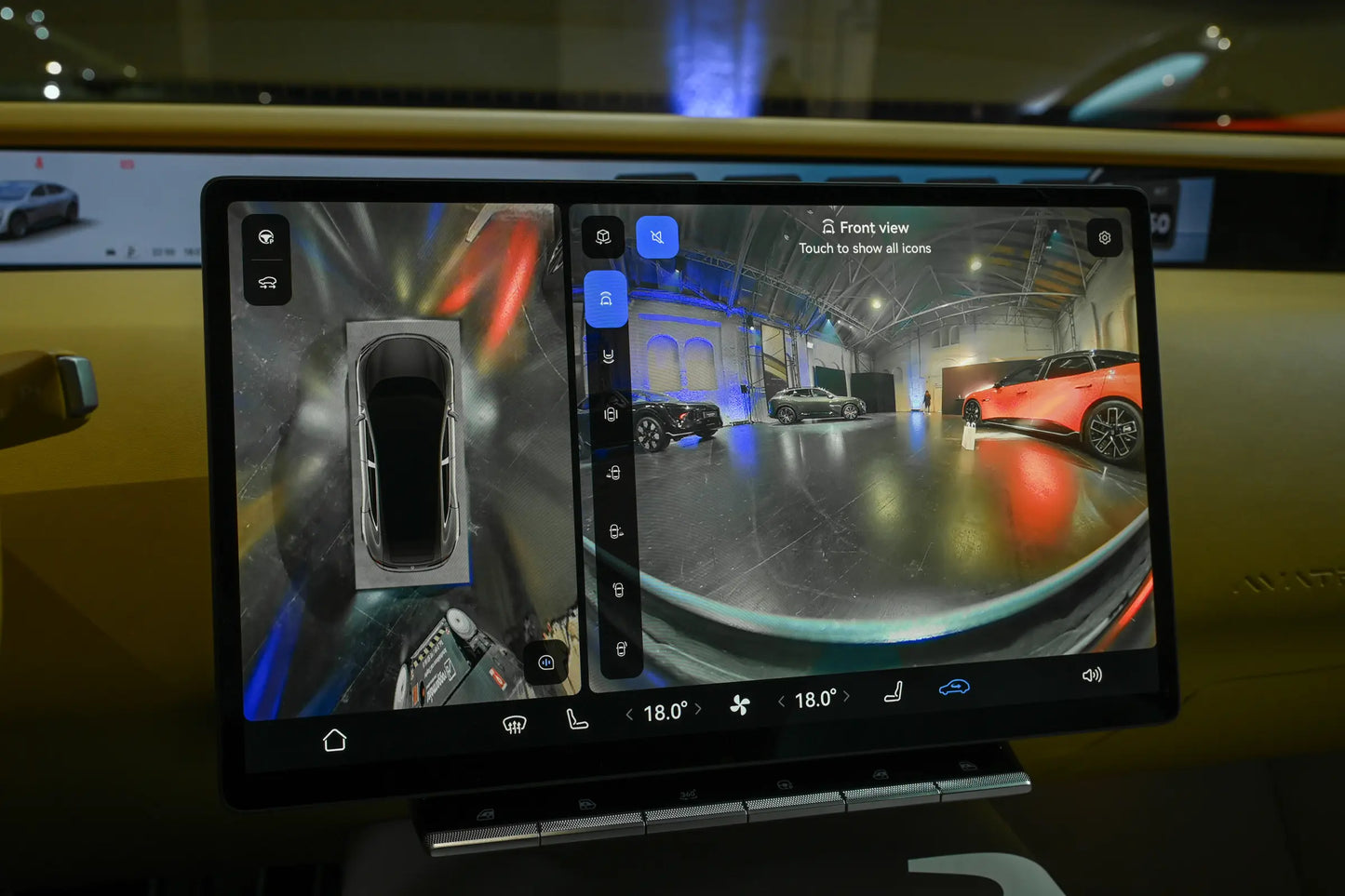
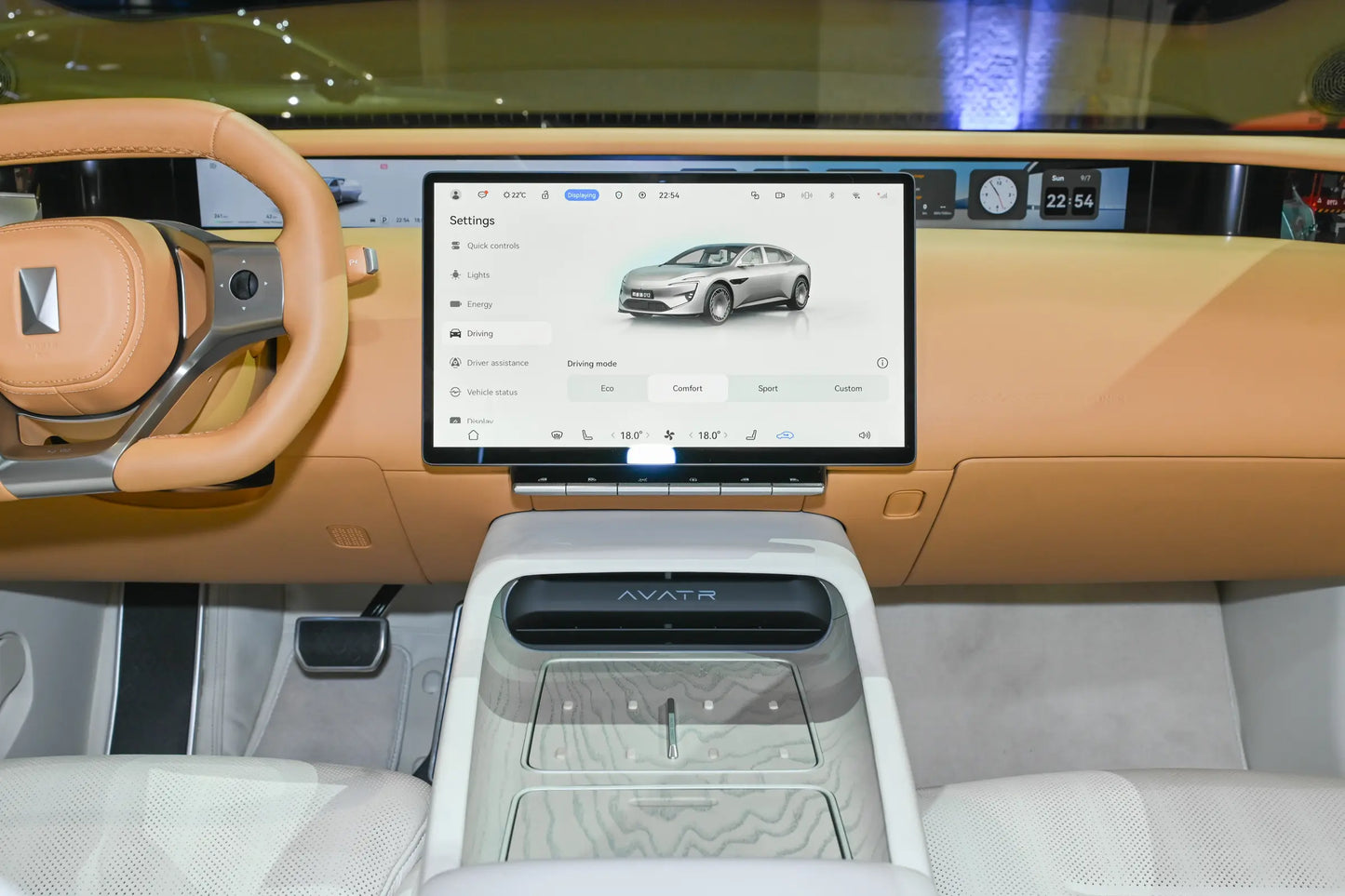
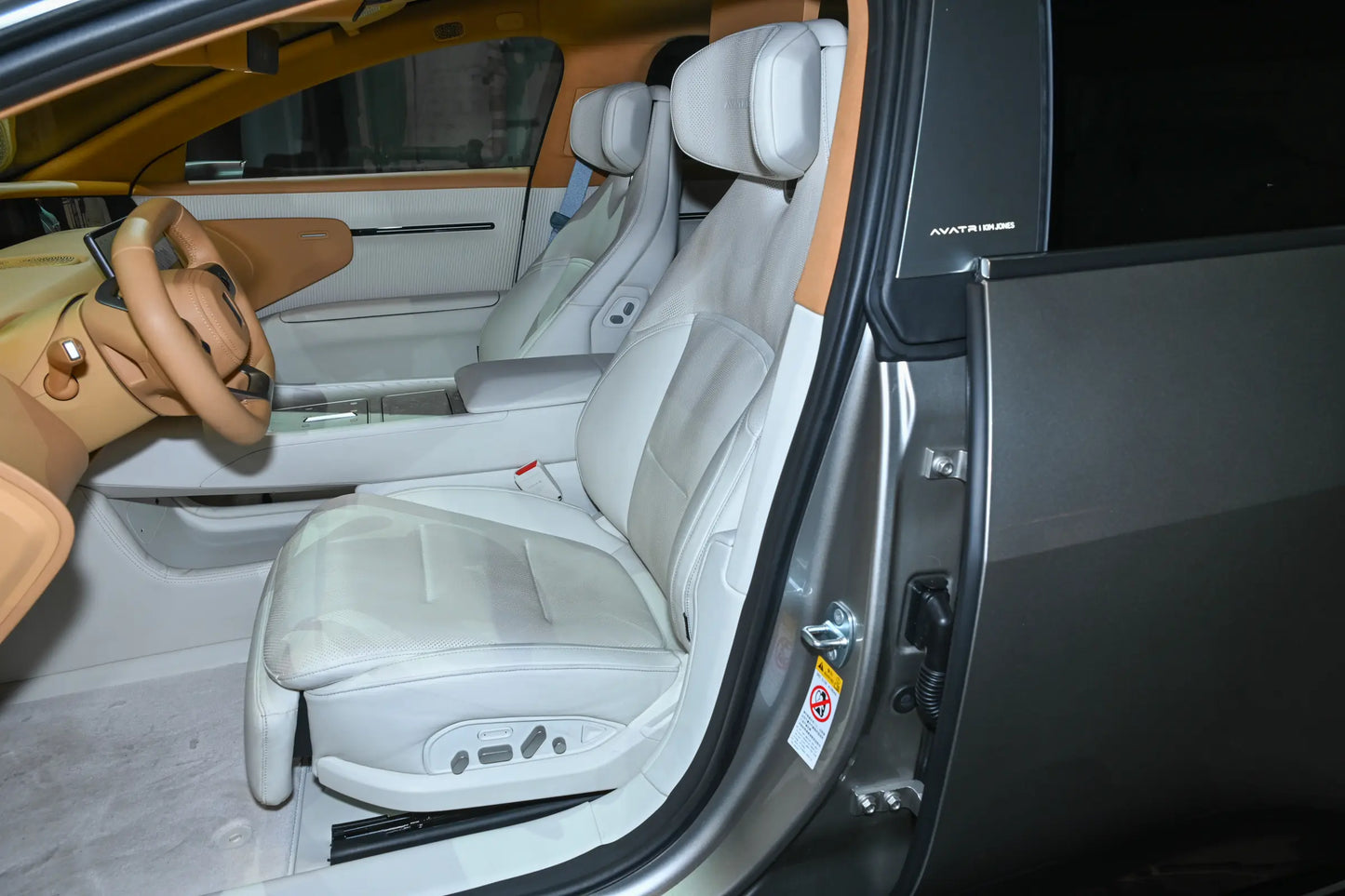
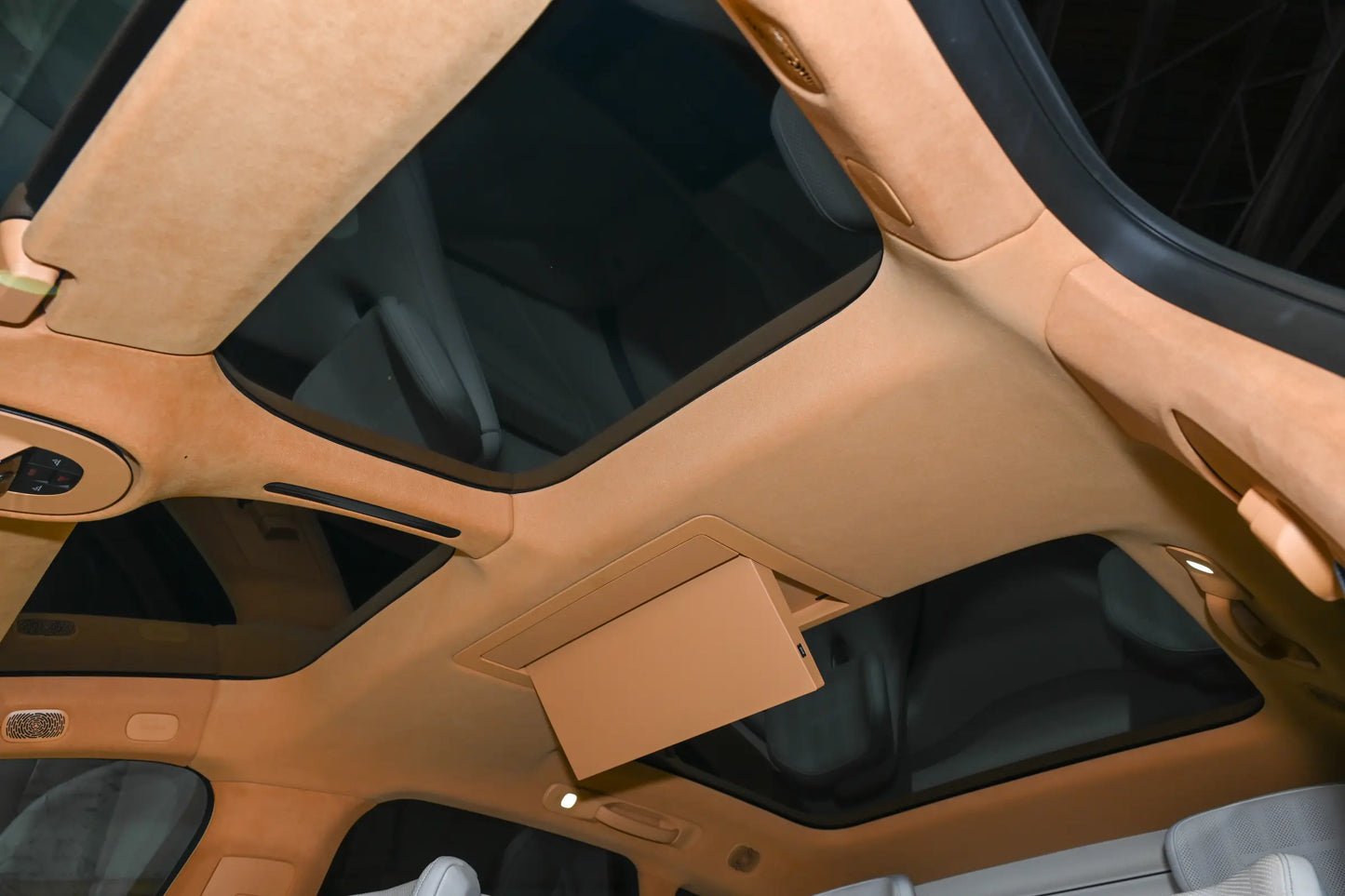
Dual zero-gravity seats (ventilation, heating, massage, memory), a 35.4-inch 4K panoramic display with a 15.6-inch central screen, a 25-speaker Meridian sound system (2,016W peak power) and a smart photochromic panoramic roof together create a tech-luxury cabin that stands out in its price segment.
Caveat 1: Fastback Styling Limits Rear Headroom
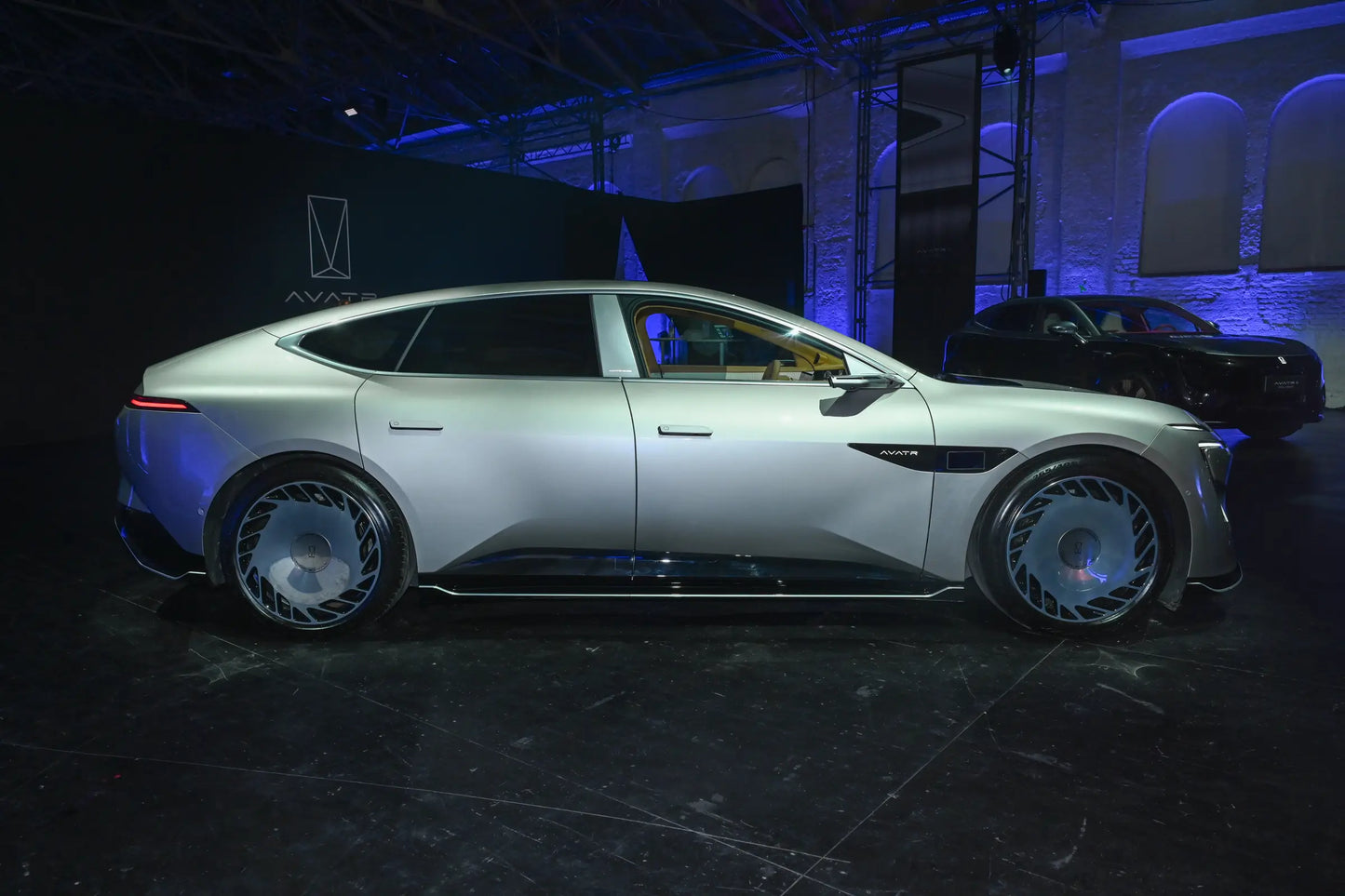
The five-meter length and smooth fastback silhouette deliver stunning looks, but rear headroom is somewhat tight for taller passengers. If generous rear headroom is a priority, we recommend a test sit before deciding.
Caveat 2: Modest Cargo Capacity
Limited by its body style, cargo volume is around 425L plus a front trunk. For users who frequently travel with heavy loads, loading space is less generous than similarly sized wagons or SUVs.
Caveat 3: Higher Energy Consumption on the AWD Version
The official consumption of about 15.2kWh/100km is reasonable for a high-power AWD model, but it is higher than the single-motor RWD version; under aggressive driving, real-world consumption can exceed 20kWh/100km, so long-range drivers should factor in their driving style.
2. Model Overview: Market Position & Credibility
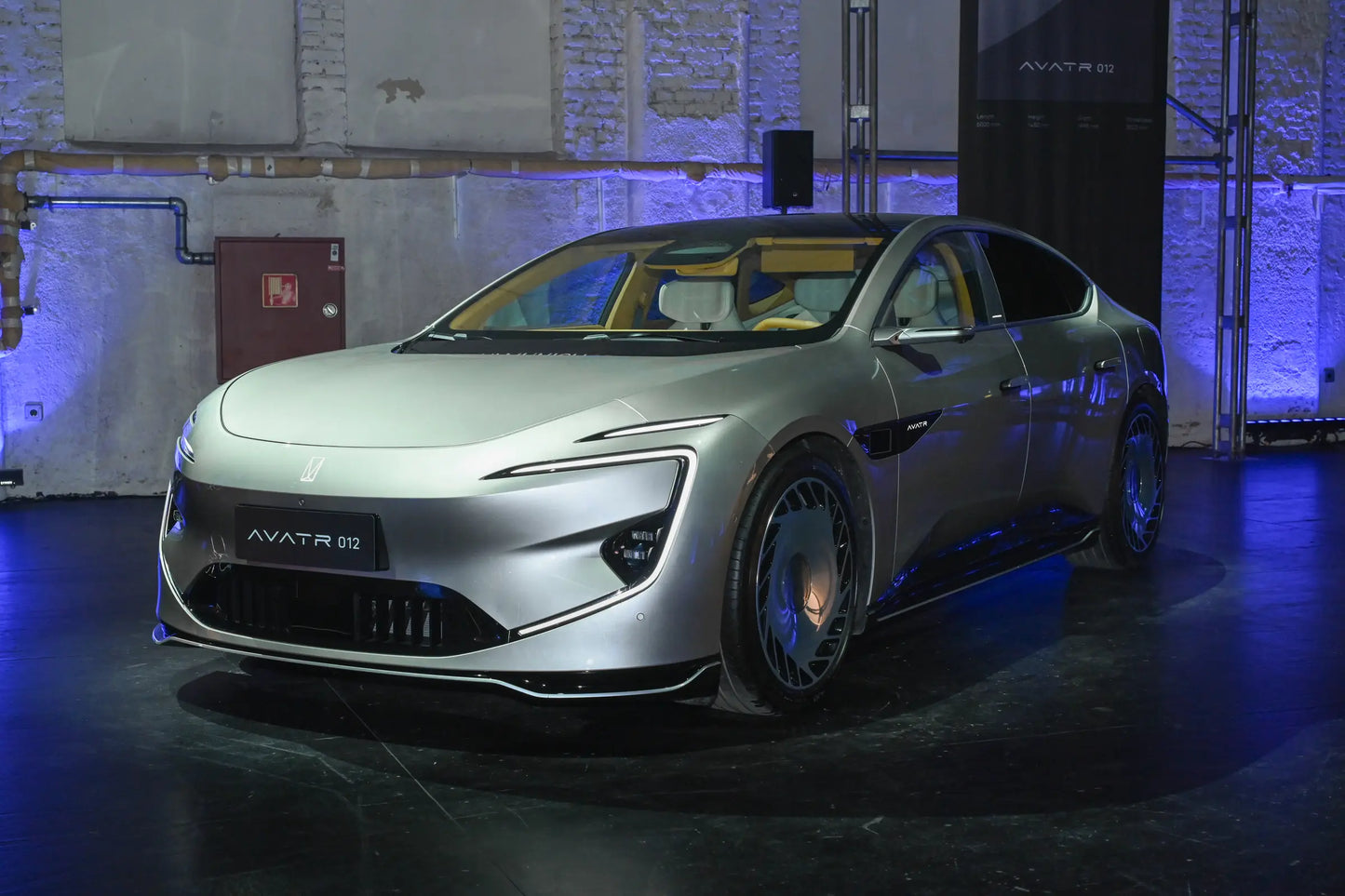
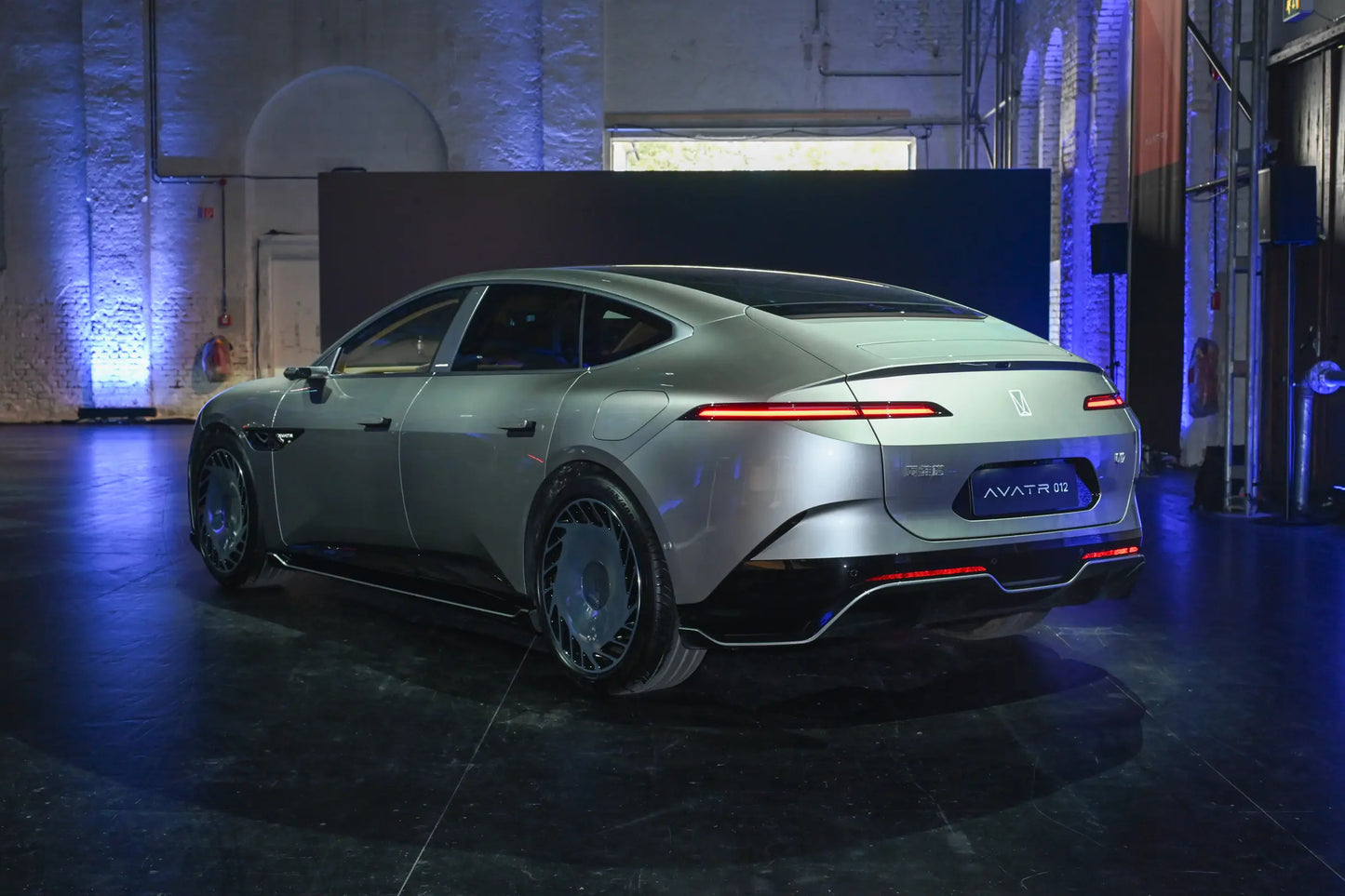
The AVATR 12 is a mid-to-large all-electric sedan flagship from AVATR Technology — the deep collaboration among Changan Automobile, Huawei, and CATL. It targets the premium 300k-class intelligent EV market. The car continues the brand's "Future Elegance" design language, distinguished by its pillarless rear-hatch silhouette, forward leaning disc-wing front face and an active electric rear spoiler. The 2025 model is a comprehensive refresh of the 2023 original, adding a Dai Hong interior color, 21-inch sport wheels and several comfort and tech upgrades.
In the market, the AVATR 12 competes alongside models such as the NIO ET7, ZEEKR 001 and the Zhijie S7, differentiating itself through the "Huawei smart driving + CATL battery + Changan manufacturing" combination. Its design has earned recognition in the industry, and the interior materials (Nappa leather, suede headliner, birch trim) underline its premium positioning. As a flagship in the 30-class large sedan segment, the AVATR 12 has made an important contribution to the brand's push into the premium market.
You can take a full look at the exterior and interior design of this model through the following video:
3. Core Specifications
|
Specification
|
AVATR 12 2025 Ultra AWD EV
|
|
Body Class
|
Mid-to-large all-electric sedan
|
|
Powertrain
|
Battery electric
|
|
Drivetrain
|
Dual-motor AWD (front induction-asynchronous + rear permanent-magnet-synchronous)
|
|
Max Power
|
402kW (547 hp)
|
|
Peak Torque
|
687N·m
|
|
CLTC Range
|
705km
|
|
Charging Time
|
Fast charge (30%-80%) ~20 min; Slow charge (0-100%) ~11 h
|
|
Energy Consumption
|
~15.2kWh/100km
|
|
Battery Capacity
|
94.53kWh (ternary lithium, CATL)
|
|
Dimensions (L×W×H)
|
5020×1999×1450mm
|
|
Wheelbase
|
3020mm
|
|
Seats
|
5
|
|
Top Speed
|
220km/h
|
|
0-100km/h
|
~3.8s
|
|
Vehicle Warranty
|
8 years or 160,000km
|
Maintenance and service: AVATR benefits from Changan's mature manufacturing and after-sales network, offering a generous vehicle warranty. As a pure EV with a relatively simple structure, routine maintenance mainly covers powertrain/three-electric checks, cabin filter and brake-fluid replacement, making upkeep more economical than a petrol car.
Purchase incentives: New-energy vehicle purchase subsidies and tax breaks vary by country/region. The following is an overview of representative markets (source: IEA Global EV Policy Explorer):
|
Country/Region
|
Key Subsidy / Incentive
|
|
China
|
NEV purchase tax exemption extended to end of 2025, halved between 2026-2027; some cities offer trade-in subsidies
|
|
EU (selected countries)
|
Many countries provide purchase subsidies or tax relief (e.g. purchase-tax exemption, company-car tax benefits)
|
|
United States
|
Eligible BEVs can claim a federal tax credit (subject to price and sourcing rules)
|
|
Selected SE Asian countries
|
Tariff reductions and purchase subsidies for imported or locally built BEVs
|
4. Ownership Costs & Service
Warranty policy: 8 years or 160,000km vehicle warranty (whichever comes first), with long-term coverage on key new-energy components such as battery and drive system; third-electric warranty terms are subject to official policy.
Maintenance costs: As a pure EV with few service items, routine maintenance mainly consists of powertrain checks, cabin filter replacement and brake fluid/coolant checks, with clearly lower intervals and costs than a petrol car.
Real ownership cost analysis: As a mid-to-large AWD EV, its purchase price is comparable to equally priced petrol flagships, but it offers significant advantages in energy and maintenance costs. The higher curb weight and AWD layout raise energy use, so long highway trips should be assessed against real-world consumption.
Charging cost (based on the Global Petrol Prices world average residential electricity price of about $0.17/kWh):
-
At the official 15.2kWh/100km, fuel cost is about $$2.58 per 100km (approx.$$0.026/km).
-
At a real-world combined consumption of 16-18kWh/100km, cost is about $$2.72$$3.06 per 100km.
-
Compared with the per-100km fuel cost of a petrol car, commuter energy costs for the EV are clearly lower.
Subsidy and policy table: Purchase subsidies and tax incentives vary by country/region — see the Stage 3 subsidy table above (source: IEA Global EV Policy Explorer).
5. Competitors Comparison
In the ~30-class high-performance EV sedan/crossover market, the main rivals of the AVATR 12 are the Zhijie S7 2025 Ultra AWD Sport, the NIO ET5T 2025 100kWh Champion Edition, and the ZEEKR 001 2025 YOU 100kWh. All four are high-power dual-motor AWD EVs, but differ in charging method, smart-driving approach, space layout and equipment.
4 Key Points:
-
The most powerful is the ZEEKR 001 (789 hp / 580kW), while the NIO ET5T offers 490 hp; the AVATR 12 sits in the middle at 547 hp with a ~3.8s 0-100km/h time, delivering a balanced AWD experience.
-
Range is close across all four (AVATR 705, Zhijie S7 703, NIO 710, ZEEKR 705), all above 700km; on charging, all except the NIO (which also supports battery swapping) are built on an 800V platform with fast recharging.
-
Smart driving is the AVATR 12's strength, using Huawei Qiankun ADS (three LiDAR + 32 sensors); the Zhijie S7 also uses Huawei ADS; NIO and ZEEKR rely on their in-house NOP / ZEEKR AD systems with different sensing hardware.
-
Space and body style differ clearly: the AVATR 12 is a five-meter large sedan (3020mm wheelbase), the Zhijie S7 a four-door sedan, the NIO ET5T a wagon (flexible loading), and the ZEEKR 001 a fastback crossover — catering to different needs.
Core Specifications Comparison
Note: Parameters above follow the user-provided configuration comparison screenshots; some data (consumption, cargo volume) supplements published public information.
Summary: The AVATR 12's core strength lies in the overall balance of "Huawei smart driving + 800V fast charging + next-level luxury cabin." If strong ADAS capability and a tech-luxury experience matter most, the AVATR 12 is the pick among the four; if you prioritize ultimate power or loading flexibility, the ZEEKR 001 (power) and NIO ET5T (wagon space, battery swapping) are more targeted choices.
6. Expert Test Drive: Pros & Cons
Pros
-
Highly usable, smooth smart driving: Huawei Qiankun ADS performs steadily on highways and in urban areas; auto-parking and valet parking recognize spots accurately, significantly reducing driver fatigue.
-
Solid chassis and stable at speed: front double-wishbone + rear multi-link suspension with smart air suspension and CDC adaptive damping keeps the car stable even above 140km/h, absorbing bumps with composure.
-
Fast charging and balanced efficiency: real-world 30%-80% fast-charging time is short; the 800V platform is efficient, with official consumption around 15.2kWh/100km and combined urban consumption of about 15-18kWh/100km.
To Improve
-
Rear headroom is limited by the fastback silhouette, feeling snug for taller passengers.
-
Cargo volume is relatively small, limiting long, heavy-load trips.
-
Under aggressive driving the AWD version's consumption rises (above 20kWh/100km), so long-range drivers should account for their style.
Tested Scenarios (source: owner tests & public reviews)
-
Highway range: one owner measured ~72% range achievement (280km driven vs 390km consumed) in ~9°C weather with 90% highway share, smart driving off (source: XChuxing owner test).
-
Urban consumption: in Comfort mode with normal driving, owners report ~15-16kWh/100km; with navigation-assisted or highway driving ~17-18kWh/100km; the lowest recorded was ~11.2kWh/100km (source: owner reviews).
7. Real Owner Reviews
Positive Feedback
Dimension 1: Exterior design Summary: Most owners highly praise the AVATR 12's striking, sci-fi looks; the pillarless rear hatch, slim daytime-running lights and digital mirrors give it strong on-road presence.
"The exterior is really eye-catching — the low-slung streamlined body with that sporty rear end… all these highlights blend together perfectly, giving it an extremely futuristic look!"
Dimension 2: Power and driving Summary: The 500+ hp AWD delivers abundant power; combined with a solid chassis and driver assistance, it feels easy and enjoyable to drive, with effortless overtaking.
"With 500+ horsepower I can beat 90% of the cars on the road… the car is very heavy, so it feels very stable."
Dimension 3: Smart driving and comfort Summary: Strong ADAS and easy auto-parking; dual zero-gravity seats with ventilation, heating and massage make long trips comfortable.
"Auto-parking and valet parking work really well — basically I can switch it on when I get home and not worry… dual zero-gravity seats with ventilation and massage — napping in the car is unbeatable."
Negative Feedback
Dimension 1: Interior details and upkeep Summary: Some owners report that the vertical strips on the door trim can catch seat belts when buckling up, risking scratches over time and collecting dust.
"The vertical strips on the door trim easily catch the seat belt every time I buckle up; not scratched yet, but they will be over long-term use, and they also gather dust and are hard to clean."
Dimension 2: Cargo space and app features Summary: Owners generally find the trunk small, less practical for frequent long trips; some also wish the mobile app offered richer vehicle information.
"Compared with an SUV or wagon the trunk really is small — for those with frequent long-distance needs, think carefully… the app shows too little vehicle information."
8. References
-
Global Petrol Prices (2025). World Average Electricity Prices, USD / kWh. Retrieved from https://www.globalpetrolprices.com/electricity_prices/
-
IEA. Global EV Policy Explorer. Retrieved from https://www.iea.org/data-and-statistics/data-tools/global-ev-policy-explorer
-
IEA. Global EV Outlook 2025. Retrieved from https://www.iea.org/
-
AVATR Official Model & Configuration Information: https://www.avatr.com/12
-
Owner test and review content compiled from publicly available owner feedback and test data
|
Dimension
|
AVATR 12 2025 Ultra AWD EV
|
Zhijie S7 2025 Ultra AWD Sport
|
NIO ET5T 2025 100kWh Champion
|
ZEEKR 001 2025 YOU 100kWh
|
|
Powertrain
|
Battery electric
|
Battery electric
|
Battery electric
|
Battery electric
|
|
Drivetrain
|
Dual-motor AWD
|
Dual-motor AWD
|
Dual-motor AWD
|
Dual-motor AWD
|
|
Max Power
|
402kW (547 hp)
|
365kW (496 hp)
|
360kW (490 hp)
|
580kW (789 hp)
|
|
Peak Torque
|
687N·m
|
673N·m
|
700N·m
|
810N·m
|
|
CLTC Range (km)
|
705
|
703
|
710
|
705
|
|
Consumption (kWh/100km)
|
15.2
|
~15.2
|
~14.7
|
~15.6
|
|
Battery Capacity (kWh)
|
94.53
|
100
|
100
|
100.01
|
|
Battery Type
|
Ternary Li (CATL)
|
Ternary Li (CATL)
|
Ternary Li (CATL et al.)
|
Ternary Li (Zeekr-CATL Qilin CTP3.0)
|
|
Charging Platform
|
800V
|
800V
|
400V
|
800V
|
|
Fast Charge (30%-80%)
|
~20 min
|
~15 min
|
~36 min
|
~15 min
|
|
Top Speed (km/h)
|
220
|
200
|
200
|
240
|
|
Dimensions L×W×H (mm)
|
5020×1999×1450
|
4971×1963×1460
|
4790×1960×1499
|
4977×1999×1533
|
|
Wheelbase (mm)
|
3020
|
2950
|
2888
|
3005
|
|
Seats
|
5
|
5
|
5-door 5-seat
|
5-door 5-seat
|
|
Cargo Volume (L)
|
425 (+ front trunk)
|
420-1450
|
529-1687
|
2144 (folded)
|
|
ADAS System
|
Huawei Qiankun ADS
|
Huawei ADS
|
NIO NOP
|
ZEEKR AD
|
|
ADAS Hardware
|
3 LiDAR + 32 sensors
|
LiDAR solution
|
1 LiDAR
|
2×Orin-X + 508 TOPS
|
|
Charging Method
|
Super-fast charge
|
Super-fast charge
|
Super-fast charge + swap support
|
Super-fast charge
|
|
Central Screen
|
15.6 in
|
15.6 in
|
15.6 in
|
15.05 in
|
|
Audio
|
Meridian 25 speakers
|
HUAWEI SOUND
|
7.1.4 layout
|
Yamaha
|
|
Front Seats
|
Zero-gravity + vent/heat/massage
|
Vent/heat/massage
|
Vent/heat/massage
|
Vent/heat/massage
|