Chery QQ Ice Cream 2024 Vehicle Profile: Affordable 4-Seat Electric City Car with Best Value

Model Overview: Market Position & Brand Background
The Chery QQ Ice Cream is the "cute pure-electric little car" launched by Chery New Energy as the first A00-class product of its iCar ecosystem. When it hit the market at the end of 2021, it ignited the mini EV segment with exceptional value — pre-orders topped 10,000 units through a blind-booking campaign and exceeded 60,000 cumulative orders before launch, and 2022 sales peaked at around 97,800 units, making it one of the most popular national commuting cars alongside the Wuling Hongguang Mini EV.
The 2024 model was refreshed with upgraded power and range: motor output rose from the entry-level 20kW to 30kW (about 41 hp) with 90 N·m of peak torque, the 205km version carries a 17.4kWh lithium iron phosphate battery, and — for the first time on this range tier — DC fast charging (30%–80% in about 75 minutes) turns "cheap car that can fast-charge" from a slogan into reality. Compared with rivals such as the Wuling Hongguang Mini EV, Panda Mini and Changan Lumin, this car differentiates itself through higher range and faster replenishment.
Design-wise it follows a rounded, adorable line: a U-shaped daytime running light forming a "smiley face," a two-tone body, a closed front grille, protruding wheel arches, and 145/70 R12 narrow tires, with the overall look of a typical Japanese K-Car-style urban commuter that is instantly recognizable.
You can get a full look at the car's exterior and interior in the following video:
Core Specifications
|
Item
|
Specification
|
|
Model
|
Chery New Energy QQ Ice Cream 2024 205km Milk Shake
|
|
Powertrain
|
Pure electric (rear-motor, rear-wheel drive)
|
|
Motor
|
Permanent magnet synchronous, 30kW (41 hp), 90 N·m peak torque
|
|
Range (CLTC)
|
205 km
|
|
Charging time
|
Fast charge approx. 75 min (30%–80%); slow charge approx. 11 h
|
|
Energy consumption
|
8.8 kWh/100km
|
|
Battery capacity
|
17.4 kWh (LFP, Gotion High-tech cells)
|
|
Dimensions
|
3008 × 1496 × 1637 mm
|
|
Wheelbase
|
1960 mm
|
|
Seating
|
3-door, 4-seat hatchback
|
|
Top speed
|
100 km/h
|
|
Vehicle warranty
|
3 years or 100,000 km (first owner eligible for additional drive-unit + battery warranty)
|
Maintenance cost & service: As a mini commuter, maintenance is simple — estimated total maintenance cost over 60,000 km is about 370 USD, keeping daily running costs very low; after-sales is supported by Chery New Energy's nationwide service network with broad city coverage.
Incentives: Subsidies and tax benefits for mini EVs vary by country/region; please refer to local policy (see: IEA Global EV Policy Explorer).
Three Highlights & Three Caveats
Highlight 1: A rare 205km real-world range and fast-charging at this price point The 2024 Milk Shake version delivers a CLTC range of 205km, placing it in the top tier of mini EVs in its price bracket. More importantly, it supports DC fast charging (30%–80% in about 75 minutes), freeing you from the "slow-charge-overnight" trap most budget minis face and dramatically expanding your everyday charging radius.
Highlight 2: Great value and a small footprint with big agility With three doors, four seats, a body just over 3 meters long and a minimum turning radius of about 4 meters, it slips through old-town lanes, narrow alleys and crowded parking lots with ease. As an everyday errand-runner, easy to drive, easy to park and easy to master is its most genuine selling point.
Highlight 3: Responsible materials and excellent cabin health Built with mother-and-baby-grade antibacterial eco-materials, in a third-party multi-car comparison its cabin formaldehyde level after two hours of sun exposure was just 0.033 mg/m³ — far below the national standard of 0.08 mg/m³ and the best among its class, which is especially reassuring for families with children.
Caveat 1: Highway ride and NVH are only average Limited by its mini-car positioning and narrow tires, wind and road noise grow noticeably above 60 km/h, and the electric motor's whine accompanies the whole journey. Long-distance cruising comfort trails the next size class up.
Caveat 2: Space is "adequate," not "generous" Adults will feel cramped in the rear, and with the seats upright the trunk is just a narrow slit. Only with the second row folded 50:50 does it open up useful load space — it suits school runs and daily commuting, not whole-family road trips.
Caveat 3: Safety and smart features remain basic There is no ESP and no L2 driver assistance across the range, and only a driver airbag (passenger airbag varies by trim). Drive carefully on wet or slippery roads, and go in with realistic expectations about the equipment.
Ownership Costs & Service
Warranty policy: 3 years or 100,000 km vehicle warranty; the drive unit (battery, motor, controller) enjoys longer coverage — confirm final terms in your purchase contract.
Charging cost: At Global Petrol Prices' global average residential electricity rate of about 0.16 USD/kWh, and the MIIT-rated 8.8 kWh/100km consumption, each 100km costs about 1.41 USD — roughly 1.4 US cents per kilometer. Charging during off-peak rates can cut that further.
Maintenance cost: Estimated total maintenance over 60,000 km is about 370 USD. There are no engine-oil or fluid services typical of ICE cars; the focus is on three-electric checks, brakes and tires, keeping long-term ownership cheap.
Subsidy policy comparison:
|
Country/Region
|
Key measures (summary)
|
|
China
|
Tax benefits on EV purchase, green plates and traffic perks in some cities; frequent limited-time offers in the mini market
|
|
United States
|
Some states provide EV tax credits (subject to vehicle and price caps; minis may not qualify)
|
|
EU (multiple)
|
Purchase subsidies and tax relief coexist; standards vary by country
|
|
Southeast Asia / emerging markets
|
Many countries offer tariff and policy incentives for imported/locally-built EVs
|
Competitors Comparison
A 4-strong comparison of high-value, 4-seat mini EVs: All three-door, four-seat cars, the Chery QQ Ice Cream leans on its 205km range and DC fast charging to claim "commuting + charging freedom," the Wuling Hongguang Mini EV sells on brand recognition and an entry-level price, Panda Mini plays the value card with 200km range and a higher-output motor, and Changan Lumin attracts buyers with a larger body and more space. None is outright "better" — it comes down to which fits your use case.
-
Range & charging: QQ Ice Cream (205km + ~75min fast charge) and Panda Mini (200km + ~30min fast charge) lead clearly; Mini EV (120km, no fast charge) and Lumin (130km, no fast charge) suit purely short-hop trips.
-
Power: Panda Mini's 110 N·m peak torque stands out; QQ Ice Cream and Lumin share 30kW/41 hp; Mini EV is weakest (20kW/27 hp).
-
Space: Changan Lumin is longest (3270mm) and widest (1700mm), with the best space and load potential; Mini EV and Panda Mini sit in the middle; QQ Ice Cream is shortest but has the smallest turning radius and is the most agile.
-
Equipment: none of the four has L2 driver assistance; safety centers on a driver airbag, reversing camera and ABS/EBD; differences show mainly in infotainment screen size and tire specs.
|
Dimension
|
QQ Ice Cream 2024 205km Milk Shake
|
Wuling Hongguang Mini EV 2024 120km LFP
|
Panda Mini 2024 200km Endurance Bear
|
Changan Lumin 2024 130km Qingyue
|
|
Range (CLTC)
|
205 km
|
120 km
|
200 km
|
130 km
|
|
Charging time
|
FC ~75 min / SC ~11 h
|
SC ~4.6 h
|
FC ~30 min / SC ~4.5 h
|
SC ~6 h
|
|
Max power
|
30 kW (41 hp)
|
20 kW (27 hp)
|
30 kW (41 hp)
|
30 kW (41 hp)
|
|
Peak torque
|
90 N·m
|
85 N·m
|
110 N·m
|
—
|
|
Top speed
|
100 km/h
|
100 km/h
|
100 km/h
|
101 km/h
|
|
Dimensions (mm)
|
3008×1496×1637
|
3064×1493×1614
|
3065×1522×1600
|
3270×1700×1545
|
|
Wheelbase (mm)
|
1960
|
2010
|
2015
|
1980
|
|
Seating
|
3-door 4-seat
|
3-door 4-seat
|
3-door 4-seat
|
3-door 4-seat
|
|
Trunk volume
|
~734L (seats folded)
|
—
|
69–800L
|
104–804L
|
|
Energy consumption
|
8.8 kWh
|
8.8 kWh
|
9.4 kWh
|
9.8 kWh
|
|
Battery capacity
|
17.4 kWh
|
9.3 kWh
|
17.03 kWh
|
13.41 kWh
|
|
Battery type
|
LFP (Gotion)
|
LFP
|
LFP (Gotion)
|
LFP (CATL)
|
|
Tire spec
|
145/70 R12
|
145/70 R12
|
155/70 R13
|
165/70 R14
|
|
Drivetrain
|
Rear RWD
|
Rear RWD
|
Rear RWD
|
Front FWD
|
|
Driver airbag
|
Standard
|
Standard
|
Standard
|
Standard
|
|
Reversing camera
|
Standard
|
Standard
|
Standard
|
Standard
|
|
Drive modes
|
Eco/Sport
|
Eco/Sport
|
Eco/Sport
|
Eco/Sport
|
|
Fast charging
|
Yes (DC)
|
No
|
Yes (DC)
|
No
|
If you value "more range + fast charging + agile parking" most, the QQ Ice Cream Milk Shake is the most balanced of the four. If budget matters first and you just want a very short-hop commuter, the Mini EV has the lowest entry point. For more power and faster charging, Panda Mini earns its price. For more passenger and load space, Changan Lumin is the better fit.
Expert Test Drive: Pros & Cons
Pros
-
Excellent range attainment and energy efficiency: In the "Who Is the King · Who Is the King of Minis" five-car comparison, the QQ Ice Cream recorded just 10.7 kWh/100km in real-world testing (hot-weather, AC-on conditions) — the lowest consumption of the group, and its real-world range proved relatively dependable (source: joint auto-media "Who Is the King of Minis" comparison).
-
Agile at low speed and easy to master: a minimum turning radius of about 4 meters and brisk response in the 0–60 km/h band make urban weaving and parallel parking very novice-friendly.
-
Solid cabin-health materials: cabin formaldehyde concentration after two hours of sun exposure was just 0.033 mg/m³, far below the 0.08 mg/m³ national standard, with the mother-and-baby-grade antibacterial eco-material performing best among the five (source: same comparison).
Cons
-
Highway stability and NVH are average: wind and road noise grow beyond 60 km/h, and narrow tires offer limited grip on wet roads — drive with care.
-
Brake calibration feels "switch-like": the early pedal travel feels vague, then braking force releases suddenly past a threshold; it is not very linear and takes getting used to.
-
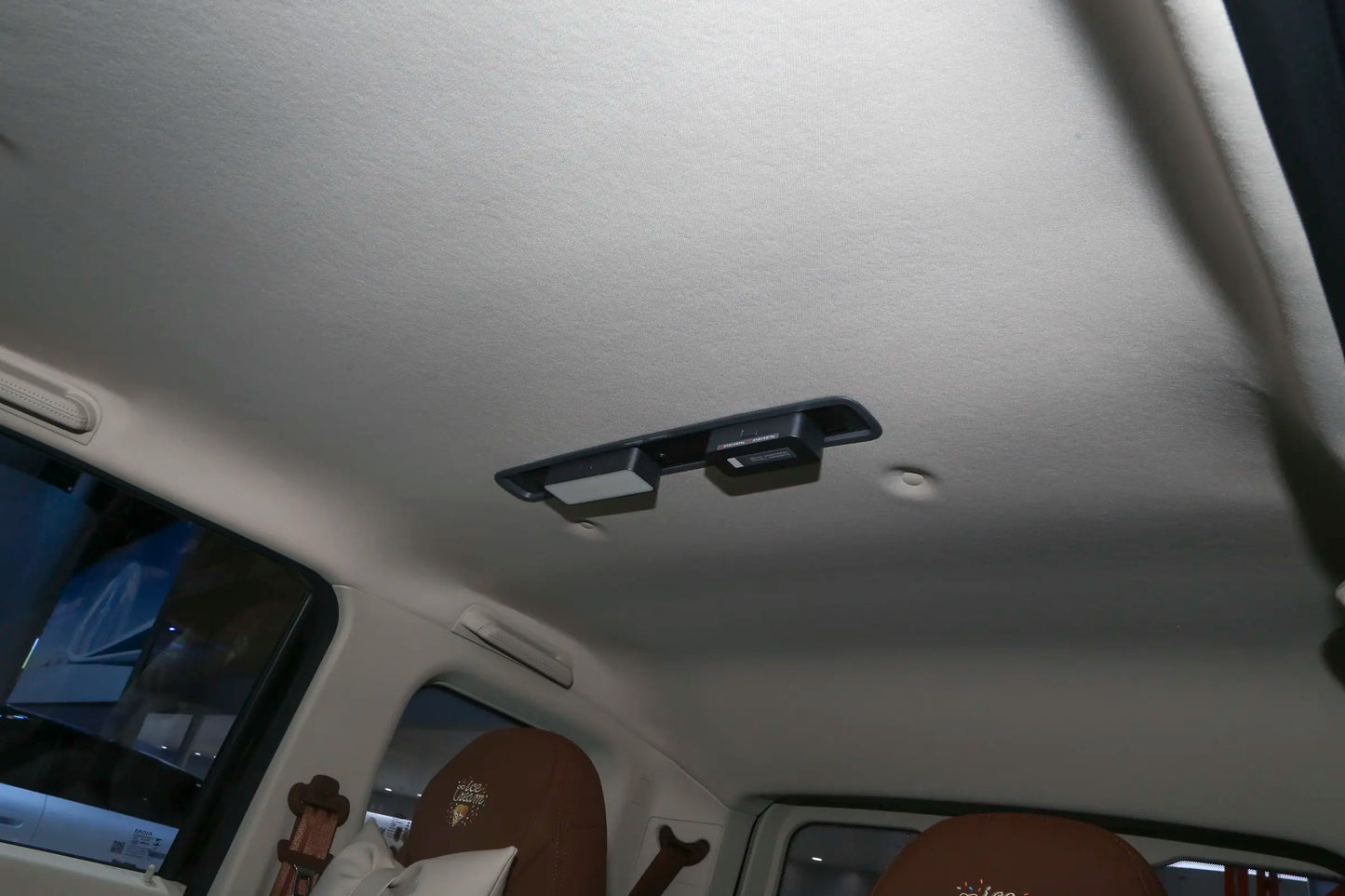
Cramped rear seat and trunk: the rear is tight for adults, and with seats upright the trunk offers almost no load space — best suited to short hops and school runs.
Real-world scenarios
-
Mixed city routes (free-flow + congestion + highway): real-world consumption of about 10.7 kWh/100km measured in hot AC-on conditions (source: "Who Is the King of Minis" five-car comparison).
-
Commuter test: a media test drive translated to about 10.5 kWh/100km, supporting roughly 130km of real range (source: 42 Garage test drive of the NEDC 170km version with a 13.9kWh battery, for reference only; the 205km version has a higher ceiling).
Real Owner Reviews
Positive feedback
As a commuter/school-run car, easy driving, easy ownership and money-saving are what owners praise most; value and the cute exterior are widely appreciated (Sohu Auto overall score 4.74; exterior 4.94, ahead of 83% of its class).
"Over these 5 days, the QQ Ice Cream surprised me more than I expected. It's not a perfect car, but for someone like me who just needs commuting and school runs, cheap, easy to drive, economical and worry-free — that's enough."
"What I'm happy with is the dual upgrade in range and charging; the whole range comes with 22kW fast charging, and 30% to 80% takes only about half an hour."
Negative feedback
Interior plastic feel, NVH/chassis comfort, and a small number of charging-related quality issues are the most common owner complaints.
"What's a letdown is the shorter range and the interior feels a bit plasticky."
"What I'm least satisfied with is the interior — there's still a lot of plastic workmanship, and the gaps at some inconspicuous spots aren't handled well."
"After the test drive, the thing I'm least satisfied with and most want to complain about is the chassis comfort."
References
-
Global Petrol Prices (2025). World Average Electricity Prices, USD / kWh. Retrieved from https://www.globalpetrolprices.com/electricity_prices/
-
IEA. Global EV Policy Explorer. Retrieved from https://www.iea.org/data-and-statistics/data-tools/global-ev-policy-explorer
-
Chery New Energy official website (QQ Ice Cream specifications)
-
Autohome (QQ Ice Cream 2024 205km Milk Shake specs and owner reviews)
-
42 Garage, Test Drive Chery QQ Ice Cream: 44,900 RMB, and worth exactly that
-
Joint auto-media "Who Is the King of Minis" five-car mini EV comparison