Hongqi Tiangong 05 2025 550 Youth Edition Vehicle Profile: 550km Range, Dual Wishbone Suspension, 200kW Fast Charging

1. Verdict: Three Highlights and Three Caveats
Highlight 1
A rear-drive chassis that beats expectations for the class. A 210kW rear-mounted permanent-magnet synchronous motor with 317N·m of torque delivers a 0-100km/h sprint in 6.9 seconds, with crisp throttle response. More importantly, the double-wishbone front and multi-link rear suspension setup is rare at this price point, and it is the single most frequently praised aspect among owners for cornering support and high-speed stability.
Highlight 2
Segment-above space thanks to a 2900mm wheelbase. At 4820mm long and 1915mm wide with a 2900mm wheelbase, this is a proper mid-size sedan. Rear legroom is generous, and the 0.213Cd low-drag body also keeps wind noise at an upper-tier level for the class.
Highlight 3
Safety hardware that is genuinely well-equipped. The body uses a 9H4M structure with roughly 76% high-strength steel and up to 2000MPa tensile strength, paired with nine airbags as standard. The battery pack has passed a 120-hour full-vehicle immersion test along with crush testing, exceeding national safety validation standards.
Caveat 1
Charging specs on the 550 version are relatively conservative. This trim is built on a 400V platform, needing roughly 20 minutes for a 10%-80% fast charge, while the 900V versions in the lineup manage it in 12 minutes. In other words, long range and ultra-fast charging are reserved for higher trims, and the Youth Edition requires accepting a trade-off here.
Caveat 2
The reliability and repair cost of flush door handles. Flush handles can freeze shut in low temperatures and pop out sluggishly; if the car loses power after a collision, the electronic mechanism carries a risk of not deploying; and the more complex structure means higher repair and replacement costs later.
Caveat 3
Software stability still has room to improve. Owner feedback points to occasional infotainment lag and intermittent app failures, while some Android devices do not yet support NFC keys, so carrying the physical card remains necessary. OTA updates are steadily improving things, but the early experience is not flawless.
2. Model Overview
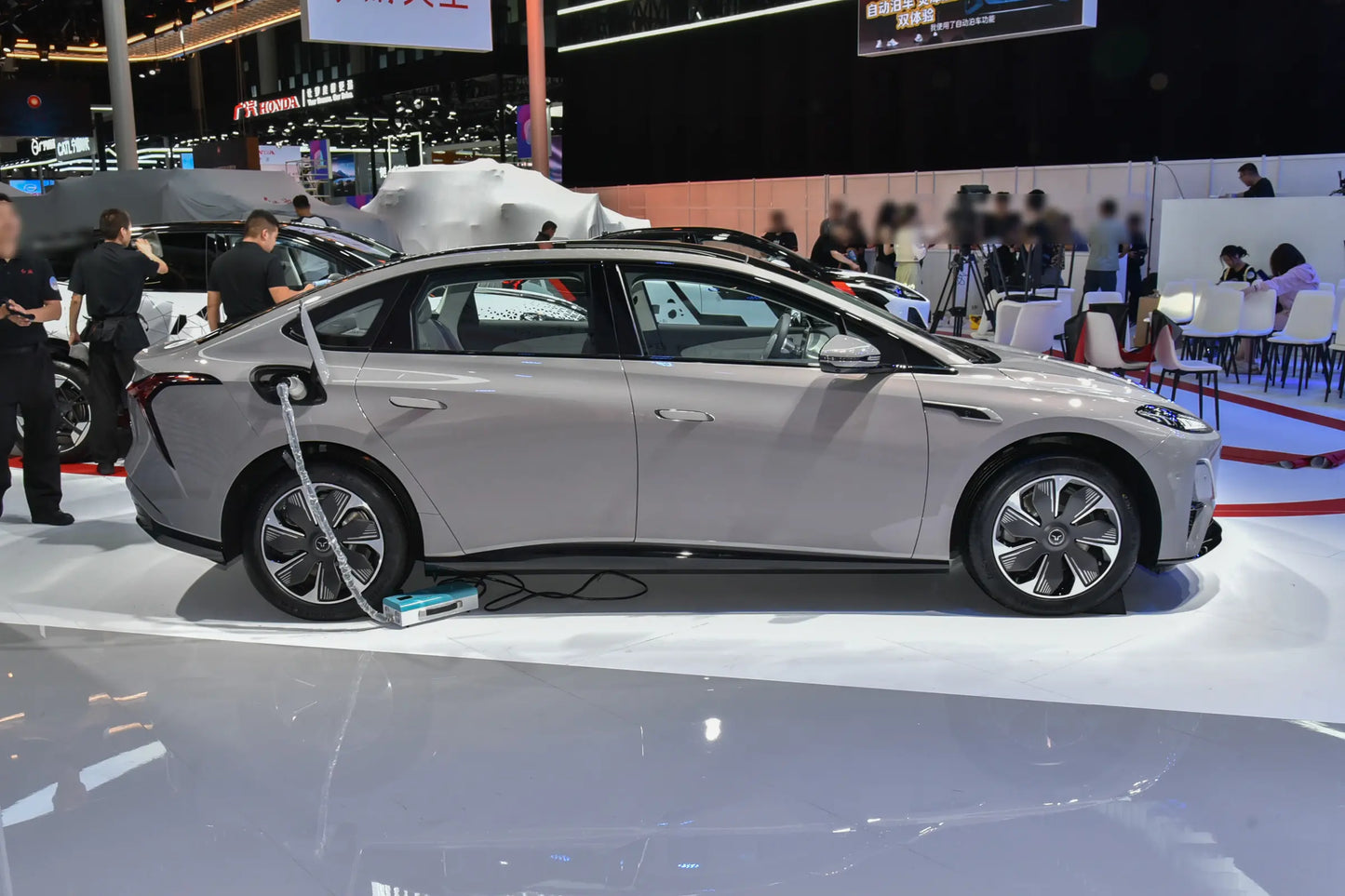
The Hongqi Tiangong 05 is a mid-size all-electric sedan from FAW Hongqi, launched in February 2025, and it serves as the core sedan in the Hongqi Tiangong EV lineup. Its role is clear: to move the Hongqi brand away from its traditional official-car image and onto the shopping list of younger families, whether for a first purchase or an additional vehicle.
Across the range, the Tiangong 05 covers three range tiers of 550km, 750km and 850km, split into standard and advanced driver-assistance versions, with the 850km model built on a 900V high-voltage platform focused on ultra-fast charging. The 550 Youth Edition covered here is the entry point and the highest-volume trim.
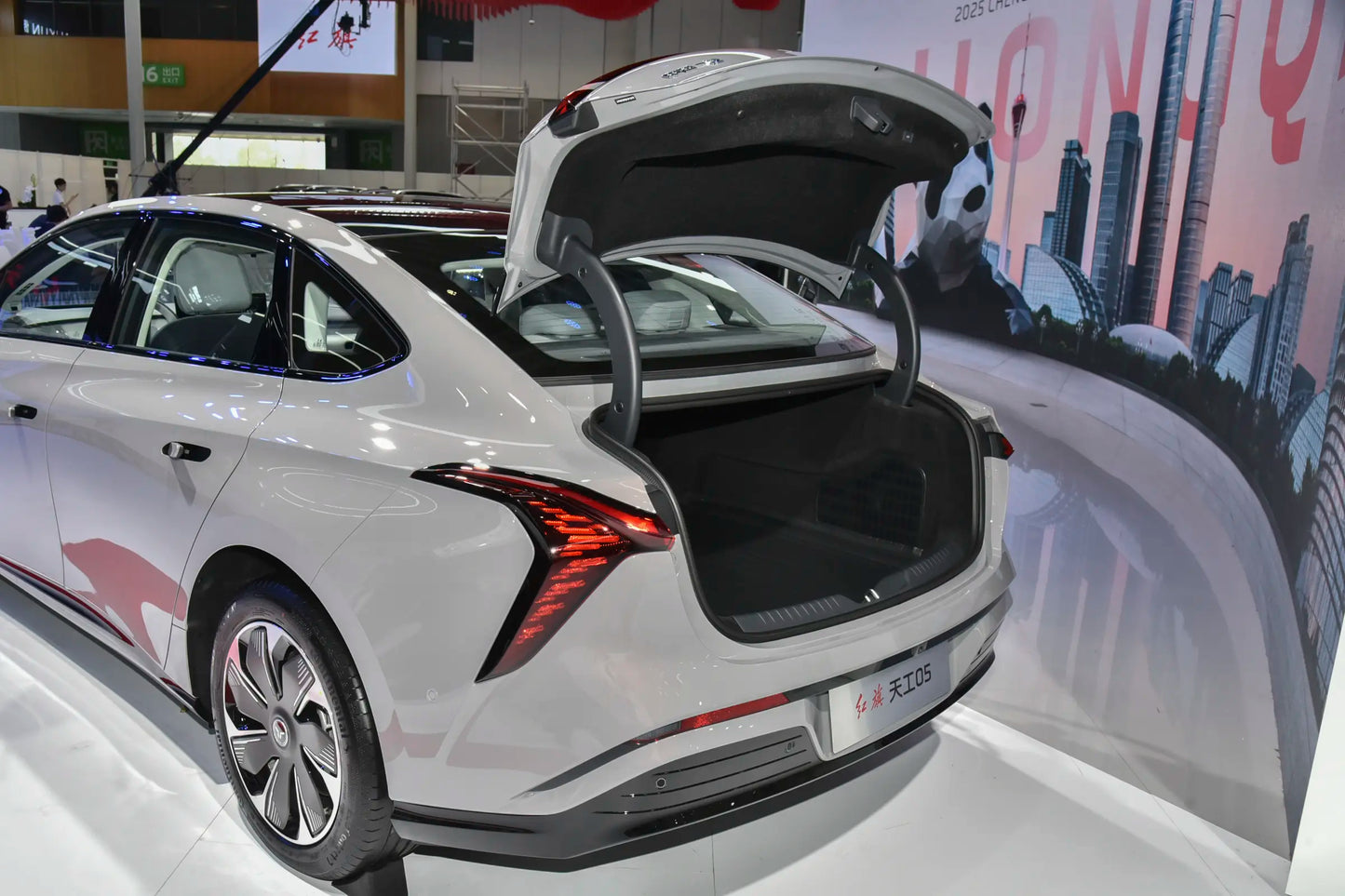
In design terms, the Tiangong 05 adopts a fastback coupe silhouette with a drag coefficient as low as 0.213Cd, balancing visual dynamism against energy efficiency. The front end centres on Hongqi's signature full-width flag emblem, while the tail lights incorporate koi motifs, giving the car a youthful, distinctly Eastern aesthetic. Dimensions are 4820×1915×1480mm with a 2900mm wheelbase, a standard footprint among mid-size electric sedans, where it competes primarily with peers in the same class.
At brand level, Hongqi carries a strong recognition symbol in its home market, and FAW's manufacturing system and service network are relative advantages. In overseas markets, what attracts buyers to this car is more the combination of chassis hardware, physical dimensions and equipment density rather than brand cachet.
You can get a full look at the car's exterior and interior design in the video below: https://youtu.be/3MDZ2Yq6_Vo
3. Basic Information
| Item | Parameter |
|---|---|
| Model | Hongqi Tiangong 05 2025 550 Youth Edition |
| Powertrain | Battery electric, single rear motor, permanent-magnet synchronous |
| Range | 550km (CLTC) |
| Charging time | Approximately 20 minutes for 10%-80% DC fast charging (400V platform) |
| Energy consumption | 12.1kWh/100km |
| Battery capacity | 62kWh, LFP (lithium iron phosphate) |
| Dimensions | 4820×1915×1480mm, wheelbase 2900mm |
| Seating | 5 seats, 4-door three-box sedan |
| Luggage capacity | 477-859L, plus a 34L front trunk |
| Max power / max torque | 210kW (286PS) / 317N·m |
| Top speed | 200km/h; official 0-100km/h in 6.9 seconds |
| Drag coefficient | 0.213Cd |
| Kerb weight | 1890kg |
Maintenance costs and manufacturer service. The vehicle warranty runs 4 years or 100,000km, and the first non-commercial owner receives lifetime warranty on the whole vehicle and the electric drive system (exclusions per official terms). As an EV, routine servicing centres on cabin filters, brake fluid, tyres and general inspections, making annual maintenance spending significantly lower than an equivalent combustion sedan. The manufacturer provides a 7kW home charging wallbox with basic installation, alongside a period of roadside assistance.
Government incentives by country
| Country/Region | Subsidy and incentive policy |
|---|---|
| China | Purchase tax exemption for new energy vehicles, plus local trade-in subsidies in some cities |
| United States | Federal clean vehicle tax credit, with additional state-level purchase or charging incentives |
| Germany | Tax benefits for EVs and favourable company-car taxation, plus charging infrastructure incentives |
| France | Purchase subsidy and scrappage incentive for EVs, tiered by income |
| Norway | Exemption from purchase tax and VAT, plus toll and parking benefits |
Source: IEA Global EV Policy Explorer (https://www.iea.org/data-and-statistics/data-tools/global-ev-policy-explorer)
4. Ownership Costs and Service
Warranty and servicing. Whole-vehicle coverage runs 4 years or 100,000km, with lifetime warranty on the electric drive system for the first non-commercial owner. EVs have no oil, oil filter or spark plug replacements, so annual servicing focuses on cabin filters, brake fluid, coolant checks and tyre rotation. Routine annual maintenance excluding electricity typically runs in the tens of US dollars, far below a combustion sedan of the same size.
Charging costs. Based on the global average residential electricity price published by Global Petrol Prices at roughly USD 0.16/kWh:
- At 12.1kWh per 100km, electricity costs about USD 1.94 per 100km
- Assuming 15,000km of annual driving, yearly charging costs come to roughly USD 290
Note that actual costs depend heavily on local electricity tariffs; public DC fast charging is usually priced above residential rates, so costs rise accordingly. With access to home AC charging, the day-to-day running cost of this car can be kept very low.
Other ownership costs. EVs are exempt from or receive reductions on annual road and local taxes in several countries, while insurance sits close to an equivalent combustion sedan. Consumables such as tyres and brake pads tend to last longer because regenerative braking reduces brake usage.
Incentive comparison
| Country/Region | Main policy instruments |
|---|---|
| China | Purchase tax exemption, local trade-in subsidies |
| United States | Federal tax credit, state-level purchase and charging incentives |
| Germany | Tax benefits, favourable company-car rates, charging infrastructure incentives |
| France | Tiered purchase subsidy, scrappage incentive |
| Norway | Exemption from purchase tax and VAT, toll and parking benefits |
Source: IEA Global EV Policy Explorer (https://www.iea.org/data-and-statistics/data-tools/global-ev-policy-explorer)
5. Competitor Comparison
Introduction: placing the Hongqi Tiangong 05 550 Youth Edition among mid-size electric sedans, positional differences matter more than raw spec differences.
- The chassis is its strongest card: double wishbones up front and multi-link at the rear, combined with a 2900mm wheelbase and 1890kg kerb weight, put high-speed stability and cornering support toward the sportier, more substantial end of the class.
- Range and charging are relative weak points: 550km of CLTC range and roughly 20 minutes for a 10%-80% fast charge trail some rivals offering 660km and 15-minute charging, demanding more careful planning on long trips.
- Driver-assistance philosophies diverge: the Tiangong 05 uses an inertial-navigation triple-camera stereo vision system without relying on lidar or high-definition maps, while some rivals opt for lidar fusion with greater hardware redundancy, a different set of trade-offs.
- Space and load capacity trade blows: the Tiangong 05 offers a wide 1915mm body and a 34L front trunk with a 477-859L rear compartment, while rivals lean on wheelbase, rear legroom or cabin technology features.
The comparison table below is compiled from the vehicle configuration screenshots provided, and is intended only as a cross-reference on specifications and equipment.
| Item | Hongqi Tiangong 05 2025 550 Youth Edition | Deepal L06 2026 560Ultra+ Lidar Edition | Deepal L07 2026 660Max Huawei Qiankun ADS SE | Roewe D7 EV 2024 510km RWD Prestige |
|---|---|---|---|---|
| Class | Mid-size sedan | Mid-size sedan | Mid-size sedan | Mid-size sedan |
| Powertrain | Battery electric | Battery electric | Battery electric | Battery electric |
| Motor | 286PS electric | 272PS electric | 272PS electric | 197PS electric |
| CLTC range | 550km | 560km | 660km | 510km |
| Battery type | LFP | LFP | LFP | LFP |
| Battery capacity | 62kWh | 56.12kWh | 68.82kWh | 57.6kWh |
| Platform voltage | 400V | 3C fast charging | 3C fast charging | 20-minute fast charge |
| Fast charge (10%-80%) | Approx. 20 min | Approx. 15 min | Approx. 15 min | Approx. 20 min |
| Max DC charging power | 200kW | 163kW | 167kW | Approx. 100kW |
| Max power | 210kW (286PS) | 200kW (272PS) | 200kW (272PS) | 145kW (197PS) |
| Max torque | 317N·m | 290N·m | 290N·m | 310N·m |
| Motor layout | Single, rear | Single, rear | Single, rear | Single, rear |
| Top speed | 200km/h | 185km/h | 185km/h | 170km/h |
| 0-100km/h | 6.9s | 5.9s | 6.6s | Not stated |
| Energy consumption | 12.1kWh/100km | 11.5kWh/100km | 12.3kWh/100km | 13.4kWh/100km |
| Dimensions | 4820×1915×1480mm | 4830×1905×1480mm | 4875×1890×1480mm | 4890×1872×1510mm |
| Wheelbase | 2900mm | 2900mm | 2900mm | 2810mm |
| Front/rear track | 1652/1652mm | 1630/1650mm | 1620/1630mm | 1600/1600mm |
| Kerb weight | 1890kg | 1750kg | 1890kg | 1722kg |
| Luggage capacity | 477-859L | 464L | 473-1180L | 376L |
| Front trunk | 34L | 100L | 70L | 101L |
| Seating | 5 | 5 | 5 | 5 |
| Drag coefficient | 0.213Cd | Not stated | 0.215Cd | 0.23Cd |
| Vehicle warranty | 4 years / 100,000km | 5 years / 120,000km | 3 years / 120,000km | 6 years / 150,000km |
| Battery warranty | Lifetime, first owner | Lifetime, first owner | Lifetime, first owner | Lifetime, first owner |
| Front suspension | Double wishbone independent | Not stated | Not stated | Not stated |
| Rear suspension | Multi-link independent | Not stated | Not stated | Multi-link independent |
| Tyre size | 235/50 R18 | 235/45 R19 | 225/55 R18 | 225/50 R18 |
| Spare tyre | None | None | None | None |
| V2L output | 3kW | 6kW | 6kW | Not stated |
| Sunroof | Panoramic glass roof | Standard | Opening panoramic sunroof | Optional |
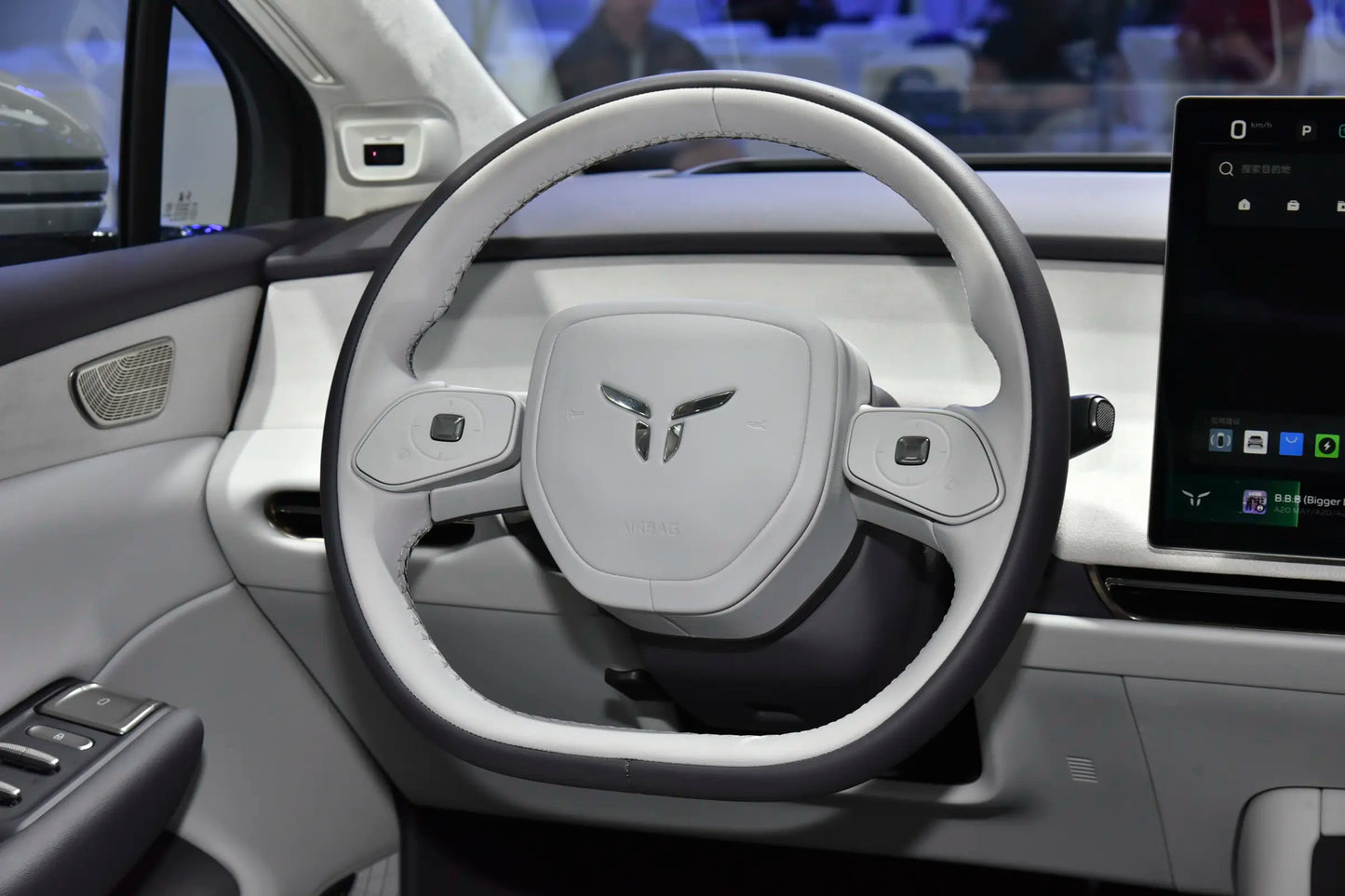
| Steering wheel material | Leather | Leather | Leather | Leather |
| Gear selector | Electronic column shifter | Electronic column shifter | Electronic column shifter | Electronic column shifter |
| Wireless phone charging | Front row 40W | Front row 50W | Front row 50W | Not stated |
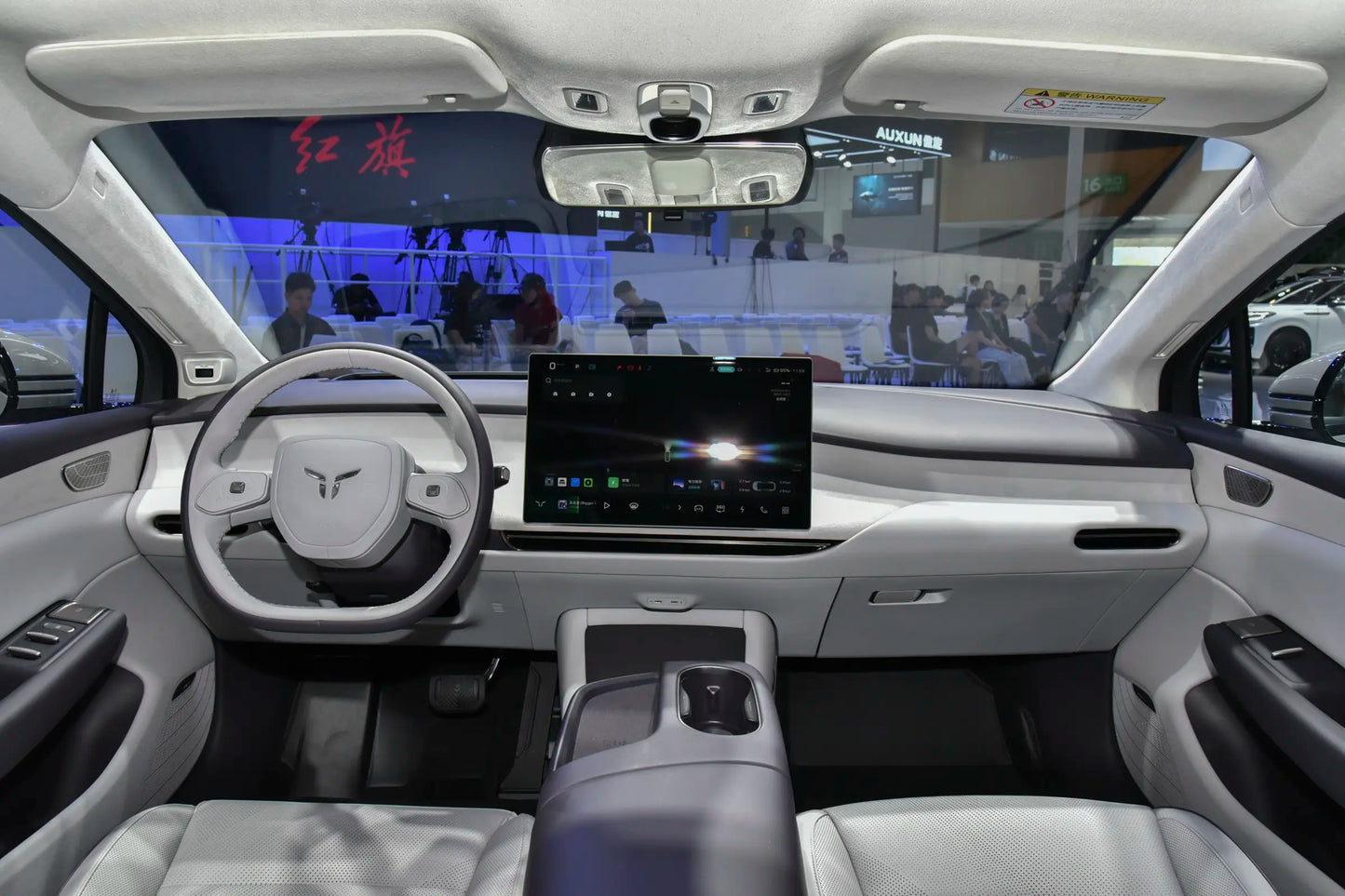
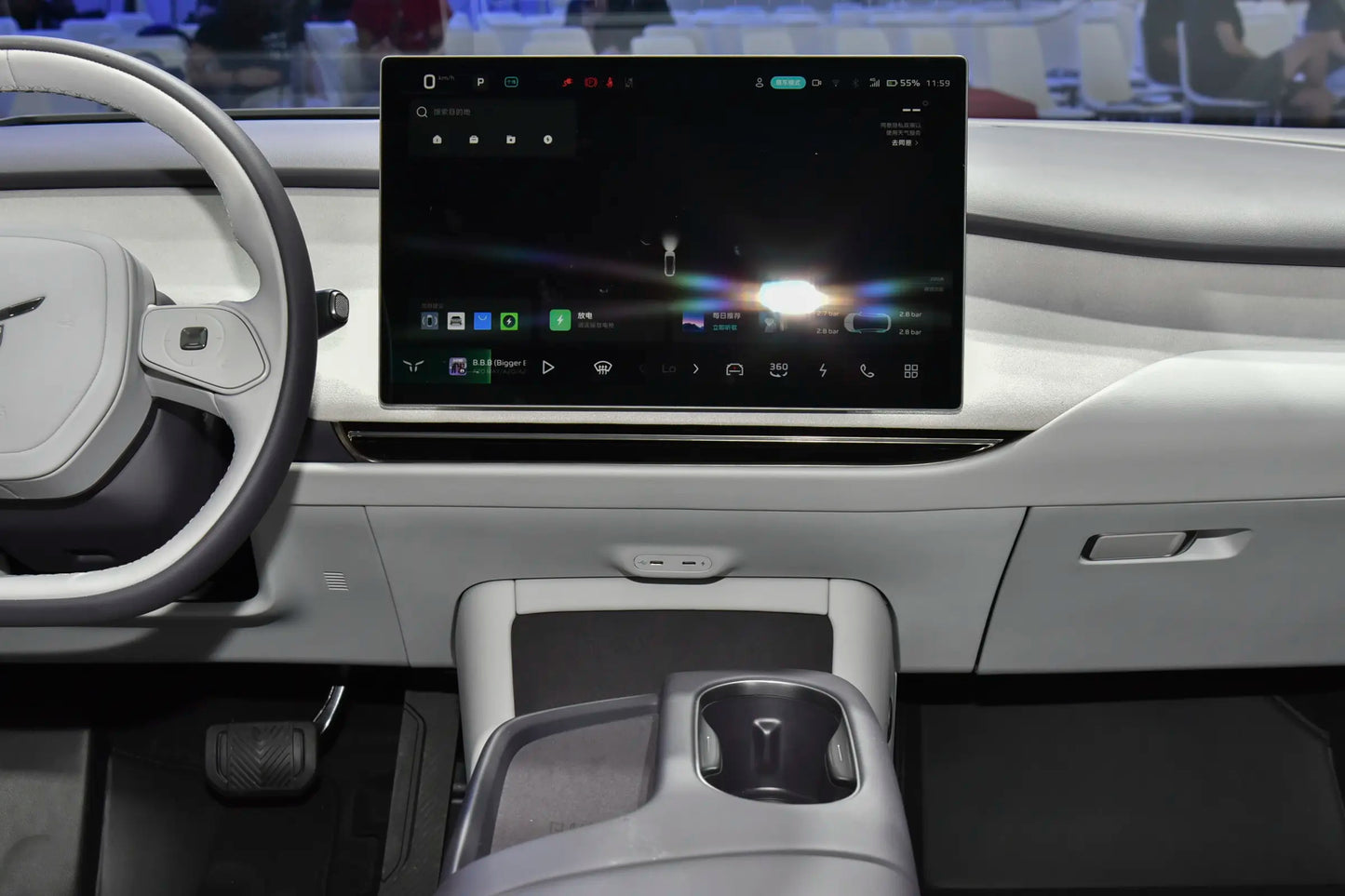
| Central screen | 15.6-inch 2.5K | 15.6-inch 2.5K | 15.6-inch 2.5K | 12.2-inch |
| Seat material | Synthetic leather | Synthetic leather | Synthetic leather | Synthetic leather |
| Driver seat power adjustment | 4-way (slide/recline/height) | 4-way (slide/recline/height) | 4-way (slide/recline/height) | Mixed manual and power |
| Passenger seat power adjustment | 2-way (slide/recline) | 2-way (slide/recline) | 2-way (slide/recline) | Not stated |
| Front seat heating | Standard | Standard | Standard | Standard |
| Front seat ventilation | Standard | Standard | Standard | Standard |
| Seat memory | Driver only | Driver only | Driver only | Not stated |
| Rear seat folding | 40:60 | 40:60 | 40:60 | Bench fold |
| Parking sensors | Front and rear | Front and rear | Front and rear | Rear |
| Reversing camera | 360° surround view with transparent chassis | 360° surround view with transparent chassis | 360° surround view with transparent chassis | Reversing camera |
| Cruise system | Full-speed adaptive cruise | Full-speed adaptive cruise | Full-speed adaptive cruise | Fixed-speed cruise |
| Lane keeping assist | Standard | Standard | Standard | Standard |
| Automated lane change | Standard | Standard | Standard | Not stated |
| On/off-ramp assist | Standard | Standard | Standard | Not stated |
| Driver assistance level | L2 | L2 | L2 | L2 |
| ADAS approach | Inertial triple-camera stereo vision, no lidar | Lidar edition | Huawei Qiankun ADS SE | Conventional assistance |
| Auto parking | Not stated | Advanced parking optional | Advanced parking optional | Not stated |
| Auto hold | Standard | Standard | Standard | Standard |
| Hill-start assist | Standard | Standard | Standard | Standard |
| Hill descent control | Not stated | Standard | Standard | Standard |
| Front side airbags / curtain airbags | Standard | Standard | Standard | Standard |
| Tyre pressure monitoring | Display | Display | Display | Display |
| Child seat anchor points | Standard | Standard | Standard | Standard |
| Head-up display | Not stated | Standard | Not stated | Not stated |
| Built-in dash cam | Not stated | Not stated | Not stated | Not stated |
Summary: if the priorities are chassis quality, body width, safety structure and charging power, the Hongqi Tiangong 05 550 Youth Edition holds its ground in this quartet, and its 200kW maximum DC charging power is the highest of the four. But if range, charging time and acceleration top the list, the Deepal L07's 660km and the Deepal L06's 5.9-second sprint will fit better. The Roewe D7 EV is the more basic proposition here, with warranty length and body length as its strengths and noticeably weaker powertrain and charging.
6. Expert Test Drive: Pros and Cons
Pro 1
Ride quality and chassis tuning. The double-wishbone front and multi-link rear setup, combined with a 1890kg kerb weight and rear-drive layout, earns consistent praise from both professional reviewers and owners for stability in corners and lane changes. Steering feel is on the substantial side, body control is composed, and it does not feel like a commuter car that merely stacks features.
Pro 2
Cabin quietness. Measured noise at idle inside the cabin is about 30.3dB, an upper-tier figure among tested cars in the class. The low-drag body and sealing genuinely help suppress wind and road noise at speed.
Pro 3
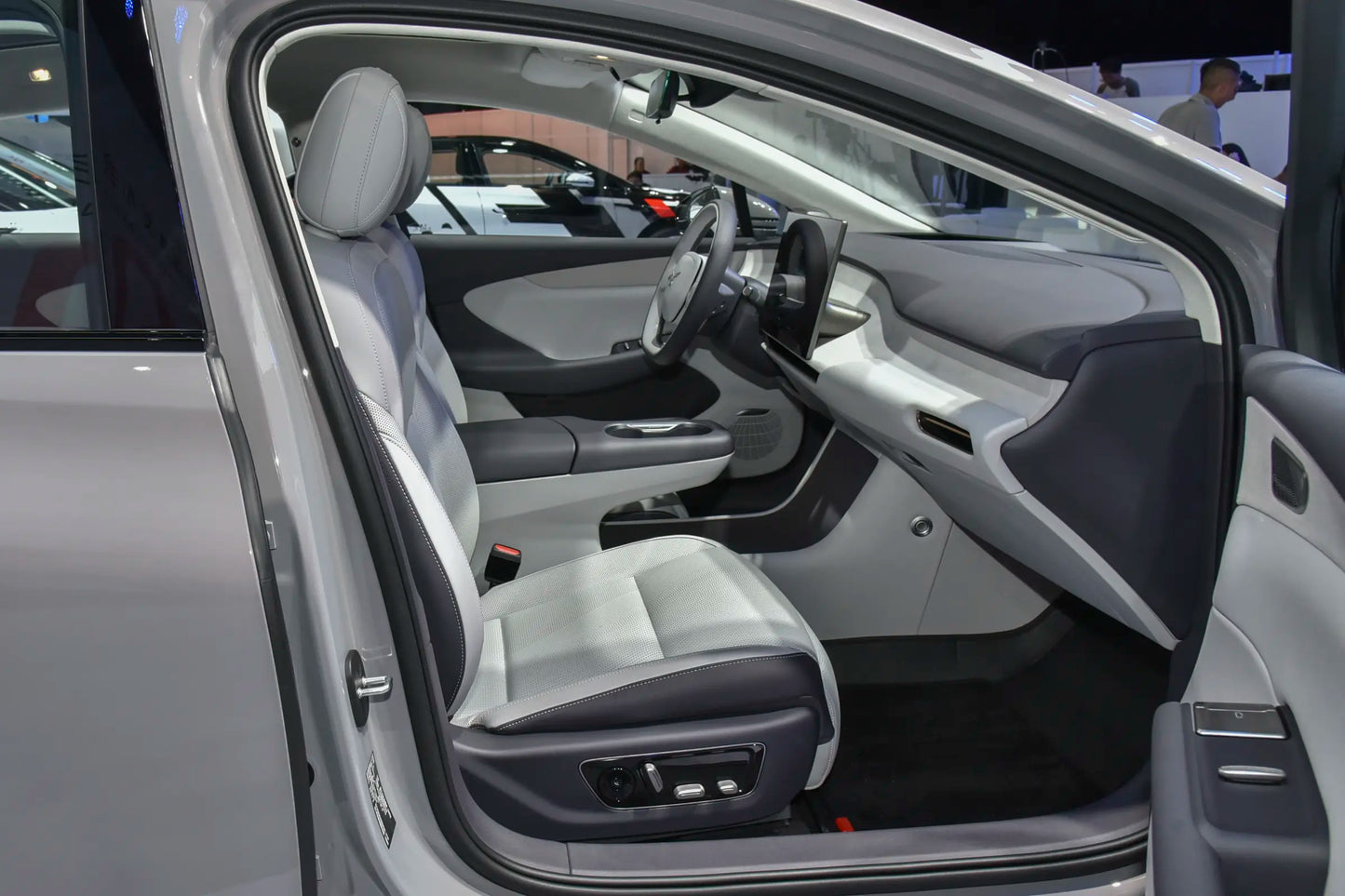
Practical space and rear-seat comfort. The 2900mm wheelbase delivers generous rear legroom with a nearly flat rear floor and minimal transmission tunnel hump. The variable 477-859L boot plus the 34L front trunk handle family luggage needs with ease.
Improvement 1
Software and infotainment stability. The system lags in some scenarios and navigation drifts in low-signal environments such as tunnels, one of the more frequently cited owner complaints that requires continued OTA iteration.
Improvement 2
Trim-level differences in charging specs. The 550 version is built on a 400V platform and needs about 20 minutes for a 10%-80% charge, a clear gap from the 12 minutes of the 900V versions in the same lineup, meaning longer waits on long trips.
Improvement 3
Everyday usability of the flush door handles. In low temperatures and ice, they may pop out slowly or fail to pop out at all, requiring manual clearing; the electronic mechanism after a power loss and its repair economics also carry concerns.
Test scenario 1: Cold-weather range. Owner-measured data shows range at full charge may drop to roughly 230km in winter conditions, with winter consumption around 21kWh/100km, a marked gap versus the 550km CLTC figure. Source: owner reviews (2025 550 Advanced Edition, Changchun, 3,000km odometer).
Test scenario 2: Mild-weather range and consumption. Owners report around 11.0kWh/100km in spring conditions with a measured full-charge range of roughly 650km, a high achievement rate against the rated figure. Source: owner reviews (2025 750 Advanced Edition, Beijing, 5,000km odometer).
7. Real Owner Reviews
Space
Summary: Owners widely regard the rear space enabled by the 2900mm wheelbase as a class-above feature, with load flexibility that fits family use well, while the body size remains easy to handle in narrow streets and mechanical parking spaces.
"Space exceeds expectations. The 2900mm wheelbase gives really generous rear legroom — at 1.8m tall I still have two fists of clearance, and my parents find the rear seats comfortable."
Chassis and handling
Summary: With rear drive and double wishbones, owners rate the chassis positively overall, describing steering and lane-change stability as solid and characteristic of a traditional manufacturer's tuning.
"Traditional manufacturers feel like they tune the chassis more carefully! Steering is silky smooth! Corners give you a reassuring feeling — extremely stable!"
Range and charging
Summary: Most owners recognise the rated range as honest and repeatable in mild weather, but are clearly aware of winter range loss, a common trait of LFP batteries.
"What I like most is the range. After repeated testing, 700km in summer is no problem. I mostly commute morning and evening, 80km round trip, and basically the range drops as much as I actually drive — very honest."
Exterior and interior
Summary: Looks and interior quality are frequent praise points, with the fastback shape, koi-motif tail lights and two-tone cabin gaining recognition, along with the sense of openness from the glass roof.
"Getting inside, the two-tone interior quality is maxed out, and the moment the 65-inch AR-HUD comes on it feels like sitting in a sci-fi movie cockpit."
Intelligence and connectivity
Summary: Driver assistance earns credit for practicality in congested commuting, while infotainment smoothness and positioning accuracy are repeatedly cited as weak points.
"What I'm least satisfied with is the intelligence side — the system sometimes stutters, and navigation positioning is sometimes off in tunnels. I hope they improve it."
Flush door handles
Summary: Flush door handles are listed by several owners as their least favourite aspect, centring on freezing in cold weather, a usability barrier and repair costs.
"Flush door handles — the Tiangong 05's handles freeze easily in low temperatures, have a usability barrier, may affect rescue if power is lost in a crash, and cost more to repair due to their complex structure."
Smart key and app
Summary: Phone key compatibility and app stability are real day-to-day pain points, with some Android devices not yet supporting NFC keys, leaving owners reliant on the physical card.
"Anyway, the app sometimes doesn't work, and Oppo still has no NFC key, so you have to carry the physical card — and only one of them, which is really inconvenient. Afraid of losing it!"
8. References
- Global Petrol Prices (2025). World Average Electricity Prices, USD / kWh. Retrieved from https://www.globalpetrolprices.com/electricity_prices/
- IEA. Global EV Policy Explorer. Retrieved from https://www.iea.org/data-and-statistics/data-tools/global-ev-policy-explorer
- Hongqi Official Website. Retrieved from https://www.hongqi-auto.com/
- FAW Hongqi Tiangong 05 Official Product Page. Retrieved from https://www.hongqi-auto.com/