Li Auto L7 2025 Pro Smart Refresh Vehicle Profile: Family 5-Seat EREV with Air Suspension

1. Verdict: Three Highlights and Three Caveats
Three Highlights:
- 51 kWh big battery, greatly improved pure-EV range: The 2026 Li Auto L6 Ultra raises its battery from 36.8 kWh to 51 kWh, delivering a CLTC pure-electric range of 300 km (about 234 km under WLTC). City commuting feels almost like driving a pure EV, and most users can cover a week of urban electric driving on a single charge.
- Faster charging, 20% to 80% in about 12 minutes: With the upgraded high-power charging, the battery goes from 20% to 80% in roughly 12 minutes — a big improvement over the previous model’s ~20 minutes. Range anxiety on long trips eases, and with the longer pure-EV range, everyday use comes close to a pure EV experience.
- Mach M100 ADAS chip, class-leading computing power: The 2026 L6 standardizes on the in-house Mach M100 chip with 1,280 TOPS of computing power, and can be upgraded to a dual-chip 2,560 TOPS setup with four LiDAR units. This leaves ample headroom for future OTA iteration, letting high-end features like urban NOA run smoothly.
Three Caveats:
- Combined range actually dropped: To fit the bigger battery, the fuel tank shrank from 60 L to 50 L and curb weight rose, so WLTC combined range fell from about 1,160 km on the old model to 1,040 km. Drivers who frequently travel long distances may find usable flat-tank range reduced.
- Some headline features need optional extras: The 2026 model drops the Pro/Max split for a single Ultra trim, but the dual-Mach chip, four-LiDAR setup, rear entertainment screen, and front zero-gravity seats are all paid options. A fully loaded car costs noticeably more than the base price.
- No air suspension: By product positioning, the L6 uses CDC adaptive damping rather than air suspension, so the ride height cannot be adjusted. Although the new model upgrades the rear suspension from stamped steel to aluminium (improving handling), its ride quality still lags the air-suspension L8 and L9.
2. Model Overview: Market Position and Brand Background
The Li Auto L6 is a mid-to-large five-seat EREV SUV aimed at the family market. Launched in 2024, it performed strongly and had accumulated close to 400,000 deliveries by mid-2026, making it a key volume model for the brand. The 2026 model is a mid-cycle refresh that pulls down flagship L9 technology through a larger battery, faster charging, an advanced ADAS chip, and a redesigned cockpit.
Positioned around “precise cost control + leading smart experience + solid safety,” the key upgrades of the 2026 L6 include a 51 kWh battery, a 29-inch seamless panoramic display, a Qualcomm Snapdragon 8797 cockpit chip, and an optional four-LiDAR Mach ADAS system. Powertrain-wise it keeps the 1.5T four-cylinder range extender (model L2E15M) with front and rear electric motors, standard CDC adaptive damping, and a front double-wishbone + rear five-link suspension.
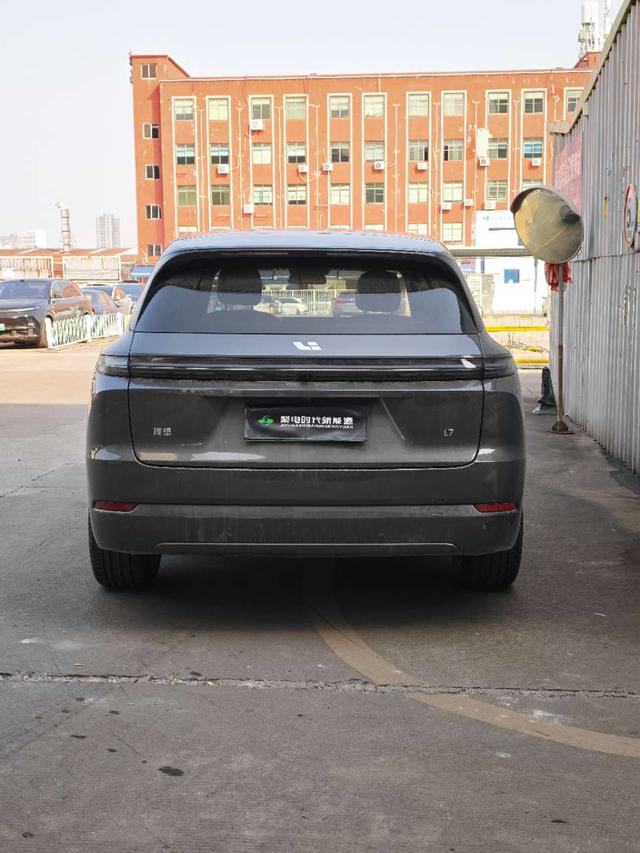
In design, the 2026 L6 keeps the clean, tech-forward Li Auto family look. The small instrument cluster is removed; information is now shown via AR-HUD and the 29-inch panoramic display, giving a simpler cabin. New paint options such as Dune Yellow and Sky Cyan are offered, plus a black sport package, and the rear number plate has moved up to the tailgate.
You can get a full visual walkthrough of the exterior and interior via this video:
3. Basic Information (Main Vehicle Specifications)
| Category | Item | Specification |
|---|---|---|
| Model & Powertrain | Model | Li Auto L6 2026 Ultra |
| Manufacturer | Li Auto | |
| Class | Mid-to-large SUV | |
| Powertrain | EREV (Extended-Range Electric Vehicle) | |
| Engine & Motors | Range extender | 1.5T, 154 hp (L2E15M) |
| Max power | 300 kW (dual motors) | |
| Max torque | 529 N·m | |
| 0–100 km/h | 5.4 s | |
| Range & Charging | CLTC pure EV range | 300 km (WLTC: 234 km) |
| Combined range | approx. 1,250 km (CLTC) | |
| Battery capacity | 51 kWh (ternary lithium, Sunwoda) | |
| Energy consumption | approx. 22.3 kWh/100km | |
| Fast charging (20%–80%) | 12 min | |
| Dimensions & Space | L × W × H | 4935 × 1960 × 1735 mm |
| Wheelbase | 2920 mm | |
| Seating | 5 seats | |
| Top speed | 200 km/h | |
| Warranty & Info | Warranty | 5 years or 100,000 km |
| Launch date | July 2026 |
Maintenance and after-sales: The third-generation range extender enables a long service interval of 3 years or 30,000 km — comparable to a pure EV — keeping routine maintenance infrequent and affordable. Li Auto has built more than 4,000 supercharger stations across 31 provinces and 290 cities, providing a broad charging network.
Subsidies and policies: Purchase incentives vary by country. Below is an overview of selected markets (source: IEA Global EV Policy Explorer):
| Country / Region | Subsidy highlights |
|---|---|
| China | Exemption from vehicle purchase tax; some regions offer purchase/swap subsidies |
| Europe (selected countries) | Tax relief and purchase subsidies for EV/PHEV models in some markets |
| North America (selected states) | Eligible PHEV models may qualify for federal tax credits |
Note: Regional subsidy policies change with fiscal cycles — always verify the latest official rules in your target market before purchase.
4. Ownership Costs and Service
- Warranty policy: Vehicle warranty of 5 years or 100,000 km (whichever comes first), with the battery-electric powertrain (battery, motor, and control units) covered for 8 years or 160,000 km for first owners.
- Maintenance cost: Thanks to the long range-extender service interval (3 years or 30,000 km of extender operation), routine upkeep focuses on brakes, tyres, and filters — infrequent and cost-effective.
- Charging cost estimate: At the global average residential electricity price of about USD 0.17/kWh (source: Global Petrol Prices) and 22.3 kWh/100km, each 100 km in electric mode costs roughly USD 3.79 — far below a comparable petrol SUV. With a home charger, overnight off-peak charging lowers the cost further. On long trips when the range extender engages, depleted-mode consumption is about 7.1 L/100 km, which remains competitive.
Subsidies and policies: See the subsidy table above; confirm the policy in effect at your place of purchase.
5. Competitor Comparison
Introduction: Choosing among four EREV mid-to-large SUVs
This document compares the Li Auto L6 2026 Ultra against three rivals so overseas buyers can make an informed choice. Four key observations:
- Pure EV range and battery size: The L6 leads with a 51 kWh battery and 300 km CLTC pure EV range; the AITO M6 has 235 km and the Zhijie R7 251 km, while the IM LS6 tops the group with a 66 kWh battery and 450 km of pure EV range.
- Charging speed differences: The L6 and IM LS6 both support 20%–80% fast charging (L6 about 12 min, LS6 about 16 min), while the M6 and R7 use standard 400V-class fast charging with more modest replenishment.
- Different performance profiles: The L6 (300 kW, 5.4 s) and AITO M6 (345 kW, 5.2 s) are dual-motor AWD with strong performance; the IM LS6 (230 kW, 6.4 s) and Zhijie R7 (227 kW, 7.4 s) are rear-motor single-motor setups leaning toward range and efficiency.
- ADAS approaches diverge: The L6 uses the self-developed Mach M100 chip (1,280 TOPS), the M6 and R7 run Huawei ADS (the R7 with a 192-line LiDAR), and the IM LS6 uses an NVIDIA Orin-X — each offering a different high-level assisted-driving path.
| Metric | Li Auto L6 2026 Ultra | AITO M6 2026 EREV Max AWD | IM LS6 2026 EREV 66 Max | Zhijie R7 2026 EREV Max (192-line LiDAR) |
|---|---|---|---|---|
| Class | Mid-to-large SUV | Mid-to-large SUV | Mid-to-large SUV | Mid-to-large SUV |
| Powertrain | EREV | EREV | EREV | EREV |
| Launch date | 2026.07 | 2026.08 | 2025.09 | 2025.08 |
| CLTC pure EV range | 300 km | 235 km | 450 km | 251 km |
| WLTC pure EV range | 234 km | 200 km | 360 km | 201 km |
| Combined range | approx. 1250 km | — | 1502 km | 1570 km |
| Battery capacity | 51 kWh | 37 kWh | 66 kWh | 37 kWh |
| Battery type | Ternary lithium | LFP | Ternary lithium | LFP |
| Energy consumption | 22.3 kWh/100km | 19.9 kWh/100km | 17.3 kWh/100km | 18.5 kWh/100km |
| Max power | 300 kW | 345 kW | 230 kW | 227 kW |
| Max torque | 529 N·m | 478 N·m | 430 N·m | 320 N·m |
| 0–100 km/h | 5.4 s | 5.2 s | 6.4 s | 7.4 s |
| Top speed | 200 km/h | 200 km/h | 200 km/h | 180 km/h |
| Dimensions (mm) | 4935×1960×1735 | 4960×1985×1736 | 4937×1988×1673 | 4982×1981×1650 |
| Wheelbase (mm) | 2920 | 2950 | 2970 | 2820 |
| Seating layout | 5-door 5-seat | 5-door 5-seat | 5-door 5-seat | 5-door 5-seat |
| Fast charge range | 20%–80% | 30%–80% | 10%–80% | 30%–80% |
| HV platform | 800V | 400V | 800V | — |
| Range extender | 1.5T 154 hp | 152 hp | 1.5T 156 hp | 1.5T 188 hp |
| Motor output (hp) | 408 | 469 | 313 | 309 |
| Drivetrain | Dual-motor AWD | Dual-motor AWD | Rear-motor RWD | Rear-motor RWD |
| Core ADAS scheme | Mach M100 1280 TOPS | Huawei ADS | Orin-X 254 TOPS | Huawei ADS + 192-line LiDAR |
| Body structure | Unibody | Unibody | Unibody | Body-on-frame |
Note: Competitor data sourced from publicly available specifications. Cells marked “—” indicate data not confirmed.
Summary: The table makes the differences clear. The 2026 Li Auto L6 Ultra upgrades in three targeted directions — battery capacity, charging speed, and self-developed high-end ADAS. Its 51 kWh battery plus 12-minute fast charging bring everyday commuting close to a pure-EV experience, while the Mach M100 chip reserves ample headroom for assisted-driving updates, making it a well-balanced family EREV. The AITO M6 and Zhijie R7 lean on the Huawei ADS ecosystem and LiDAR for mature smart driving; the IM LS6 uses a 66 kWh battery and 800V platform to champion ultra-long pure-EV range. Buyers should weigh their priorities around pure-EV range, charging speed, ADAS preference, and whether they need AWD.
6. Expert Test Drive: Pros and Cons
Compiled from third-party professional media road tests and official launch information.
Pros:
- Targeted chassis upgrade: The rear suspension moves from stamped steel to aluminium, and the dampers are upgraded from single-valve to dual-valve CDC with independently controlled compression and rebound. Body roll in corners and lane changes drops noticeably, and the previous vague steering feel is resolved.
- Smooth smart-driving experience: Standard Mach M100 chip (1,280 TOPS) handles urban NOA, unprotected left turns, and 150-metre follow-back parking with ease, with headroom left for OTA evolution.
- Flagship-level electric experience: With the 51 kWh battery, CLTC pure-EV range reaches 300 km, letting city commuters use it almost like a pure EV, while the 12-minute fast charge eases range anxiety and highlights running-cost advantages.
Cons:
- Combined range drop: The fuel tank shrank from 60 L to 50 L, lowering WLTC combined range from 1,160 km to 1,040 km — long-distance full-tank range actually dropped.
- No air suspension: No air suspension means the ride height cannot be adjusted, so off-road capability and air-suspension ride quality still trail the L8 and L9.
- Paid optional extras: The dual-Mach chip, four-LiDAR setup, and rear entertainment screen are paid extras, so a fully spec'd car costs notably more than the base.
Test scenarios:
- Pure-EV range test: Officially rated at 300 km CLTC pure-EV range (about 234 km WLTC), the L6 covers typical city commuting in electric mode, supporting several days of urban driving per charge (source: Li Auto official release, vehicle config platform).
- Fast-charging test: On a compatible fast charger, the battery charges from 20% to 80% in about 12 minutes — a clear improvement over the previous ~20 minutes, boosting long-distance top-up efficiency (source: Li Auto official release).
7. Real Owner Reviews
Positive feedback:
- Seat comfort and ride: Comfortable seats and a well-tuned suspension earn praise across the whole family; the cabin feels roomy and uncrowded. “Owners say the seats are genuinely comfortable — parents compare the back row to a soft sofa; even with a child seat installed, two passengers still sit comfortably alongside.”
- Smart driving and chassis: NOA assisted driving is smooth with natural lane changes; the CDC chassis switches confidently between sport and comfort modes. “Owners report highway NOA works well, with fluid auto lane changes and turn-signal operation; on speed bumps and rough roads, sport mode gives firm support while comfort mode stays soft, and rear passengers don't feel dizzy.”
- Running cost: With a home charger, electric driving is extremely cheap, and energy consumption is competitive in class. “One owner notes that home electricity costs about 0.6 yuan/kWh, bringing pure-electric running to barely over 0.1 yuan per km, and the car can even keep the AC on while idling — far cheaper than a petrol car.”
Negative feedback:
- Range-extender noise: Under hard acceleration or in depleted-battery mode, the range extender's noise and vibration are relatively noticeable, contrasting sharply with the silence of pure-EV mode. “The engine noise is louder than I imagined — especially under hard acceleration, that roar contrasts badly with how quiet it is in electric mode.”
- Range achievement and combined range: Real-world range trails the CLTC figure, shrinking noticeably with summer AC; and the bigger battery's smaller tank means long-distance combined range is actually worse than before. “Stated at 212 km, only in spring and autumn without AC did I reach over 180 km; with summer AC on it dropped to around 150 km. After the 51 kWh battery, the tank got smaller and full-tank long-distance range actually fell by over a hundred kilometres.”
8. References
- Global Petrol Prices (2026). World Average Electricity Prices, USD / kWh. Retrieved from https://www.globalpetrolprices.com/electricity_prices/
- IEA. Global EV Policy Explorer. Retrieved from https://www.iea.org/data-and-statistics/data-tools/global-ev-policy-explorer
- Li Auto official website and press release (Li Auto L6 launch)
- Li Auto L6 2026 Ultra specifications (vehicle comparison platform)
Disclaimer: This profile is for reference only. Actual specifications and configurations are subject to the vehicle sold at local dealerships and the latest official information. Before importing, verify the certification, emissions, and subsidy policies of your target market.