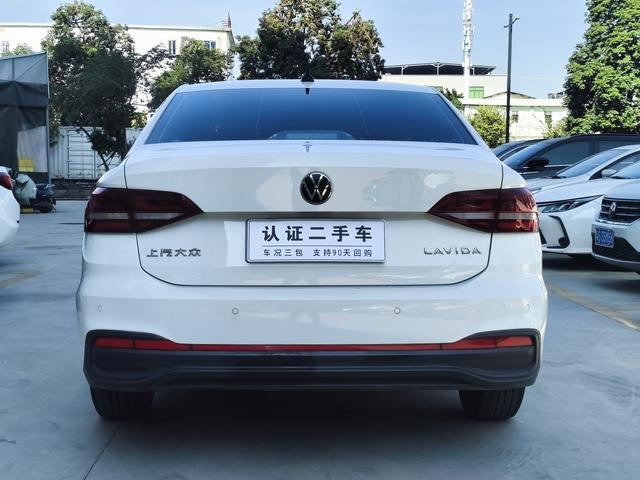
Volkswagen Lavida XR 2026 Vehicle Profile: Best Budget Compact Sedan with 5.98L/100km Fuel Economy

1. Verdict: Three Highlights and Three Caveats
- A proven powertrain keeps running costs predictable: The 1.5L naturally aspirated engine paired with a 6-speed conventional automatic has been on the market for years. It is simple, has few failure points, and makes fuel, servicing and repair costs easy to plan for.
- Outstanding fuel economy, especially on the highway: The WLTC combined figure is 5.98L/100km. In real use, highway cruising regularly returns just over 5L/100km, while congested city driving sits around 7L/100km, placing this car firmly in the economy class for a compact family sedan.
- Solid German chassis feel and safety fundamentals: The MacPherson front and torsion-beam rear setup is tuned for stability, and the car holds its line at highway speed. Six airbags, stability control and tyre-pressure monitoring are standard, so passive safety has not been cut.
- Caveat 1: Modest power reserves: At 81kW and 141N·m, output is merely adequate today. Pulling away and mid-range acceleration need early throttle input, and there is little margin when climbing fully loaded or overtaking at highway speed.
- Caveat 2: Interior materials are mostly hard plastic: The dashboard and door panels rely heavily on hard plastics. Touch and visual quality are basic, and there is less of a premium surprise than some same-price domestic rivals offer.
- Caveat 3: Rear space and storage are not generous: At 1740mm wide, the car feels tight across the rear bench with three aboard, and the front centre armrest bin is small. Families who regularly travel full need to weigh this up.
2. Model Overview
The Lavida is SAIC Volkswagen's core product in China's mainstream family sedan market. Since its launch in 2008, the Lavida family has passed five million cumulative sales, which is where the "national family sedan" label comes from. The Lavida XR is the more accessible member of the family. It is built on Volkswagen's MQB platform and shares production and quality control with the main Lavida line, but with a more compact body and a lower price threshold, its job is to make a Volkswagen a realistic first car for more buyers.
In design terms, the Lavida XR adopts a star-pattern front grille with an enlarged aperture and diamond-like elements, matched to sharp full-LED headlights. The overall look is younger and more purposeful than older Volkswagen family sedans. The side profile is clean, with a shoulder line running from the front wing to the tail lamps, and the three-box proportions are conventional, the type that ages well rather than shouting for attention.
In market positioning, the XR targets the entry end of the compact sedan segment, attracting first-time buyers with limited budgets who still value brand reliability and resale value. SAIC Volkswagen supports the car with a complete after-sales system, and the dense national dealer network gives owners an advantage in parts availability and service convenience. For buyers who put peace of mind, fuel economy and resale value first, the XR is a decision that does not demand much homework.
You can explore the exterior and interior design of this model in the following video:
Volkswagen Lavida XR 2026 walkaround and interior review
3. Basic Specifications
- Model: Lavida 2026 XR 1.5L Distinguished New Wish Edition
- Powertrain type: Petrol
- Engine: 1.5L naturally aspirated inline four (DRZ), 110 hp
- Transmission: 6-speed conventional automatic
- Fuel consumption: 5.98L/100km (WLTC combined)
- Body dimensions: 4561 × 1740 × 1470mm
- Wheelbase: 2651mm
- Seating: 5
- Fuel tank: 42.5L
- Top speed: 185km/h
- Kerb weight: 1250kg
Maintenance and manufacturer service: The Lavida XR has a service interval of 10,000km or one year, and basic servicing sits at the lower end of its class. Volkswagen's China dealer network is extensive and parts supply is mature, so routine maintenance and repair are easy to arrange. The vehicle warranty is 3 years or 100,000km.
Incentive policies (source: IEA Global EV Policy Explorer):
| Country / Region | Policy direction for petrol and low-emission vehicles | Notes |
|---|---|---|
| United States | Purchase credits focused on electric vehicles | Conventional petrol compact sedans receive essentially no purchase subsidy |
| Germany | Purchase subsidies and tax benefits for electric vehicles | No direct purchase subsidy for petrol cars |
| France | Subsidies focused on battery-electric and low-emission vehicles | Not applicable to petrol cars |
| Thailand | Excise duty incentives for electric vehicles | Petrol cars are taxed by engine displacement |
4. Ownership Costs and Service
The Lavida XR carries a 3-year or 100,000km vehicle warranty. Routine servicing centres on oil and filter changes, and the cost per visit is low for its class, with cumulative maintenance to 60,000km amounting to roughly 700 USD.
Charging cost in this case corresponds to fuel cost. At the WLTC combined figure of 5.98L/100km, and using the world average petrol price with an annual mileage of 15,000km, yearly fuel spending sits in the economical band for a compact family sedan. At steady highway cruising the figure falls further, reducing annual outlay accordingly.
On incentives, this is a petrol model, so most markets do not support it through purchase subsidies. Acquisition cost is driven mainly by dealer discounts and finance programmes.
5. Competitor Comparison
In the entry compact sedan segment, the cars most often cross-shopped against the XR are domestic family sedans such as the Emgrand, the Venucia D60 and the Roewe i6. Each makes a different trade-off:
- First, on output: The Roewe i6 leads with a 95kW 1.5L engine, followed by the Emgrand and Venucia D60 at 88kW and 90kW. The Lavida XR's 81kW is the lowest of the group, but it pairs with a 6-speed conventional automatic whose shift smoothness and durability have a stronger reputation.
- Second, on size: The Emgrand leads with a 4815mm body and 2755mm wheelbase. At 4561mm long with a 2651mm wheelbase, the Lavida XR is the most compact of the four, which pays back in easier parking around town.
- Third, on fuel use: All four sit in a narrow 5.9 to 6.3L/100km band. The Lavida XR's 5.98L is mid-pack, and the running-cost gap between them in daily use is not significant.
- Fourth, on equipment: The Roewe i6 offers a 360-degree camera, L2 driver assistance, a 15.6-inch 2.5K centre screen and heated and ventilated front seats, a clearly denser specification. The Lavida XR focuses on reversing camera, single sunroof and tyre-pressure warning, taking the adequate rather than abundant approach.
Specification Comparison Table
| Item | Lavida 2026 XR 1.5L Distinguished New Wish Edition | Emgrand 2026 5th Gen 1.5L CVT | Venucia D60 2023 PLUS 1.6L XE CVT | Roewe i6 2026 1.5L |
|---|---|---|---|---|
| Engine | 1.5L 110hp L4 | 1.5L 120hp L4 | 1.6L 122hp L4 | 1.5L 129hp L4 |
| Max power | 81kW (110PS) | 88kW (120PS) | 90kW (122PS) | 95kW (129PS) |
| Max torque | 141N·m | 150N·m | 155N·m | 158N·m |
| Transmission | 6-speed automatic | CVT (8 simulated ratios) | CVT | CVT |
| Dimensions L×W×H | 4561×1740×1470mm | 4815×1885×1480mm | 4761×1803×1487mm | 4767×1828×1498mm |
| Wheelbase | 2651mm | 2755mm | 2701mm | 2755mm |
| Body style | 4-door 5-seat sedan | 4-door 5-seat sedan | 4-door 5-seat sedan | 4-door 5-seat sedan |
| Seating | 5 | 5 | 5 | 5 |
| Top speed | 185km/h | 170km/h | 180km/h | 180km/h |
| WLTC combined fuel use | 5.98L/100km | 6.25L/100km | 6.18L/100km | 6.15L/100km |
| Kerb weight | 1250kg | 1355kg | 1229kg | 1250kg |
| Fuel tank | 42.5L | 58.0L | 50.0L | 50.0L |
| Boot volume | 498L | 610-1779L | 525L | 545-1253L |
| Engine code | DRZ | BHE15-CFN | HR16 | 15FCD |
| Displacement | 1498mL | 1499mL | 1598mL | 1495mL |
| Aspiration | Naturally aspirated | Naturally aspirated | Naturally aspirated | Naturally aspirated |
| Drive layout | Front-engine front-wheel drive | Front-engine front-wheel drive | Front-engine front-wheel drive | Front-engine front-wheel drive |
| Front suspension | MacPherson independent | MacPherson independent | MacPherson independent | MacPherson independent |
| Rear suspension | Torsion beam semi-independent | Torsion beam semi-independent | Torsion beam semi-independent | Torsion beam semi-independent |
| Front brakes | Ventilated discs | Ventilated discs | Ventilated discs | Ventilated discs |
| Rear brakes | Solid discs | Solid discs | Solid discs | Solid discs |
| Parking brake | Electronic | Electronic | Electronic | Electronic |
| Front tyres | 205/55 R16 | 215/60 R16 | 195/60 R16 | 205/50 R17 |
| Rear tyres | 205/55 R16 | 215/60 R16 | 195/60 R16 | 205/50 R17 |
| Spare wheel | Space-saver | Space-saver | Space-saver | Space-saver |
| ABS | Standard | Standard | Standard | Standard |
| Brake force distribution | Standard | Standard | Standard | Standard |
| Brake assist | Standard | Standard | Standard | Standard |
| Traction control | Standard | Standard | Standard | Standard |
| Stability control | Standard | Standard | Standard | Standard |
| Lane departure warning | — | — | Standard | Standard |
| Forward collision warning | — | — | Standard | Standard |
| Autonomous braking | Standard | — | — | Standard |
| Tyre pressure monitoring | Warning | Warning | Warning | Warning |
| Driver assistance camera | Reversing camera | Reversing camera | Reversing camera | 360-degree camera |
| Cruise system | Cruise control | Cruise control | Cruise control | Full-speed adaptive cruise |
| Assistance level | — | — | — | L2 |
| Auto hold | Standard | Standard | Standard | Standard |
| Hill-start assist | Standard | Standard | Standard | Standard |
| Drive modes | Sport / Eco | Eco | — | Eco |
| Sunroof | Single sunroof | — | — | Single sunroof |
| Steering wheel adjustment | Tilt+reach / multi-function | Tilt+reach / multi-function | Tilt / multi-function | Tilt / multi-function |
| Gear selector | Mechanical lever | Mechanical lever | Mechanical lever | Electronic column stalk |
| Instrument cluster | Full digital | Digital combi | Part-digital | Full digital |
| Centre screen size | 8-inch | 10.2-inch | 10.1-inch | 15.6-inch |
| Centre screen resolution | — | — | — | 2.5K |
| Satellite navigation | — | Standard | — | Standard |
| Roadside assistance | — | — | — | Standard |
| Phone mirroring | CarPlay / HUAWEI HiCar | HUAWEI HiCar / Carlink / Flyme Link | — | HUAWEI HiCar / Carlink |
| Connected services | — | Standard | — | Standard |
| 4G/5G connectivity | — | 4G | — | 4G |
| OTA updates | — | Standard | — | Standard |
| Voice control | Standard | Standard | — | Standard |
| Wake-word-free voice | — | Standard | — | Standard |
| Zone-based voice recognition | — | Dual zone | — | Dual zone |
| Continuous voice recognition | — | Standard | — | Standard |
| Wi-Fi hotspot | — | Standard | — | Standard |
| App store | Standard | Standard | — | Standard |
| Seat upholstery | Fabric | Leatherette | Leatherette | Leather |
| Driver seat power adjustment | — | — | — | Standard |
| Front seat heating | — | — | — | Standard |
| Front seat ventilation | — | — | — | Standard |
| Front seat memory | — | — | — | Driver side |
| Driver seat adjustment | Slide/recline/height/headrest | Slide/recline/height/headrest | Slide/recline/height/headrest | Slide/recline/height/headrest |
| Front/rear armrests | Front | Front/rear | Front | Front/rear |
| Rear seat folding | Full fold | Full fold | — | Full fold |
| Keyless entry | Front | — | — | Front |
| Keyless start | Standard | Standard | — | Standard |
| Built-in dashcam | — | — | — | Standard |
| Wireless phone charging | — | — | Standard | Standard (50W front) |
| USB/Type-C ports | 1 front | 1 front / 1 rear | 1 front | 2 front / 1 rear |
| USB/Type-C power | — | 7.5W front / 27W rear | — | 15W front / 15W rear |
Summary: If the need is commuting plus the occasional long trip, with peace of mind, fuel economy and resale value at the top of the list, the Lavida XR's proven powertrain and brand system are its strengths. If equipment density, infotainment and rear space matter more, the Emgrand and Roewe i6 deliver more visible and tangible features for the same budget. The deciding factor is not which numbers are higher, but which dimensions the buyer ranks first.
6. Expert Test Drive
- Pro 1: Excellent high-speed stability — The Lavida XR's chassis tuning continues Volkswagen's long-standing solidity. It holds its line at cruising speed, and does not feel floaty in crosswinds or when passing large vehicles (source: aggregated real-world tests and owner feedback from Pacific Auto).
- Pro 2: Consistent, predictable fuel economy — With a WLTC combined figure of 5.98L/100km, measured data shows around 6.5 to 8L/100km in congested city traffic and about 5L/100km at highway cruise. Variation is small, making running costs easy to estimate (source: published real-world test data from Pacific Auto).
- Pro 3: Mature powertrain, convenient servicing — The 1.5L naturally aspirated engine with a 6-speed conventional automatic has served in the market for years. Parts supply is mature, the service network is wide, and uncertainty over long-term ownership is low (source: technical analysis from Automotive Business Review).
- Improvement area 1: Weak from standstill and in the mid-range — The 1.5L naturally aspirated engine responds gently from a standstill, and power builds only after sustained throttle. Overtaking needs a longer window.
- Improvement area 2: High proportion of hard plastics inside — The dashboard and door panels are mainly hard plastic, which feels basic and trails the interior quality of some same-price domestic rivals.
- Improvement area 3: Modest equipment level — A reversing camera, cruise control and a single sunroof form the baseline, with no 360-degree camera, L2 driver assistance or large centre screen among today's mainstream smart features.
- Measured scenario 1: City commuting fuel use — In congested urban conditions, measured consumption clusters between 6.5 and 8L/100km, averaging about 7L/100km (source: published real-world test data from Pacific Auto).
- Measured scenario 2: Highway cruising fuel use — At steady highway cruising speed, measured consumption is around 5 to 5.5L/100km, the car's most economical operating window (source: aggregated owner measurements).
7. Real Owner Reviews
Positive 1: Low fuel consumption
Summary: Many owners describe fuel economy as the biggest surprise, with low figures achievable both on the highway and in the city, keeping long-term costs manageable.
"The thing I like most about this car is the fuel consumption, it really is low, 5.1 on the highway and about 7 around town."
Positive 2: Stable chassis and good road manners
Summary: Owners broadly agree on the car's high-speed stability, and regard it as one of the more solid options at its price.
"After a month of driving the chassis feels very planted, and it handles corners well too." / "The car drives very steadily, more stable than Japanese, Korean and domestic cars at the same price."
Positive 3: Adequate space and equipment for family use
Summary: Most owners find the space sufficient for commuting and family use, and consider the equipment basic but complete.
"Space is enough, headroom is fine, at 1.75m the driving position is just right. The rear space is big enough." / "What I'm most satisfied with is the equipment, it has basically everything it should."
Negative 1: Weak power
Summary: Insufficient power from a standstill and when overtaking is the most frequently raised issue, with owners describing the launch as sluggish.
"The power is weak, it roars at the start but barely moves." "The power is a bit lacking, overtaking is hard work."
Negative 2: Plastic-heavy interior and limited infotainment
Summary: Hard interior materials and limited screen functionality are the other main focus of owner criticism.
"The interior feels quite plasticky, but at this price it's already decent." "The infotainment has been stripped back, it doesn't feel premium, lots of plastic ... the big screen is just for show."
8. References
- Global Petrol Prices (2025). World Average Electricity Prices, USD / kWh. Retrieved from https://www.globalpetrolprices.com/electricity_prices/
- IEA. Global EV Policy Explorer. Retrieved from https://www.iea.org/data-and-statistics/data-tools/global-ev-policy-explorer
- SAIC Volkswagen. Lavida XR model page and specifications. Retrieved from https://www.svw-volkswagen.com/
- Pacific Auto. Lavida XR fuel consumption real-world test. Retrieved from https://www.pcauto.com.cn/gl/255450.html
- Automotive Business Review. What makes the Lavida XR混乱. Retrieved from https://m-new.inabr.com/news/17331