Volkswagen Magotan 2026 380TSI Vehicle Profile: Best 220hp Midsize Sedan with L2 Driver Assist and Panoramic Sunroof

1. Verdict: Three Highlights and Three Caveats
A punchy 2.0T high-output engine, among the class leaders The 380TSI pairs a 2.0T turbocharged engine producing 220hp and 350N·m with a 7-speed wet dual-clutch transmission. The official 0-100km/h time is 7.3 seconds, leaving plenty in reserve for city pull-aways and highway overtaking.
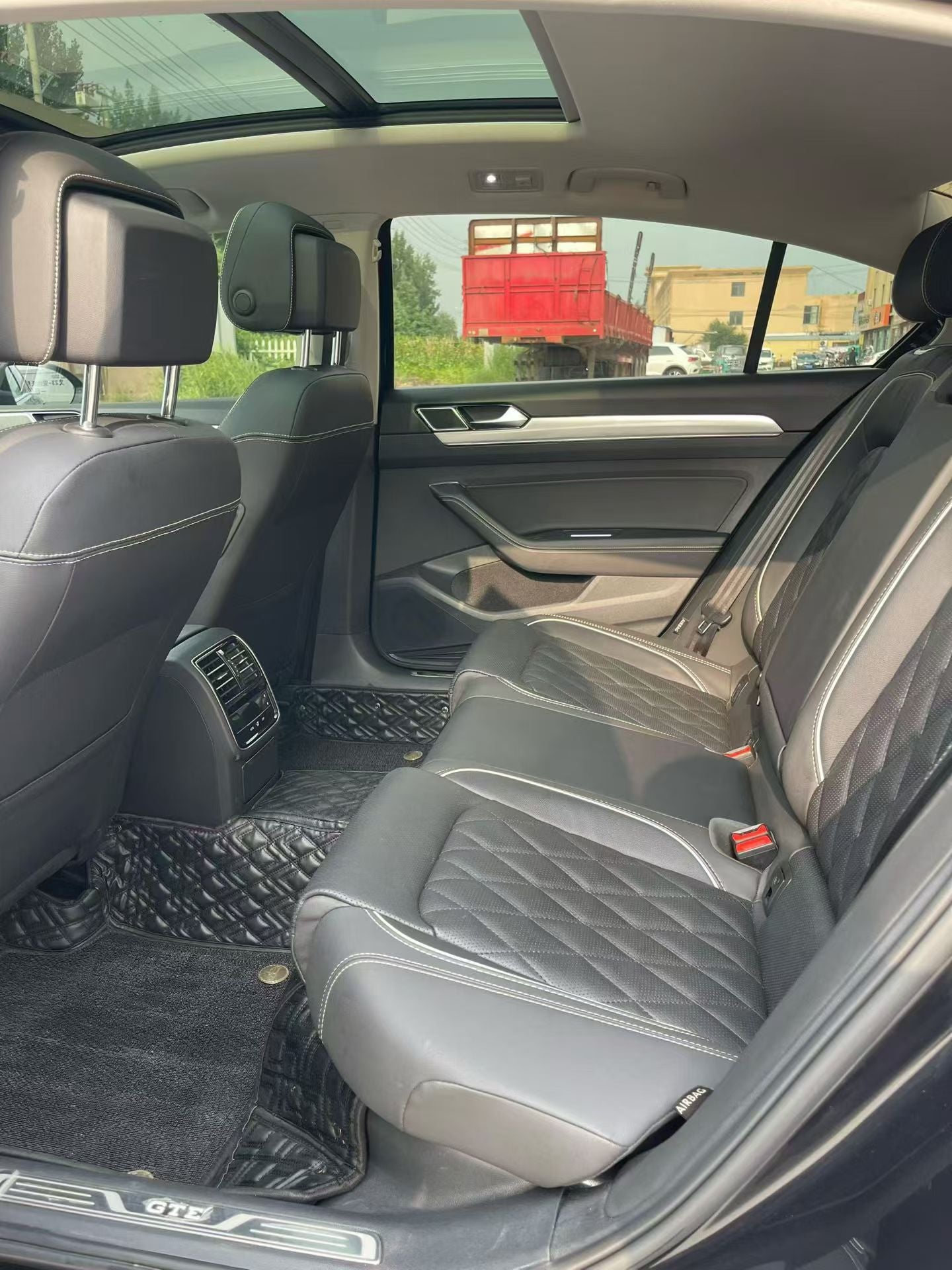
Space and comfort equipment that serve both family and business use A 4990mm body and 2871mm wheelbase deliver rear legroom approaching the C-segment. A power panoramic sunroof, heated, ventilated and massaging front seats, and rear independent climate control keep long journeys comfortable.
German chassis engineering with upgraded intelligence The MacPherson front and multi-link rear suspension is tuned for tightness and stability at speed. L2 driver assistance, full-speed adaptive cruise and a head-up display bring this combustion sedan close to electric-era smart features.
Caveat 1: Highway noise insulation is the weak point Around town the cabin is reasonably quiet, but at 120km/h wind and tyre noise become noticeable. Single-layer window glass is the main limitation, so long-distance drivers should take a rear-seat test ride first.
Caveat 2: Infotainment and smart features remain conservative Occasional fault codes, voice recognition that reacts less quickly than newer EV brands, and traditional menu logic mean buyers who prioritise smart cabin experiences will need to adjust expectations.
Caveat 3: Running costs are higher than Japanese rivals It requires 95-octane fuel, returns roughly 8 to 9L/100km in the city, and both per-service and 60,000km cumulative maintenance costs exceed comparable Japanese models. Long-term ownership costs deserve a careful calculation.
2. Model Overview
The Magotan is FAW-Volkswagen's flagship in the midsize sedan segment. Together with SAIC Volkswagen's Passat it forms a two-car strategy, and it has long held a top position in China's B-segment sedan sales charts. Its technical foundation traces back to the European Passat platform, and successive generations have built a large owner base in China, giving it strong market recognition and above-average resale value for its class. The ninth-generation Magotan currently on sale was facelifted and launched at the end of 2025, spanning 280TSI, 300TSI and 380TSI powertrains. The 380TSI is the high-output version, aimed at buyers who want more power and equipment.
In design terms, the Magotan continues the steady, disciplined German sedan approach. The front end is restrained rather than dramatic, with a full-width light bar and an illuminated brand emblem adding a touch of technology. Overall proportions approach the C-segment, a shape that ages well rather than dating quickly. The interior uses soft-touch surfaces and metal trim, solidly assembled and traditional in style, a different route from the big-screen, tech-led approach of newer brands.
In positioning, the Magotan targets midsize sedan buyers who need both family and business capability. Typical owners are established families who value brand and driving quality, along with buyers who need a car for business use. Within the range the 380TSI Premium is the balanced choice, retaining the high-output engine and L2 assistance without the premium of the flagship trim. For buyers who rank power, space and brand reliability first, it is a decision that does not require agonising over the spec sheet.
You can explore the exterior and interior design of this model in the following video:
3. Basic Specifications
- Model: Magotan 2026 380TSI Premium Edition
- Powertrain type: Petrol
- Engine: 2.0T turbocharged inline four (DTJ), 220hp
- Transmission: 7-speed wet dual-clutch
- Fuel consumption: 6.66L/100km (WLTC combined)
- Body dimensions: 4990 x 1854 x 1487mm
- Wheelbase: 2871mm
- Seating: 5
- Fuel tank: 69.0L
- Top speed: 210km/h
- Kerb weight: 1649kg
- Official 0-100km/h: 7.3 seconds
- Boot volume: 520L
- Minimum ground clearance: 107mm
- Maintenance and manufacturer service: The Magotan carries a 3-year or 100,000km vehicle warranty, with the first service at 5,000km and subsequent intervals of 10,000km or one year, alternating minor and major services. Individual service costs are on the high side, and cumulative maintenance to 60,000km is expensive for the class. Volkswagen's dealer network is extensive and parts supply is mature, so repair access is convenient.
- Incentive policies (source: IEA Global EV Policy Explorer):
- Country / Region
- Policy direction for petrol and low-emission vehicles
- Notes
- United States
- Purchase credits focused on electric vehicles
- Conventional petrol midsize sedans receive essentially no purchase subsidy
- Germany
- Purchase subsidies and tax benefits for electric vehicles
- No direct purchase subsidy for petrol cars
- France
- Subsidies focused on battery-electric and low-emission vehicles
- Not applicable to petrol cars
- Thailand
- Excise duty incentives for electric vehicles
- Petrol cars are taxed by engine displacement
4. Ownership Costs and Service
The Magotan carries a 3-year or 100,000km vehicle warranty, with the first service at 5,000km and subsequent intervals of 10,000km or one year, alternating minor and major services. Individual minor service costs are clearly higher than comparable Japanese models, and over a 60,000km cycle the cumulative spend through authorised channels is considerable. Non-authorised servicing can cut costs by 30 to 40 percent, though it may affect warranty rights, so the trade-off needs weighing.
On fuel, the Magotan 380TSI requires 95-octane petrol and has a WLTC combined figure of 6.66L/100km. In real use, city consumption commonly sits between 8 and 9L/100km, falling to the low 6s at steady highway speed. Assuming 20,000km a year, annual fuel spending is mid-to-upper for a B-segment combustion sedan, depending on route and driving style.
On incentives, this is a petrol model, so most markets do not support it through purchase subsidies. Acquisition cost is driven mainly by limited-time manufacturer discounts, finance programmes and trade-in allowances.
5. Competitor Comparison
In the midsize sedan market, the cars most often cross-shopped against the Magotan are the Passat, the Avalon and the Accord. Each makes a different trade-off:
First, on output, the Magotan and Passat share the same 2.0T high-output unit, and their 220hp and 350N·m clearly lead the Avalon's 173hp and the Accord's 192hp. The 7.3-second sprint is also the quickest of the four.
Second, on size, the Passat leads slightly at 5006mm long, while the Magotan and Avalon are both 4990mm and the Accord is the widest. On wheelbase, the Magotan and Passat share 2871mm, ahead of the Avalon's 2870mm and the Accord's 2830mm.
Third, on fuel economy, the Avalon's 2.0L naturally aspirated engine with CVT has the lowest WLTC figure, followed by the Accord's 1.5T turbo. The Magotan and Passat 2.0T high-output versions consume more, but deliver noticeably stronger performance.
Fourth, on equipment, the Magotan 380TSI Premium offers a power panoramic sunroof, L2 driver assistance, a head-up display, heated, ventilated and massaging front seats, and rear independent climate control. The Passat Pro is closely matched, the Avalon focuses on a fixed segmented sunroof with L2 assistance, and the Accord is comparatively basic in this trim with a single sunroof.
Specification Comparison Table (Part 1)
| Item | Magotan 2026 380TSI Premium | Passat 2026 Pro 380TSI Starry Dragon Edition | Avalon 2026 2.0L CVT Luxury | Accord 2026 Sport Series 260TURBO Luxury |
|---|---|---|---|---|
| Manufacturer | FAW-Volkswagen | SAIC Volkswagen | FAW Toyota | GAC Honda |
| Class | Midsize sedan | Midsize sedan | Midsize sedan | Midsize sedan |
| Energy type | Petrol | Petrol | Petrol | Petrol |
| Engine | 2.0T 220hp L4 | 2.0T 220hp L4 | 2.0L 173hp L4 | 1.5T 192hp L4 |
| Max power | 162kW (220PS) | 162kW (220PS) | 127kW (173PS) | 141kW (192PS) |
| Max power rpm | 4900-6700rpm | 4900-6700rpm | 6600rpm | 6000rpm |
| Max torque | 350N·m | 350N·m | 206N·m | 260N·m |
| Max torque rpm | 1600-4300rpm | 1600-4300rpm | 4600-5000rpm | 1700-5000rpm |
| Engine tech | — | — | VVT-iE | VTEC |
| Fuel grade | 95 octane | 95 octane | 92 octane | 92 octane |
| Fuel delivery | Direct injection | Direct injection | Port and direct | Direct injection |
| Cylinder head | Aluminium | Aluminium | Aluminium | Aluminium |
| Cylinder block | Cast iron | Cast iron | Aluminium | Aluminium |
| Emissions standard | China VI | China VI | China VI | China VI |
| Transmission | 7-speed wet DCT | 7-speed wet DCT | CVT (10 simulated) | CVT |
| Gears | 7 | 7 | Stepless | Stepless |
| Transmission type | Wet dual-clutch (DCT) | Wet dual-clutch (DCT) | Continuously variable (CVT) | Continuously variable (CVT) |
| Drive | Front-engine FWD | Front-engine FWD | Front-engine FWD | Front-engine FWD |
| Front suspension | MacPherson independent | MacPherson independent | MacPherson independent | MacPherson independent |
| Rear suspension | Multi-link independent | Multi-link independent | Multi-link independent | Multi-link independent |
| Steering assist | Electric | Electric | Electric | Electric |
| Body structure | Unibody | Unibody | Unibody | Unibody |
| Front brakes | Ventilated disc | Ventilated disc | Ventilated disc | Ventilated disc |
| Rear brakes | Solid disc | Solid disc | Solid disc | Solid disc |
| Parking brake | Electronic | Electronic | Electronic | Electronic |
| Front tyres | 225/55 R17 | 245/45 R18 | 235/45 R18 | 225/50 R17 |
| Rear tyres | 225/55 R17 | 245/45 R18 | 235/45 R18 | 225/50 R17 |
| Spare tyre | Space-saver | Space-saver | Space-saver | Space-saver |
| Dimensions L x W x H | 4990 x 1854 x 1487mm | 5006 x 1850 x 1489mm | 4990 x 1850 x 1450mm | 4990 x 1862 x 1449mm |
| Wheelbase | 2871mm | 2871mm | 2870mm | 2830mm |
| Front track | 1586mm | 1586mm | 1585mm | 1600mm |
| Rear track | 1572mm | 1572mm | 1595mm | 1620mm |
| Ground clearance | 107mm | 120mm | — | — |
| Body style | 4-door 5-seat sedan | 4-door 5-seat sedan | 4-door 5-seat sedan | 4-door 5-seat sedan |
| Doors | 4 | 4 | 4 | 4 |
| Seats | 5 | 5 | 5 | 5 |
| Top speed | 210km/h | 210km/h | 205km/h | 186km/h |
| 0-100km/h | 7.3s | 7.6s | — | — |
| WLTC combined | 6.66L/100km | 6.87L/100km | 6.0L/100km | 6.6L/100km |
| Kerb weight | 1649kg | 1680kg | 1595kg | 1515kg |
| Gross weight | 2130kg | 2140kg | 2070kg | 2030kg |
| Fuel tank | 69.0L | 68.5L | 60.0L | 56.0L |
| Boot volume | 520L | 506L | — | — |
| Turning radius | 5.9m | 5.7m | — | 5.7m |
| Warranty | 3 years / 100,000km | 3 years / 100,000km | 3 years / 100,000km | 3 years / 100,000km |
6. Real-World Test Notes
Strength 1: Abundant, linear power delivery The 380TSI's 2.0T high-output engine paired with a 7-speed wet dual-clutch responds keenly. It has enough reserve for stop-start city traffic and highway overtaking, and does not feel strained when fully loaded (source: professional reviews and multiple media test drives).
Strength 2: Tight chassis and strong high-speed stability The MacPherson front and multi-link rear suspension is tuned towards firmness, with good lateral support through corners and a settled body attitude at speed, in keeping with the traditional German feel (source: professional test drive reports).
Strength 3: Space and comfort equipment are well covered The 2871mm wheelbase delivers generous rear legroom, and heated, ventilated and massaging front seats, a power panoramic sunroof and rear independent climate control noticeably improve long-distance comfort (source: test drive reviews).
Area to improve 1: Highway noise insulation is average Around town the cabin is acceptably quiet, but at 120km/h wind and tyre noise become prominent, with single-layer window glass the main limiting factor (source: media reviews and owner feedback).
Area to improve 2: City fuel consumption is on the high side In real city conditions consumption commonly sits between 8 and 9L/100km and can rise further in congestion, while 95-octane fuel is required, making everyday running costs higher than comparable Japanese models (source: ownership cost analysis).
Area to improve 3: Infotainment feels traditional Occasional fault codes appear, and voice recognition is slower and less capable than in newer EV brands, with conservative menu logic that will frustrate buyers who want a truly smart cabin (source: owner feedback).
Test scenario 1: City combined consumption In mixed city and elevated-road conditions the 380TSI returns around 8 to 9L/100km, rising above 10L/100km under hard driving or heavy congestion (source: ownership cost analysis and test drives).
Test scenario 2: Highway cruise consumption At a steady highway cruise the 380TSI can drop into the low 6s, close to its WLTC combined figure (source: media test drives and owner measurements).
7. Owner Feedback
Positive 1: Strong performance Summary: Owners consistently praise the 380TSI's output, saying it feels confident from a standstill and when overtaking, even when fully loaded.
"Power is there the moment you ask for it. In the city you get exactly what you press, and it never feels sluggish with five aboard. It cruises at 120km/h easily and overtakes in one clean move." "The 380 makes 350Nm and does 0-100 in 7.3 seconds. Great power, a real shove in the back, and overtaking feels effortless."
Positive 2: Generous rear space Summary: Space is one of the most frequently raised strengths, with rear legroom enough to cross your legs and a boot that swallows luggage.
"It is a proper B-segment size, with roomy rear legroom. Cross your legs with no problem. The boot takes family trip luggage and moving boxes with ease." "At 182cm tall, I have a hand-span of knee room in the second row and four fingers of headroom."
Positive 3: Comfortable ride and seating Summary: Seat support and ride stability win praise, with low fatigue on long journeys.
"The front seats support well and hold you in place, so long drives do not leave your back aching. The rear is spacious, and family passengers can stretch out or recline comfortably."
Negative 1: Highway noise and tyre roar Summary: Wind and tyre noise at highway speed are the most commonly raised complaints.
"On the highway the insulation is a bit lacking, with obvious wind and tyre noise." "Below 80km/h the cabin is fine, but at 120km/h tyre and wind noise stand out. The single-layer windows are the weak point."
Negative 2: Infotainment and detail issues Summary: Occasional infotainment glitches, modest smart features and the raised rear centre tunnel are frequently mentioned shortcomings.
"Little infotainment niggles keep coming, with fault codes popping up now and then. It does not affect driving, but it annoys anyone who likes things spotless, and voice recognition is not very clever." "The only real flaw: there is a hump in the rear centre tunnel, so the middle passenger has to splay their legs. Fine for short trips, painful over long distances."
8. References
Global Petrol Prices (2025). World Average Electricity Prices, USD / kWh. Retrieved from https://www.globalpetrolprices.com/electricity_prices/
IEA. Global EV Policy Explorer. Retrieved from https://www.iea.org/data-and-statistics/data-tools/global-ev-policy-explorer
FAW-Volkswagen. Magotan model page and specifications. Retrieved from https://www.faw-vw.com/
Autohome. 2025 Magotan 380TSI ownership cost breakdown. Retrieved from https://chejiahao.m.autohome.com.cn/info/24612576
Yiche. Magotan 380TSI test drive report. Retrieved from https://car.yiche.com/maiteng