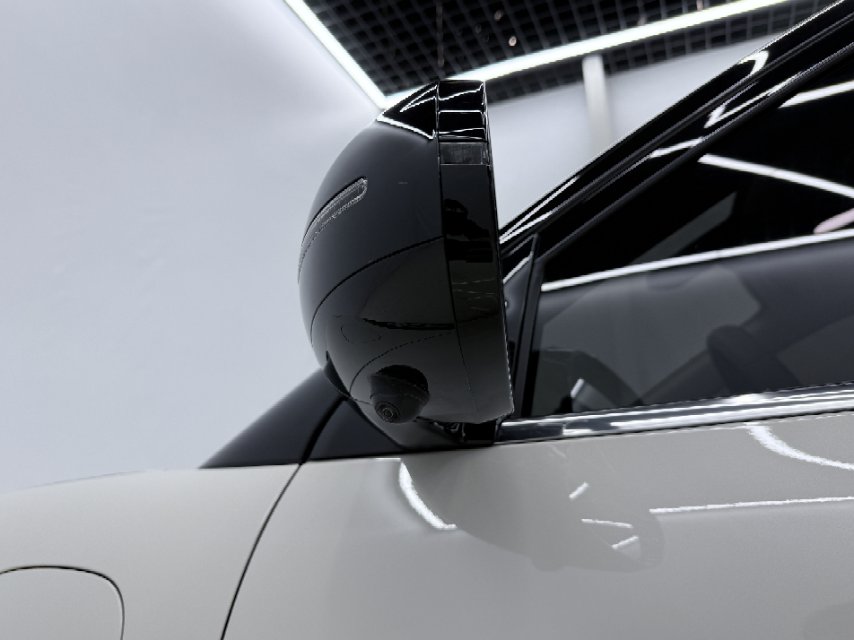
Wuling Binguo 2025 Vehicle Profile: Best Affordable Compact Electric Hatchback with 333km Range, Shenlian Battery and Flexible Space

1. Verdict: Three Highlights & Three Caveats
Three Highlights:
- 333 km of electric range — commute with zero range anxiety: With 333 km of CLTC electric-only range and a roughly 31.9 kWh battery, daily commuting and errands are covered for about a week. Its LFP “Shenlian” battery comes with standard DC fast charging for easy top-ups.
- Compact, nimble, and space-efficient: At 3950 mm long with a 2560 mm wheelbase, it’s small and easy to park, while the 350–1240 L trunk is flexibly expandable — a good balance of urban runabout and luggage capacity.
- High safety and strong value: About 74% high-strength steel body, Shenlian battery, multiple airbags, and lifetime three-electric coverage for first owners make it a “small but refined” commuter pick in its class.
Three Caveats:
- Commuter-oriented, not performance-focused: With a single-motor front-drive setup at 50 kW and a 130 km/h top speed, power is smooth but limited — best for city commuting rather than fast highway and long-distance driving.
- Small body, limited loaded storage: As a small hatchback, regular cargo space is modest, and carrying capacity with a full load is less than larger vehicles.
- Warranty and range vary by trim: The whole-vehicle warranty is 3 years or 100,000 km, and electric range differs notably across versions (203 km / 333 km / 410 km, etc.) — choose the range trim that fits your needs.
2. Model Overview
The Wuling Binguo is a compact pure-electric commuter car from SAIC-GM-Wuling, popular in China’s A0-class EV market thanks to its retro flowing-aesthetic design, accessible price, and practical space — cumulative sales have surpassed one million units. It is offered in several range versions; this profile focuses on the 2025 333km Enjoy trim.
On the outside, the Binguo uses a retro, rounded design language with colors like Taro-Purple, Sea-Salt-Blue, Cheese-White, and Milk-Coffee-White, and a caramel/Brown-shell two-tone interior in a retro-luxury style. At 3950 × 1708 × 1580 mm with a 2560 mm wheelbase, it’s a standard small-car footprint with high space utilization.
On the technology side, the 2025 Binguo carries a 50 kW three-in-one water-cooled flat-wire motor and Wuling’s in-house Shenlian battery, an upgraded shift-by-wire stalk design, dual 10.25-inch floating screens (Ling OS smart operating system, depending on trim), and standard DC fast charging across the line, with improved NVH and safety features. With its accessible price, strong safety, and practical space, the Binguo is widely regarded by users as a high-value choice for “commuting and everyday errands.”
3. Core Specifications
| Category | Item | Specification |
|---|---|---|
| Model & Powertrain | Brand | Wuling (SAIC-GM-Wuling) |
| Model | Binguo 2025 333km Enjoy | |
| Powertrain | Pure electric (BEV) | |
| Body | 5-door, 4-seat hatchback | |
| Powertrain Details | Motor | Front single-motor (FWD) |
| Motor model | CRRC Times TZ180XS250 | |
| Combined motor output | 50 kW (~68 hp) | |
| Combined motor torque | 125 N·m | |
| Transmission | Single-speed (fixed-ratio) | |
| Top speed | 130 km/h | |
| Drive layout | Front-wheel drive (FWD) | |
| Range & Charging | CLTC EV range | 333 km |
| Battery | approx. 31.9 kWh (LFP “Shenlian”, air-cooled) | |
| Energy density | approx. 125 Wh/kg | |
| Energy consumption | approx. 10.6 kWh/100 km | |
| Fast charge (30%–80%) | approx. 0.58 h | |
| Slow charge (20%–100%) | approx. 9.5 h | |
| Dimensions & Space | L × W × H | 3950 × 1708 × 1580 mm |
| Wheelbase | 2560 mm | |
| Curb weight | approx. 1155 kg | |
| Cargo volume | 350–1240 L | |
| Approach/departure angle | 17° / 29° | |
| Chassis & Safety | Suspension | Front MacPherson independent / rear torsion beam (depending on trim) |
| Drive | Front-wheel drive | |
| Tires | 185/60 R15 | |
| Brakes | Front ventilated disc / rear disc, electronic parking brake | |
| Body safety | Ring-type cage body, approx. 74% high-strength steel; driver/passenger airbags, (some trims) front side airbags | |
| Active safety | ABS, EBD, brake assist, traction control, stability control, tire pressure warning | |
| Smart & Cockpit | Cockpit | Dual 10.25-inch floating screens (Ling OS, depending on trim), voice assistant “Hello XiaoLing,” smartphone app remote control |
| Shift | Electronic shift-by-wire stalk | |
| Other | Bluetooth, OTA, etc. (depending on configuration) | |
| Warranty & Service | Vehicle warranty | 3 years or 100,000 km |
| Three-electric warranty | 8 years or 120,000 km | |
| First-owner three-electric | Lifetime warranty for non-commercial first owner (subject to official terms) |
Subsidy Policy (framework per IEA Global EV Policy Explorer):
| Country / Region | Policy Notes |
|---|---|
| China | Compliant BEVs benefit from phased purchase tax exemption (per latest official rules) |
| Some EU countries | Some markets offer purchase subsidies or tax relief for EVs; terms vary |
| Parts of North America | Eligible new-energy vehicles may qualify for federal tax credits, depending on model and origin |
Note: Regional subsidy policies change with fiscal cycles — always verify the latest official rules in your target market before purchase.
4. Ownership Costs & Service
- Warranty: The whole vehicle is covered for 3 years or 100,000 km, the three-electric system for 8 years or 120,000 km, with a lifetime warranty on the three-electric system for non-commercial first owners. Backed by Wuling’s broad sales and service network, coverage is extensive and maintenance is convenient.
- Maintenance cost: As a pure EV, there are no oil/filter changes; servicing focuses on three-electric system inspections, cabin filters, and routine component checks — significantly cheaper than a fuel vehicle, with longer intervals and contained costs (confirm with your local dealer).
- Charging cost: Using an approximate global average residential rate of USD 0.18/kWh: at about 10.6 kWh/100 km, that equals roughly USD 1.9 per 100 km — a clear advantage over fuel in most markets.
Subsidies & Policy by Country (source: IEA Global EV Policy Explorer):
| Country / Region | Policy Type | Notes |
|---|---|---|
| China | Purchase tax exemption | BEVs qualify for phased purchase tax exemption (per latest official rules) |
| Germany | Purchase subsidy (by phase) | Has offered phased subsidies for eligible EVs; amounts tied to vehicle |
| France | Eco-bonus | Purchase subsidy based on CO₂ and vehicle type; EV rules adjust often |
| United States | Federal tax credit | Eligible new-energy vehicles may qualify; amount depends on origin and price |
| Norway | Tax relief | EVs exempt from parts of purchase tax/VAT; policies attract EV buyers |
Note: Policies shift with fiscal cycles and market regulation — always verify the latest official rules in your target market.
5. Competitor Comparison
Competition among small pure-electric commuter cars in this class is intense. Four key observations:
- Range and battery differ: The Nano 01 leads at 430 km, while the Binguo at 333 km, Xingyuan at 310 km, and Seagull at 305 km all cover daily commuting. On batteries: the Binguo uses “Shenlian,” the Xingyuan “Shield,” and the Seagull “Blade” — each with its own technology.
- Power and drivetrain differ: The Nano 01 has the most powerful motor (70 kW / ~95 hp) and the highest top speed at 140 km/h; the Xingyuan uses a rear-mounted, rear-drive layout; the Binguo, Seagull, and Nano 01 are front-drive.
- Body size and space differ: The Xingyuan is longest at 4135 mm with a 2650 mm wheelbase (including a 70 L front trunk); the Nano 01 has the longest wheelbase at 2663 mm; the Binguo and Seagull are nimbler, with the Binguo’s 350–1240 L trunk being practical.
- Warranty and service differ: The Binguo and Seagull both offer lifetime three-electric coverage for first owners; the Xingyuan offers 6 years/150,000 km. The Binguo’s 3-year/100,000 km whole-vehicle warranty is shorter than peers — worth noting.
| Metric | Wuling Binguo 2025 333km Enjoy | Xingyuan 2026 310km Yearning | BYD Seagull 2026 305km Active | Nano 01 2026 Origin 430 Air |
|---|---|---|---|---|
| Segment / Energy | Small car / BEV | Small car / BEV | Small car / BEV | Small car / BEV |
| Brand | SAIC-GM-Wuling | Geely | BYD | Dongfeng Nano |
| Launch | 2025.04 | 2026.05 | 2026.05 | 2025.10 |
| CLTC EV range | 333 km | 310 km | 305 km | 430 km |
| Battery capacity | approx. 31.9 kWh | approx. 30.12 kWh | approx. 30.08 kWh | approx. 42.3 kWh |
| Battery tech | Shenlian (LFP) | Shield (LFP) | Blade (LFP) | LFP |
| Energy consumption | approx. 10.6 kWh/100km | approx. 10.7 kWh/100km | approx. 9.9 kWh/100km | approx. 10.7 kWh/100km |
| Fast charge (30–80%) | approx. 0.58 h | approx. 0.35 h | approx. 0.5 h | approx. 0.5 h |
| Slow charge | approx. 9.5 h | — | — | — |
| Combined motor power | 50 kW | 58 kW | 55 kW | 70 kW |
| Combined motor output | approx. 68 hp | approx. 79 hp | approx. 75 hp | approx. 95 hp |
| Combined motor torque | 125 N·m | 130 N·m | 135 N·m | 160 N·m |
| Motor layout | Front / FWD | Rear / RWD | Front / FWD | Front / FWD |
| 0–50 km/h | — | — | 4.9 s | — |
| Top speed | 130 km/h | 130 km/h | 130 km/h | 140 km/h |
| L × W × H (mm) | 3950×1708×1580 | 4135×1805×1570 | 3780×1715×1540 | 4020×1810×1570 |
| Wheelbase (mm) | 2560 | 2650 | 2500 | 2663 |
| Curb weight (kg) | approx. 1155 | approx. 1215 | approx. 1160 | approx. 1312 |
| Cargo volume (L) | 350–1240 | 375–1320 | 930 | 326–945 |
| Seats | 4 | 5 | 4 | 5 |
| Tires | 185/60 R15 | 205/60 R16 | 165/65 R15 | 215/60 R16 |
| Vehicle warranty | 3y / 100,000 km | — | 6y / 150,000 km | — |
Source: user-provided spec comparison screenshots.
Summary: If you want the longest range and strongest power, the Nano 01 stands out; for more space plus rear-drive and a front trunk, the Xingyuan is worth a look; for high value with the Shenlian battery’s safety and lifetime three-electric coverage, the Wuling Binguo is the balanced, practical commuter choice; and the BYD Seagull attracts users with its Blade battery and BYD quality.
6. Expert Test Drive — Pros & Cons
Compiled from third-party professional media road tests and official launch information.
Pros:
- High value, very low running costs: Accessible price plus low energy use — under USD 2 per 100 km makes daily commuting very cheap.
- Practical and nimble: A compact body, high space utilization, and an expandable trunk make city commuting, parking, and loading convenient.
- Solid safety basis: About 74% high-strength steel, the Shenlian battery, and multiple airbags give a solid safety foundation for its class.
Cons:
- Commuter-oriented performance: At 50 kW and 130 km/h top speed, power is smooth but limited for highway and enthusiastic driving.
- Small body, limited loaded storage: As a small hatchback, regular and full-load cargo capacity is limited.
- Warranty term is relatively short: The 3-year/100,000 km whole-vehicle warranty is on the short side among some peers — worth noting.
Real-World Scenarios (source: professional media real-world figures / official release):
- City EV-mode commuting: With 333 km of CLTC range, a week of commuting is covered; standard DC fast charging takes about 0.58 h (30%–80%), making top-ups convenient.
- Short commutes and errands: The nimble body is easy to park, and the 350–1240 L expandable trunk handles groceries, shopping, and school runs with ease.
7. Real Owner Reviews
The Binguo is a long-running model with rich owner feedback.
Positive feedback:
- Nimble, easy to drive and park: Most users appreciate the compact size, finding city commuting and parking very convenient. “The body is small and really nimble in the city; parking is easy too — perfect for school runs and grocery errands.”
- Honest range and low running costs: Owners generally report realistic range performance with very low electric-drive running costs. “The 333 km range covers a week of daily commuting easily, and charging is cheap — way less than filling up on fuel.”
- High space utilization and great value: Many users feel the space and features strike a good balance for the price. “Don’t let the small size fool you — the trunk holds a lot, and with the seats folded there’s even more room; great value overall at this price.”
Negative feedback:
- Commuter power, average highway performance: Some users find the tuning better for short trips, with ordinary acceleration and refinement on the highway. “It’s lively in the city, but power starts to struggle on the highway; it’s a commuter car, so don’t expect much sportiness.”
- Small body, limited loaded storage: Some mention the small body leaves the cabin and trunk a little tight when fully loaded. “When the rear is full of people, storage gets tight, and the regular trunk isn’t big either — better for light, everyday use.”
8. References
- Global Petrol Prices (2025). World Average Electricity Prices, USD / kWh. Retrieved from https://www.globalpetrolprices.com/electricity_prices/
- IEA. Global EV Policy Explorer. Retrieved from https://www.iea.org/data-and-statistics/data-tools/global-ev-policy-explorer
- SAIC-GM-Wuling official website (Wuling Binguo model information): https://www.wuling.com/
- Professional automotive media launch reports, road tests, and real-world reviews of the Wuling Binguo
- Genuine owner feedback shared on automotive information platforms
Disclaimer: This profile is for reference only. Actual specifications and configurations are subject to the vehicle sold at local dealerships and the latest official information. Before importing, verify the certification, emissions, and subsidy policies of your target market.