SAIC Maxus V90 2024 Vehicle Profile: Versatile Diesel Panel Van with 5180mm Body, 3000mm Wheelbase and Low Operating Cost

Model Overview: Market Position & Credibility
The Maxus V90 is a light commercial vehicle from SAIC MAXUS (SAIC Motor), focused on logistics and commercial use. This 2024 Zhijie (Smart/Practical) version pairs a 2.0L diesel engine with a 6-speed manual gearbox, positioned for freight, commuter shuttles, and SME owner-operated fleets. Its overseas counterpart is the MAXUS Deliver 9, sold in multiple international markets — evidence of the platform's and manufacturing quality's global recognition.
As a front-wheel-drive, short-wheelbase, high-roof version, it balances a 5180mm length with a high roof: the short wheelbase improves city maneuverability, while the high roof offers plentiful cargo height. The 5/6-seat layout covers both hauling and passenger duty. The design follows the practical, business-oriented Maxus van style — a rigid, clean body that looks tough and wears well under daily use.
SAIC MAXUS has mature production and service systems in the light-commercial segment, and the V90 enjoys a large installed base. It is a dependable, high-value pick for overseas buyers seeking a versatile, cost-effective light commercial vehicle.
You can get a full look at the car's exterior and interior in this video:
Core Specifications
Powertrain & Chassis: 2.0L turbo-diesel engine, 110kW (150 hp), 375Nm peak torque, matched to a 6-speed manual gearbox (MT); front-wheel drive; front MacPherson independent and rear rigid multi-link (live axle) non-independent suspension; unibody (load-bearing) construction.
Dimensions (mm): Length 5180, width 2062, height 2535, wheelbase 3000; 5-door 5/6-seat bus; sliding side door; fuel tank 80L.
Performance & Consumption: Diesel, runs on 0# diesel; owner-measured combined consumption around 8.1L/100km; peak torque band 1500-2400rpm; strong low-speed torque under full load.
After-Sales: 3 years or 60,000km warranty; estimated 60,000km maintenance cost about 436 USD (about 3,108 CNY); routine oil-and-filter intervals; maintenance costs among the lowest in its class.
Incentive Policies (per country/region, source: IEA Global EV Policy Explorer):
|
Country / Region
|
Fuel Type
|
Relevant Incentives
|
|
Major EU markets
|
Diesel commercial
|
Operated under Euro 6 emission rules; purchase tax and operating-license regulations vary for small commercial vehicles
|
|
China
|
Diesel commercial
|
Light vans registered by use (freight/passenger); some cities impose emission and driving restrictions on diesel
|
|
Southeast Asia
|
Diesel commercial
|
Import tariffs and emission rules vary; commercial vehicles usually enjoy relatively favorable rates
|
Three Highlights & Three Caveats
Highlight: Space Efficiency with a High Roof Advantage The 5180×2062×2535mm body with a high roof provides generous internal cargo height, while the 5-door 5/6-seat layout balances loading and passenger duty. The short-wheelbase, front-wheel-drive setup makes it noticeably easier to maneuver in narrow city streets and underground garages than long-wheelbase rivals — a true "carry more, squeeze through" work van.
Highlight: Plenty of Diesel Torque, Low Running Costs Powered by the SAIC π 2.0T turbo-diesel (150 hp, 375Nm peak torque), its strong low-end torque handles full loads and hill starts with ease. Owners report combined consumption as low as around 8.1L/100km; combined with diesel's lower price per liter, this gives a clear operating-cost edge among light commercial vehicles.
Highlight: Cheap to Maintain, Well-Supported After-Sales Estimated total maintenance over 60,000km is only about 436 USD (about 3,108 CNY) — among the lowest in its class. SAIC MAXUS's dense service network and sizable ownership base keep parts supply and repairs convenient.
Caveat: Noise Insulation Is Mediocre Several owners report that cabin noise insulation is not great; wind, road, and diesel-engine noise are noticeable at speed. NVH is only average.
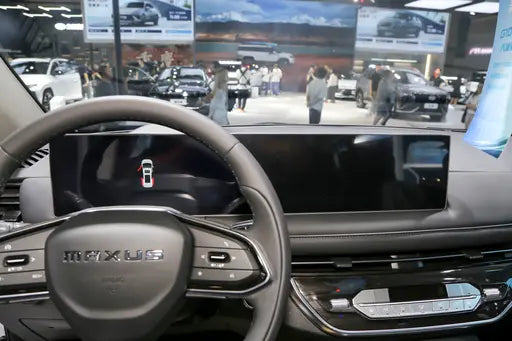
Caveat: Configuration Is Function-First As the manual entry trim, it comes with a plastic steering wheel, a mechanical gear lever, a non-full-LCD cluster, and fabric seats, lacking power adjustment, seat heating, and other comfort features. The upscale and tech feel is limited.
Caveat: Manual Transmission Has a Learning Curve The 6-speed manual gearbox requires adaptation for drivers used to automatics, and frequent shifting can be tiring during long city delivery shifts.
Ownership Costs & Service
Warranty: 3 years or 60,000km, covering major components including the engine and transmission.
Maintenance Cost: Estimated total maintenance over 60,000km is roughly 436 USD (about 3,108 CNY), with routine oil-and-filter intervals; the diesel's steady low-speed duty keeps service cycles stable and parts supply abundant.
Real Ownership Cost Analysis: Based on owner-measured combined consumption of about 8.1L/100km and a diesel price of roughly 1.6 USD per liter, driving 20,000km per year consumes about 1,620L, costing roughly 2,592 USD per year. The diesel's low consumption and lower fuel price deliver a significant cost advantage in high-frequency commercial operation. With relatively simple construction and cheap maintenance, the long-term cost of ownership is competitive among light commercials.
Charging Cost Note: This is a diesel commercial vehicle, so no charging applies; for reference, Global Petrol Prices' world-average electricity rate is used to compare the energy costs of comparable electric vans.
Incentive & Policy Table (source: IEA Global EV Policy Explorer):
|
Country / Region
|
Incentive Type
|
Notes
|
|
Germany
|
Regular tax on commercials
|
Diesel vans taxed by emission and use; EVs enjoy purchase subsidies
|
|
China
|
Tightening restrictions on diesel
|
Some urban areas restrict diesel truck operating hours
|
|
Thailand / Indonesia
|
Regular rates on commercials
|
Diesel commercials taxed by displacement; electric commercials enjoy exemptions
|
Competitors Comparison
All four are diesel light commercial vehicles covering different use cases — from a 3-seat cargo truck to a 9-seat bus. The Maxus V90, Tuono (Tuyano), New Transit (Transit), and Iveco Ousheng (Daily) each serve distinct scenarios:
Point 1 — Different powertrains. The Maxus V90 uses a 2.0T diesel (150 hp / 375Nm) with 6-speed manual and FWD; the Tuono runs a 2.5T diesel (158 hp / 400Nm) with 6-speed manual and RWD — the highest torque; the New Transit 2.2T (135 hp / 350Nm) with 6-speed manual and RWD is the least powerful; the Iveco Ousheng 2.0T (148 hp / 350Nm) uses a 5-speed manual and RWD.
Point 2 — Different body structure and seating. The V90 is a 5-door 5/6-seat bus (short wheelbase) with the best maneuverability; the Tuono is a 5-door 7-seat light bus (long wheelbase, 6000mm length); the New Transit is a 5-door 3-seat cargo truck focused purely on freight; the Iveco Ousheng is a 5-door 5-9-seat bus (long wheelbase, short overhang). Wheelbase length and seat count directly determine the passenger-vs-cargo focus.
Point 3 — Different drivetrain and body form. The V90 is the only FWD, unibody van — high drivetrain efficiency, flat floor, and low center of gravity; the Tuono and New Transit are RWD with unibody; the Iveco Ousheng is RWD with body-on-frame (ladder chassis), offering the strongest heavy-load and rough-terrain resilience but generally firmer ride comfort.
Point 4 — After-sales and reliability reputation. All four have sizable China market presence. The V90 stands out for its Maxus service system and low maintenance costs; the New Transit benefits from Ford's joint-venture heritage and solid reputation; the Iveco Ousheng leads in body-on-frame heavy-load capability and the largest fuel tank (100L); the Tuono leads in long-wheelbase space and torque output.
Full Configuration Comparison Table:
|
Dimension
|
Maxus V90 2024 Zhijie 2.0T
|
Tuono 2025 Jixiang 2.5T
|
New Transit 2019 2.2T
|
Iveco Ousheng 2026 2.0T
|
|
L×W×H (mm)
|
5180×2062×2535
|
6000×2000×~2710
|
4963×1974×2161
|
5495×2040×2525
|
|
Body Structure
|
5-door 5/6-seat bus
|
5-door 7-seat light bus
|
5-door 3-seat cargo
|
5-door 5-9-seat bus
|
|
Door Opening
|
Sliding door
|
Sliding door
|
Sliding door
|
Sliding door
|
|
Top Speed (km/h)
|
—
|
—
|
145
|
140
|
|
Engine
|
2.0T diesel L4
|
2.5T diesel L4
|
2.2T diesel L4
|
2.0T diesel L4
|
|
Max Power (hp)
|
150
|
158
|
135
|
148
|
|
Max Power (kW)
|
110
|
116
|
99
|
109
|
|
Peak Torque (Nm)
|
375
|
400
|
350
|
350
|
|
Transmission
|
6-spd manual
|
6-spd manual
|
6-spd manual
|
5-spd manual
|
|
Drivetrain
|
FWD
|
RWD
|
RWD
|
RWD
|
|
Front Suspension
|
MacPherson ind.
|
MacPherson ind.
|
MacPherson ind.
|
MacPherson ind.
|
|
Rear Suspension
|
Live axle
|
Live axle
|
Live axle
|
Live axle
|
|
Body Construction
|
Unibody
|
Unibody
|
Unibody
|
Body-on-frame
|
|
Fuel Tank (L)
|
80
|
80
|
80
|
100
|
|
Front/Rear Brakes
|
Ventilated/solid disc
|
Ventilated/solid disc
|
Ventilated/solid disc
|
Ventilated/solid disc
|
|
Parking Brake
|
Handbrake
|
Handbrake
|
Handbrake
|
Handbrake
|
|
Tire Spec
|
215/75 R16
|
195/75 R16
|
215/75 R16
|
215/75 R16LT
|
|
Spare Tire
|
Full-size
|
Full-size
|
Full-size
|
Full-size
|
|
EBD
|
Standard
|
Standard
|
Standard
|
Standard
|
|
TCS/Stability
|
Standard
|
Optional
|
Standard
|
Optional
|
|
Lane Departure Warning
|
Optional
|
—
|
Optional
|
Optional
|
|
TPMS
|
Warning
|
—
|
Standard
|
Standard
|
|
Parking Sensors/Camera
|
Rear radar+camera
|
Rear radar
|
Rear radar+camera
|
Rear radar+camera
|
|
Cruise Control
|
Fixed
|
Fixed
|
Fixed
|
Fixed
|
|
Steering Wheel
|
Plastic
|
Plastic
|
Plastic
|
Plastic
|
|
Digital Cluster
|
Non-full-LCD (3.5")
|
Non-full-LCD
|
Non-full-LCD
|
Combo cluster
|
|
Center Screen (inch)
|
12.3
|
~10
|
~8
|
~10
|
|
Seat Material
|
Fabric
|
Fabric
|
Fabric
|
Fabric
|
|
A/C
|
Manual
|
Manual
|
Manual
|
Manual
|
|
Connectivity
|
4G/connected std
|
—
|
—
|
—
|
|
Headlights
|
Halogen/LED opt.
|
Halogen/LED
|
Halogen
|
Halogen
|
|
Power Windows
|
All
|
Front
|
Front
|
Front
|
|
Mirrors
|
Electric adj.+heat
|
Electric adj.
|
Electric adj.+heat
|
Electric adj.+heat
|
Though all four are diesel light commercials, their positioning differs clearly. The Maxus V90 Zhijie wins on short-wheelbase FWD city maneuverability, a practical flat floor, and low maintenance costs — a well-rounded pick for balancing passenger duty with flexible freight.
The Tuono leads with the longest wheelbase (6000mm) and highest torque (400Nm) for large-space heavy loads; the New Transit is a dedicated 3-seat cargo van prized for Ford-joint-venture quality and reputation; the Iveco Ousheng wins on body-on-frame heavy-load ability, the largest tank, and its flexible 5-9-seat layout. For budget-conscious overseas buyers who value city maneuverability, practical space, and low operating costs, the Maxus V90 Zhijie is an extremely attractive choice.
Expert Test Drive: Pros & Cons
Pros:
-
Short-wheelbase FWD gives excellent city maneuverability — easier dead-end turns and underground-garage access, with higher drivetrain efficiency.
-
The 2.0T diesel's strong torque handles full loads and hill starts; low consumption and diesel's lower price create a clear operating-cost advantage.
-
Flexible 5/6-seat layout and high roof balance passenger and cargo duty, with the sliding door easing loading.
Cons:
-
Interior uses mostly hard plastic with a plastic steering wheel and mechanical lever; upscale and tech feel is limited.
-
Cabin noise insulation is mediocre; highway and diesel-engine noise are noticeable.
-
The manual gearbox raises driver fatigue during long city delivery shifts.
Real-World Scenarios (data source: owner-measured figures and auto-info platform feedback):
-
City delivery: in stop-and-go urban use, the diesel's strong torque and direct manual drive make full-load starts easy, with combined consumption around 8.1L/100km.
-
Long highway trips: with cruise control the engine runs smoothly, and the diesel's highway range and economy are stable — an 800km-level trip needs no frequent refueling.
Real Owner Reviews
Space & Practicality (Positive):
Summary: Owners widely appreciate the V90's practical space and comfortable ride. The short-wheelbase high-roof design provides generous cargo height and a flexible 5/6-seat layout, balancing passengers and goods.
Power & Operating Cost (Positive):
Owner feedback: Most owners credit the diesel's strong power and low consumption, with comments like "affordable price, stately looks, practical space, ample power" and "combined consumption as low as around 8.1 liters." Value-for-money in operation is the core selling point.
Value & Overall Satisfaction (Positive):
Owner feedback: "Among many models I finally chose the V90; performance, features, space, and comfort all satisfy."
Noise Insulation (Negative):
Owner feedback: "Noise insulation isn't very good and could be improved."
Interior & Details (Negative):
Owner feedback: "There are some small issues but they don't affect its overall performance." Some owners note the trim materials and assembly can rattle slightly on rough roads.
Owner sentiment for the V90 Zhijie is broadly positive, with core satisfaction centered on space practicality, diesel power, and low operating costs. The main complaints concern noise insulation and some interior details — common trade-offs in an affordable commercial van that don't undermine its high-value workhorse positioning.
References
-
Global Petrol Prices (2025). World Average Electricity Prices, USD / kWh. Retrieved from https://www.globalpetrolprices.com/electricity_prices/
-
IEA. Global EV Policy Explorer. Retrieved from https://www.iea.org/data-and-statistics/data-tools/global-ev-policy-explorer
-
SAIC MAXUS V90 official model information and purchase guide
-
MAXUS V90 / Deliver 9 owner reviews and real-world testing feedback (aggregated from automotive information platforms)