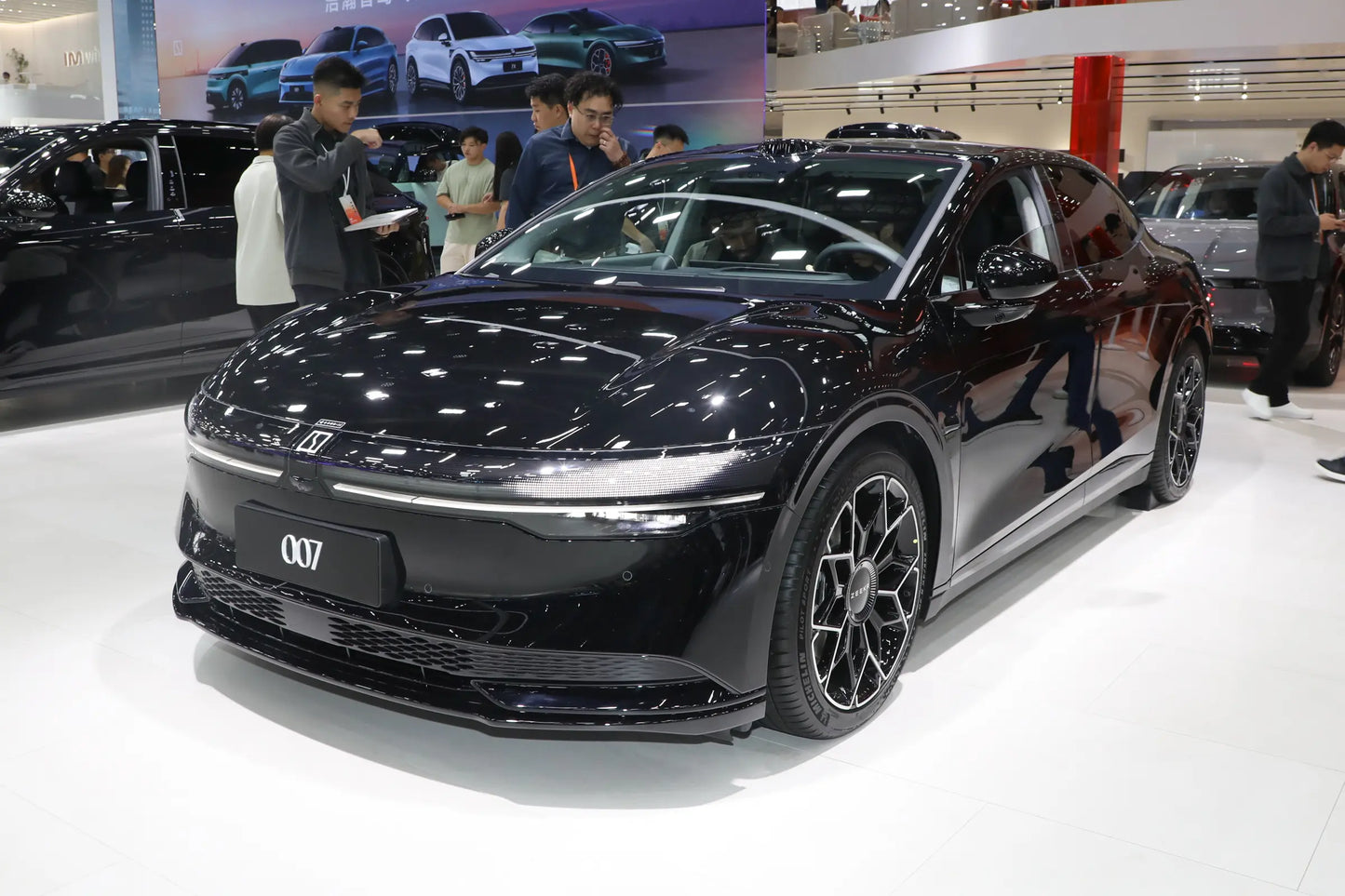
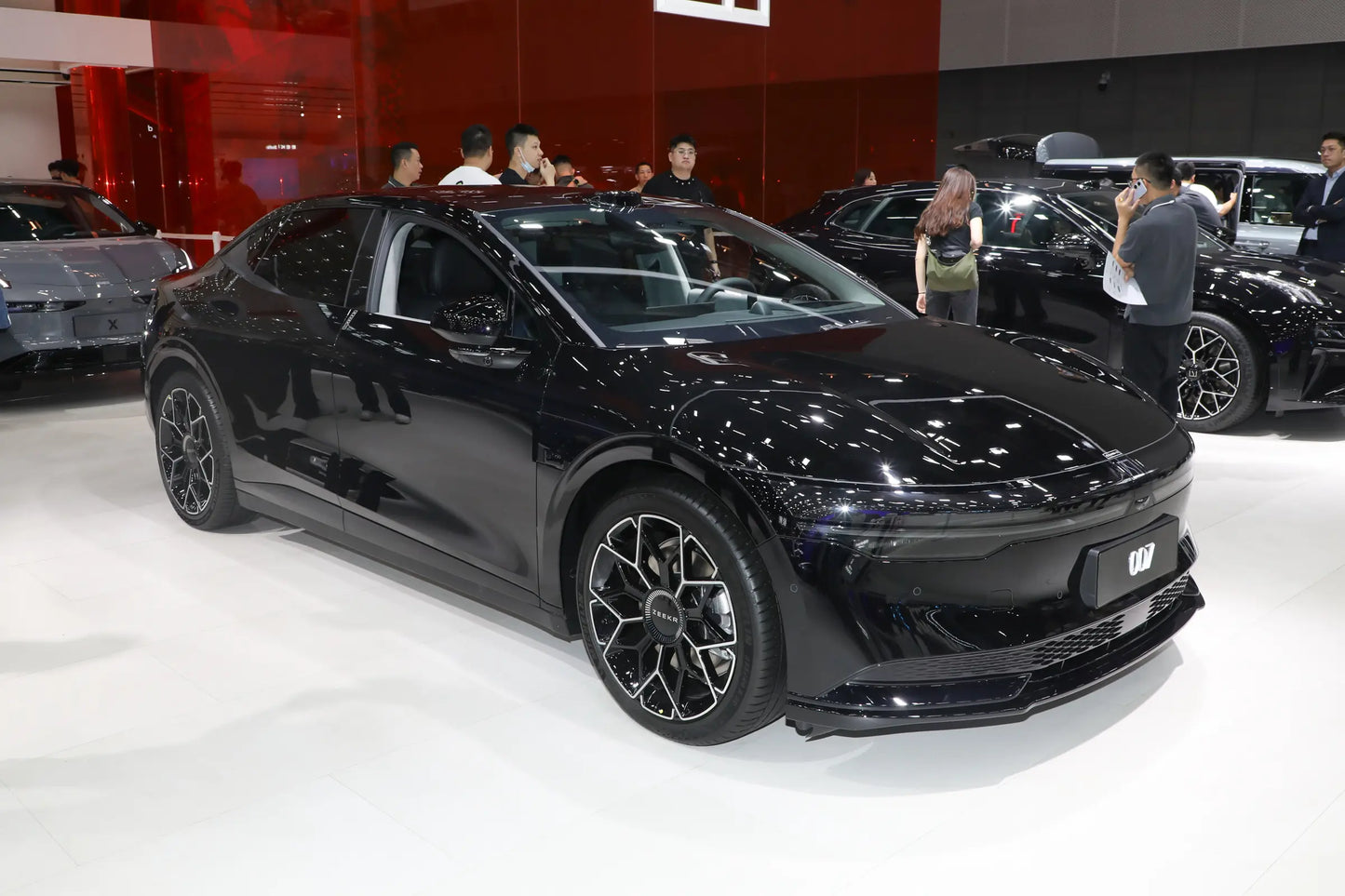
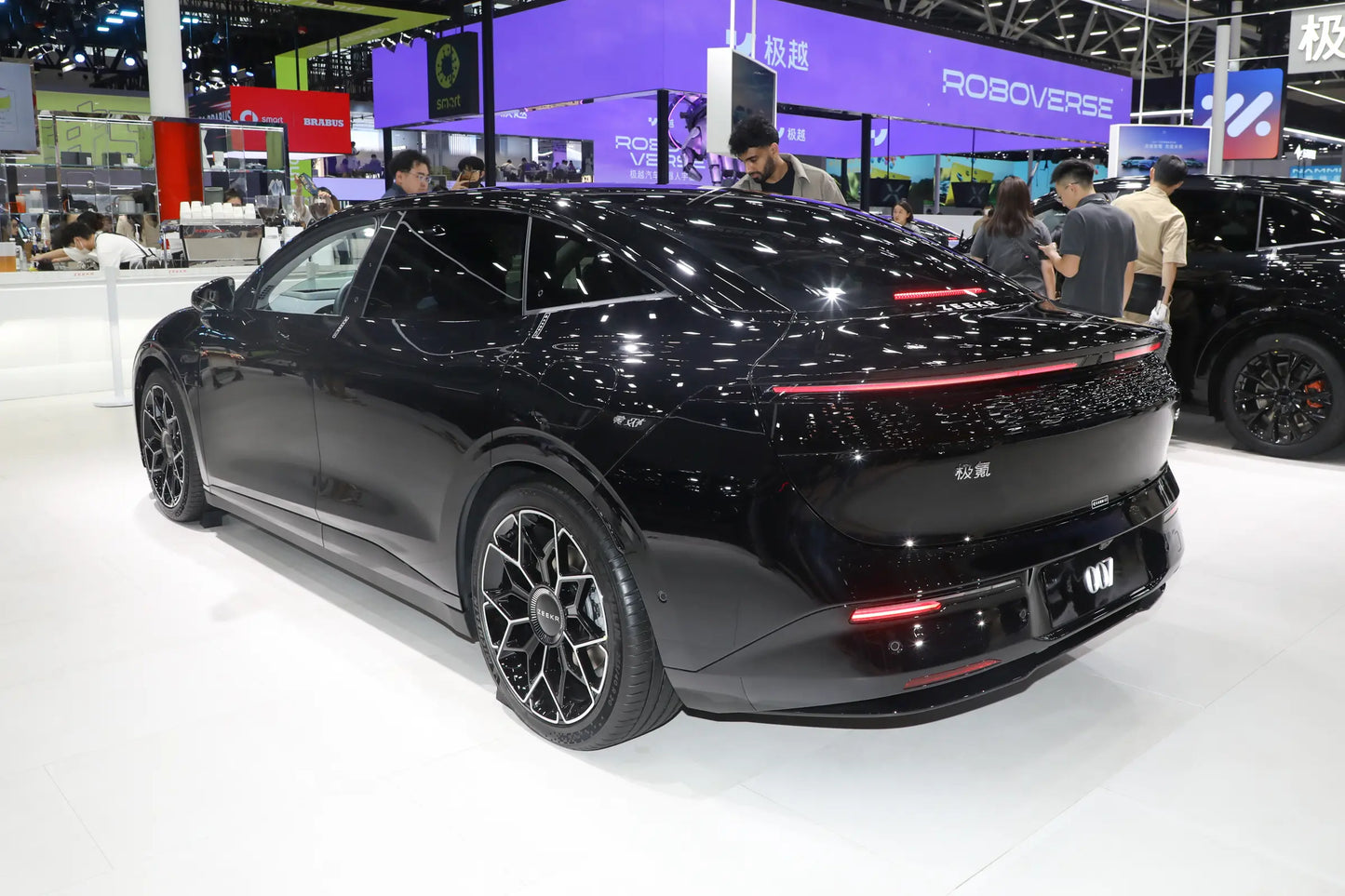
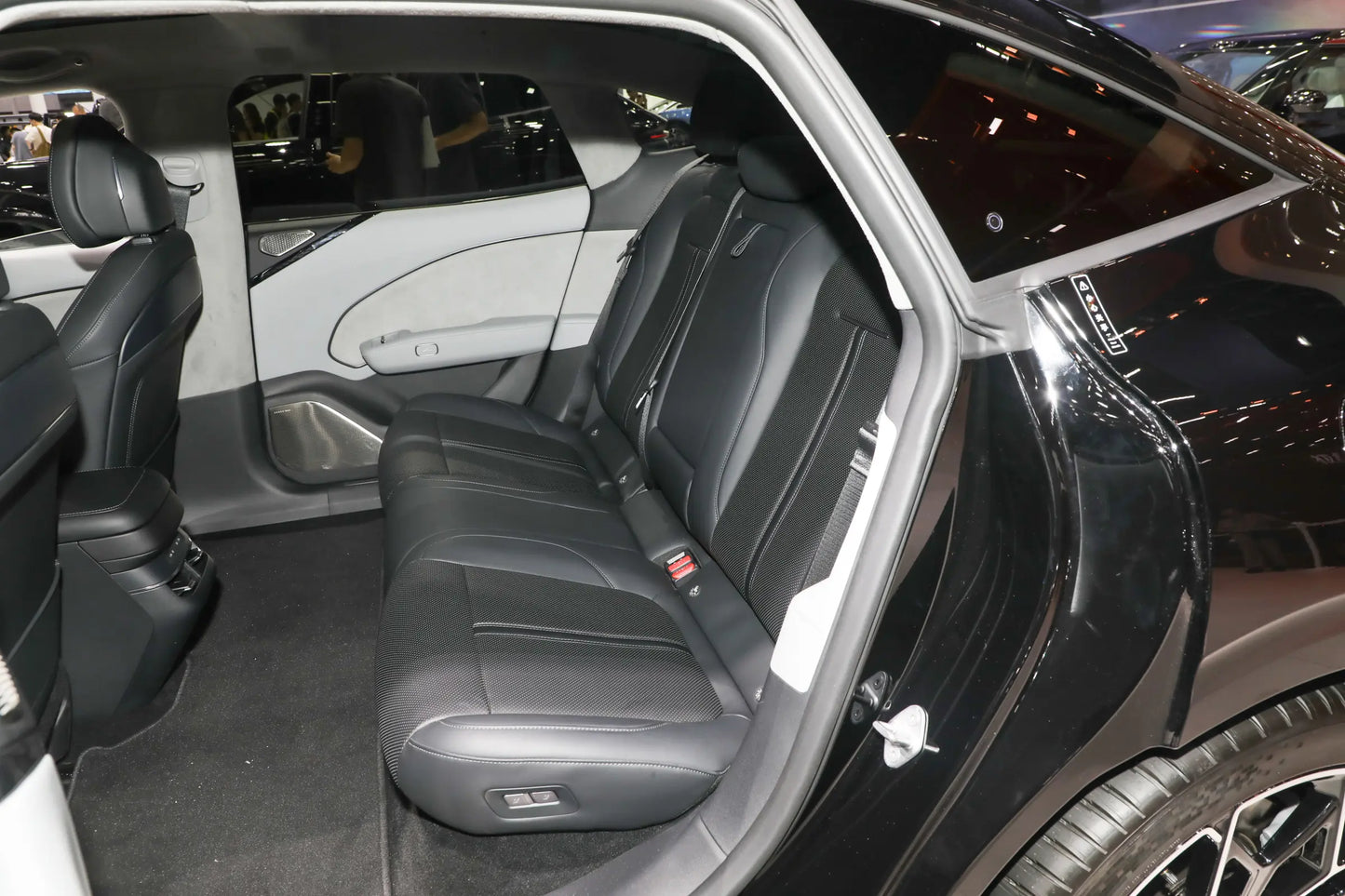
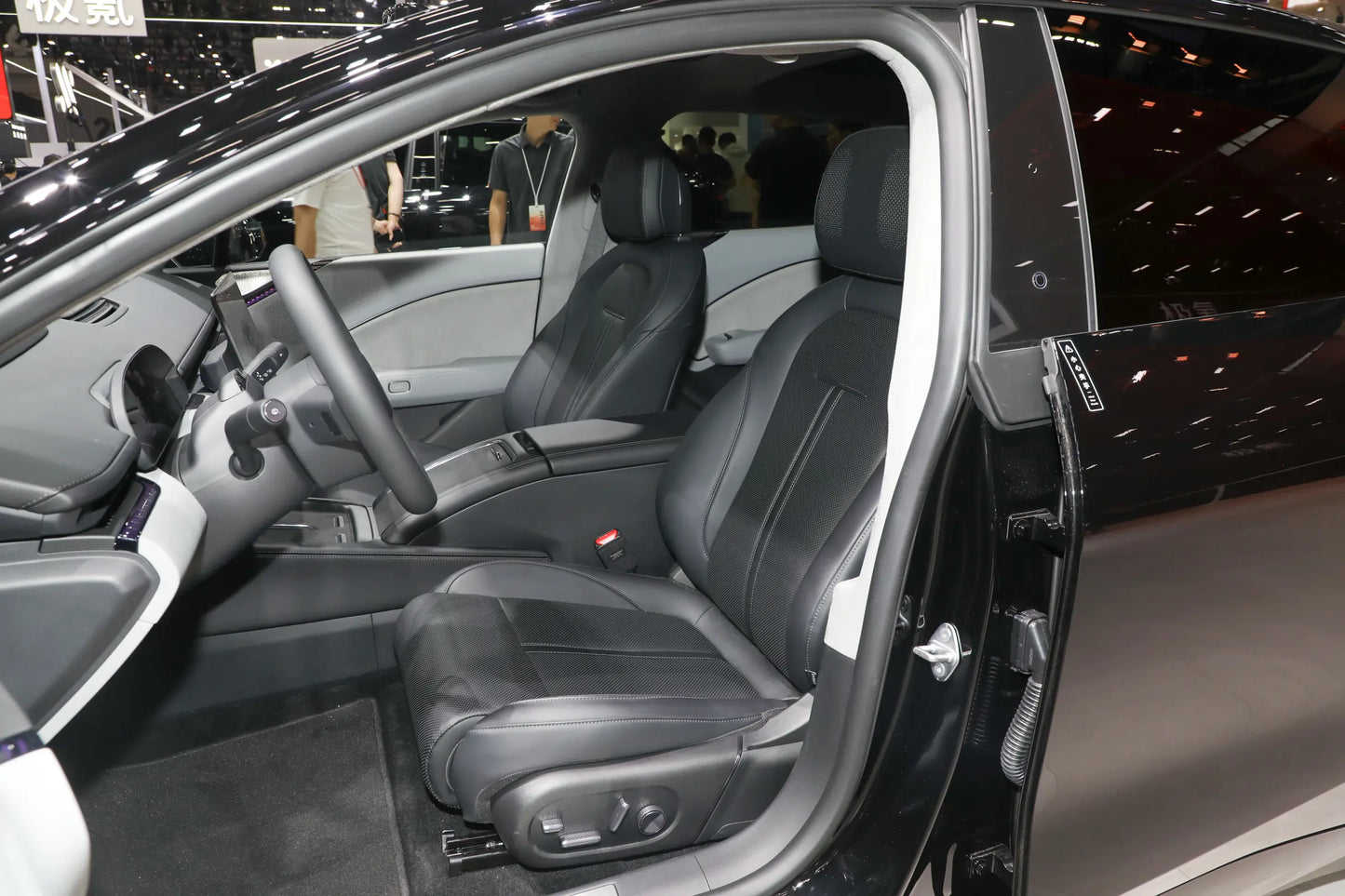
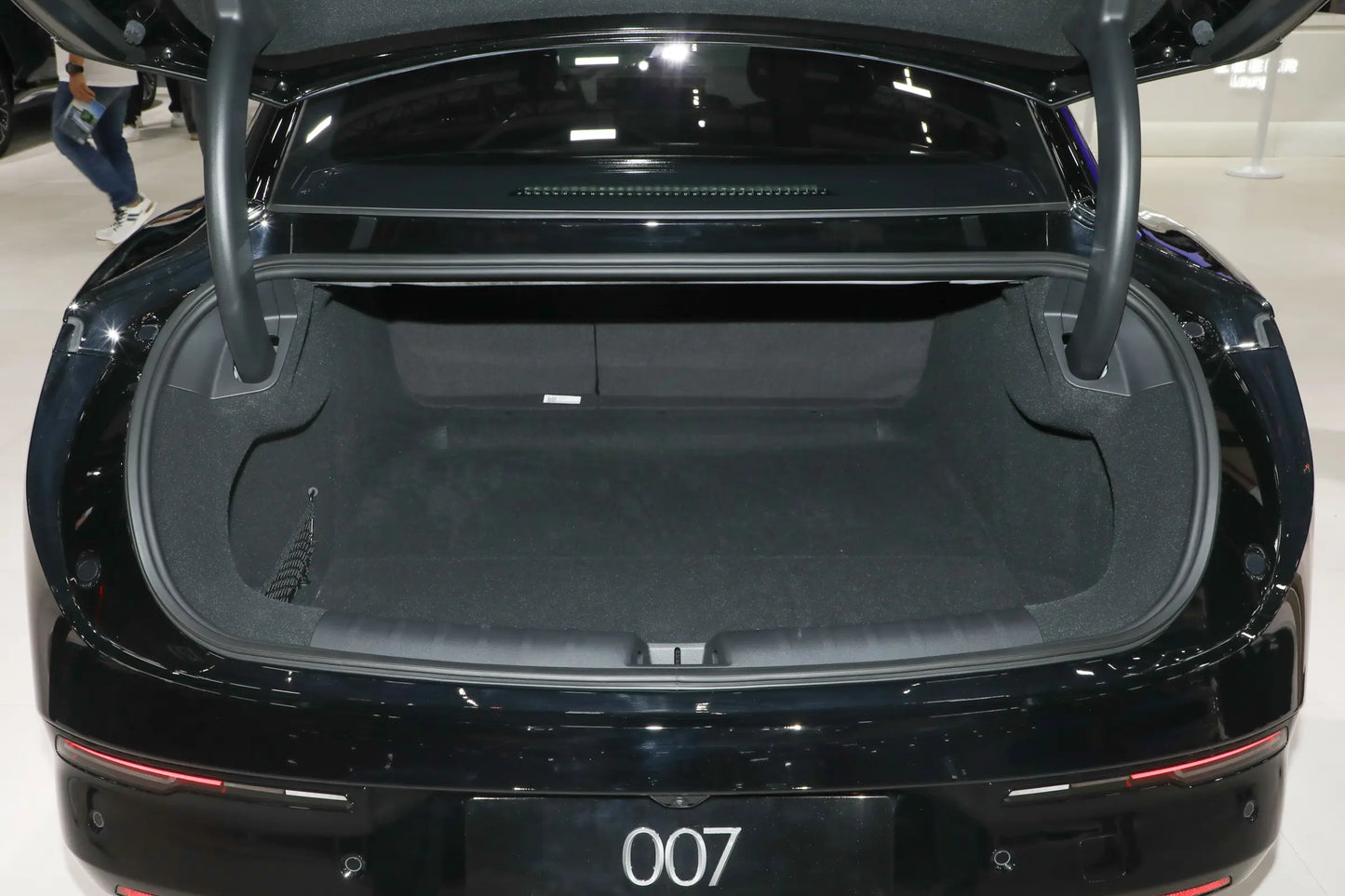
Vehicle Model Profile: ZEEKR 007

Vehicle Highlights
-
Excellent Range and Charging Capability: With a CLTC range of 870km and a battery capacity of 100kwh, it is at the leading level among vehicles in the same class, making cross-city travel stress-free.
-
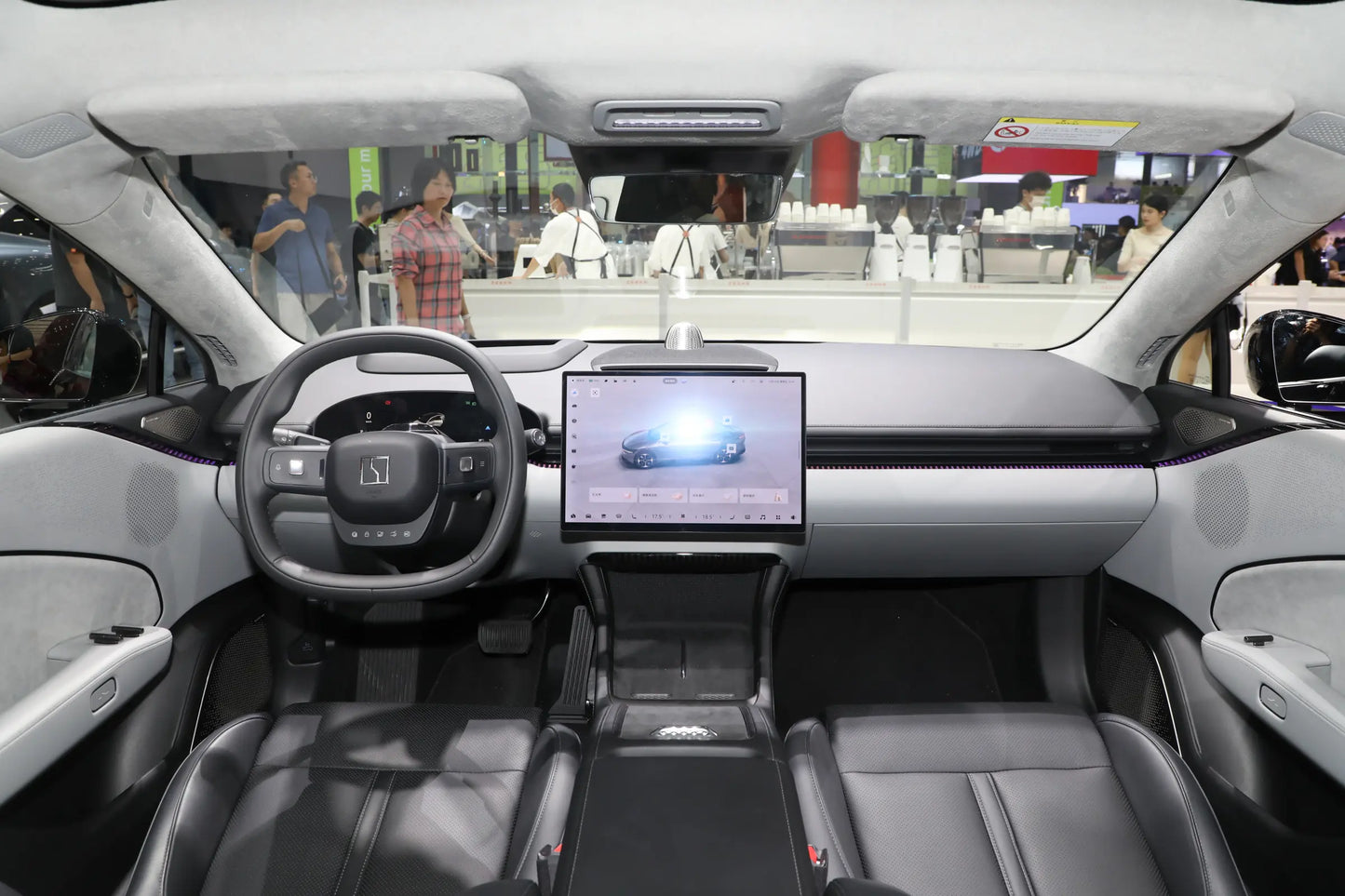
Rich Tech Configurations: Equipped with a 15.05-inch OLED central control screen and a Qualcomm Snapdragon 8295 chip, the screen displays finely and the vehicle system runs smoothly. Meanwhile, it comes standard with heating, ventilation for both the main and co-driver seats, and massage for the main driver, enhancing the driving and riding experience.
Please Note
-
The ground clearance of the chassis is relatively small. Extra care should be taken to avoid scratches when entering or exiting the garage in daily life, and it is not suitable for scenarios with large ground height differences.
-
Some models use lithium iron phosphate batteries, whose range is greatly affected in winter. It is recommended that users in severely cold regions in winter choose models with other types of batteries.
Overview
ZEEKR 007 is a pure electric mid-size car launched by the Zeekr brand under Geely Group, positioned in the mid-to-high-end new energy vehicle market.
The sales performance of Zeekr 007 is somewhat volatile. It achieved a cumulative sales volume of 26,746 units in the first half of 2024, with an average of approximately 4,458 units per month, ranking 20th in the mid-size sedan market. In September 2025, it sold 3,915 units, ranking 66th in the monthly sedan sales list.
The 2025 ZEEKR 007 is available in two-wheel-drive and four-wheel-drive versions, offering two battery capacities of 75kwh and 100kwh. The starting price is approximately 30,000 US dollars, and the top-of-the-line model is about 43,000 US dollars. Whether for young consumers pursuing a sense of technology or family users focusing on quality and practicality, the Zeekr 007 can meet their needs.
You can explore the vehicle’s exterior and interior design in detail via:
Basic Information
Configuration
Model:ZEERK 007 2025 Long-Range Rear-Wheel Drive Smart Driving Version
Driving Range (km) (CLTC): 870
Driving Range (km) (WLTP): 713 (Reference: EV Range Converter)
Charging Time (hours): 0.25 hours for fast charging, 14.29 hours for slow charging
100km Power Consumption (kWh/100km): 12.7
Battery Capacity (kWh): 100.01
Maximum Speed (km/h): 210
Vehicle Dimensions (mm): 4865x1900x1450
Maintenance Costs and Manufacturer Services
Charging Cost
Based on the global average residential electricity price of USD 0.17/kWh (Global Petrol Prices, 2025), the ZEERK 007 consumes approximately 12.7 kWh per 100 km, resulting in a charging cost of about $2.16 per 100 km.
Maintenance Cost
The average annual maintenance cost for an electric vehicle is approximately 30%–40% that of a fuel-powered vehicle.
Manufacturer Services
The vehicle warranty period is 4 years or 100,000 km (DCAR, 2025).
Subsidies and Policies
| Examples | |
| Germany | Motor tax exemption for EVs with less than 50g CO2/km emissions or at least 60km range (80km from 2025) until 2030. Privileges for electric cars on German roads, e.g. car parking and bus lane use. (Government of Germany, 2012) |
| Switzerland | Legislative revision including support for recharging stations, an extension of tax exemptions for electric and hydrogen trucks until 2030. (Swiss Federal Government, 2023) |
| Thailand | Tax reductions and exemptions for EVs to promote their deployment (Government of Thailand, 2022) |
| United Kingdom | ZEV mandate: 80% of new cars and 70% of new vans sold in Great Britain will be zero emission by 2030, increasing to 100% by 2035. Around 300 000 public chargers expected as a minimum by 2030 (Government of the United Kingdom, 2023) |
| United States | Alternative Fuel Vehicle Refueling Property Credit offers tax credits up to 30% (up to USD 1 000 for residences or up to USD 100 000 for business) for the installation of alternative fuelling equipment in low-income communities or non-urban areas (Government of the United States, 2023) |
| Mexico | Signatory to COP26 ZEV Declaration to work towards all sales of new cars and vans being zero emission globally by 2040. (Government of Mexico, 2022) |
| United Arab Emirates | Increase EV charging stations to 10 000 in 2030 and 30 000 by 2050. (Government of Dubai, 2023) |
| Brazil | National Green Mobility and Innovation Program ("MOVER") (Government of Brazil, 2024) |
For more, please refer to Global EV Policy Explorer to check the EV policies in your location (Global EV Policy Explorer, 2025)
Competitive Comparison
We have identified 3 competing models with a starting price difference of within 1,000 US dollars compared to ZEEKR 007. The comparison includes Tesla Model 3, Xpeng P7, and BYD Seal 2025 pure electric models, and we have compared the officially released parameters. The comparison shows that ZEEKR 007 demonstrates dual advantages of long range and intelligent configuration in the comparison with same-class models.
-
Range & Energy Efficiency Zeekr 007 has a CLTC range of 870km, which is 168km more than the second-place Xpeng P7 (702km), greatly reducing the frequency of charging for medium and long-distance travel. Model 3 (634km) and Seal (600km) follow closely, all meeting cross-city travel needs.
-
Charging Performance Zeekr 007 has a battery capacity of 100kwh, leading among the four models. Its fast-charging time is 0.25 hours, second only to Xpeng P7 (0.2 hours), while Seal (0.42 hours) is slower. Zeekr 007, Xpeng P7, and Seal all come standard with an 800V high-voltage platform, and their charging speed is better than that of Model 3 (400V).
-
Power Performance The maximum power is 310kW, and the top speed is 210km/h. Power performance is moderate among these models.
-
Space & Practicality The body dimensions are 4865×1900×1450mm, leading among same-class mid-size cars like Model 3 and Seal. The luggage compartment volume is 462L, slightly smaller than that of Seal (594L). The overall space capability is excellent, meeting the needs of family travel.
-
Tech Features Zeekr 007 is equipped with a 15.05-inch OLED central control screen + Qualcomm Snapdragon 8295 chip, supporting navigation assistance on high-speed sections. It comes standard with heating/ventilation for the main and co-driver seats, combining driving and riding comfort with convenience.
Summary
Zeekr 007 is a high-end pure electric sedan with outstanding strength. Its CLTC range of 870km (100kWh Kirin battery) far exceeds that of its peers. It is equipped with comfortable configurations such as heating/ventilation for the main and co-driver seats + main driver massage, and a 35.5-inch AR-HUD, taking into account practicality and a sense of ceremony. Its comprehensive strength is highly competitive in the 30,000-40,000 US dollar pure electric sedan market, making it suitable for users who frequently travel across cities or focus on intelligent driving.
| Model / Parameter | ZEEKR 007 2025 Long-Range Rear-Wheel Drive Smart Driving Version 100kWh | Model 3 2025 Rear-Wheel Drive Version | Xpeng P7 2025 702 Long-Range Ultra | BYD Seal 2025 600 Four-Wheel Drive Smart Driving Version |
| Driving Range (km) | 870 | 634 | 702 | 600 |
| Vehicle Dimensions (mm) | 4865×1900×1450, Wheelbase 2928 | 4720×1848×1442, Wheelbase 2875 | 4888×1896×1450, Wheelbase 3008 | 4800×1875×1460, Wheelbase 2920 |
| Number of Seats (units) | 5 (4-door 5-seat sedan) | 5 (4-door 5-seat sedan) | 5 (5-door 5-seat liftback) | 5 (4-door 5-seat sedan) |
| Trunk Capacity (L) | 462 | 594 | 575-1929 | 400 |
| Charging Time | Fast charging 0.25 hours (10-80%), Slow charging 14.29 hours | Not mentioned | Fast charging 0.2 hours (10-80%), Slow charging not mentioned | Fast charging 0.42 hours (10-80%), Slow charging 11.52 hours |
| Maximum Power (kW) | 310(422Ps) | 194(264Ps) | 270(367Ps) | 390(530Ps) |
| Maximum Torque (N·m) | 440 | 340 | 465 | 690 |
| Maximum Speed (km/h) | 210 | 200 | 230 | 240 |
| 100km Power Consumption (kWh/100km) | 12.7 | 11.2 | 12 | 14.9 |
| Battery Capacity (kWh) | 100.01 (NMC battery, Kirin Battery Technology) | 62.5 (LFP battery) | 74.9 (LFP battery, 5C Super Charging AI Battery Technology) | 80.64 (LFP battery, Blade Battery Technology) |
| Auto Hold | Standard | Standard | Standard | Standard |
| Driver Assistance Camera | • Rearview camera, • Blind-spot camera, • 360° panoramic image, • Transparent image, • Rear parking radar | • Rearview camera, • Blind-spot camera, • 360° panoramic image, • Transparent image, • Rear parking radar | • Rearview camera, • Blind-spot camera, • 360° panoramic image, • Transparent image, • Front and rear parking radar | • Rearview camera, • Blind-spot camera, • 360° panoramic image, • Transparent image, • Front and rear parking radar |
| Sunroof Type | • Segmented non-opening panoramic sunroof | • Segmented non-opening panoramic sunroof | • Non-opening panoramic sunroof (with full-sky sunshade) | • Non-opening panoramic sunroof (optional intelligent dimming sunroof, 6600 yuan) |
| Power Seats | • Driver's electric adjustment (front/rear + backrest angle + height + thigh support), • Co-driver's electric adjustment (front/rear + backrest angle + height), • Front seats heating/ventilation/massage, • Driver's seat memory, • Second-row seats heating | • Driver's electric adjustment (front/rear + backrest angle + height), • Co-driver's electric adjustment (front/rear + backrest angle + height), • Front seats heating (optional) | • Driver's electric adjustment (front/rear + backrest angle + height + thigh support + lumbar), • Co-driver's electric adjustment (front/rear + backrest angle + height + lumbar), • Front seats heating/ventilation/massage, • Driver's seat memory, • Second-row seats heating, • Co-driver boss key | • Driver's electric adjustment (front/rear + backrest angle + height + lumbar), • Co-driver's electric adjustment (front/rear + backrest angle + height + lumbar), • Front seats heating/ventilation/massage, • Driver's seat memory, • Second-row seats heating, • Co-driver boss key |
| Central Control Screen Size (inches) | • 15.05 (2.5K OLED screen, rotatable) | • 15.4 (LCD screen) | • 15.6 (LCD screen, rotatable) | • 15.6 (LCD screen, rotatable) |
Data Source: (DCAR, 2025)
Real-world Review
Advantages:
-
The rear-wheel-drive smart driving version achieves a measured 0-100km/h acceleration time of 4.85 seconds, outperforming the official 5.1-second result. The four-wheel-drive version has even stronger power.
-
The seats support heating, ventilation, and massage. The main driver's seat has an adjustment stroke of up to 255mm. The central armrest box is large, and the wireless phone charging power is 50W.
Areas for Improvement:
-
The fuzzy semantic recognition capability needs optimization, as it has difficulty recognizing relatively colloquial voice commands.
-
The length and angle of the rear seats are relatively short, limiting comfort during long-distance rides.
Test review from internal and third-party testing:
-
High-speed range test: In the test on the Second Ring Expressway in Chengdu, the average speed throughout the journey was 102km/h, the displayed average electricity consumption was 19.2kWh/100km, and the range achievement rate was 59%. Compared with same-class models (such as Xiaomi SU7 and Tesla Model 3), the range performance is at the upper-middle level.
-
Charging efficiency test: The measured maximum power of a 120kW charging pile is 92.4kW, and the charging time from 30% to 80% is about 27 minutes. The power of Zeekr charging stations can reach 200-210kW, and the charging speed leads to the same class.
Real User Reviews
To quantify the real user experience of car owners, we conducted a structured survey on Zeekr 007 owners at the highly influential DCAR Automotive Forum in 2025. A total of 298 valid questionnaires were collected in this survey. Through qualitative analysis of the feedback content, they were categorized into multiple positive feedback dimensions and negative feedback dimensions. There were 12 positive evaluation dimensions, with a total of 259 specific statements; and 11 negative evaluation dimensions, with a total of 39 specific statements. (DCAR, 2025).
Positive Feedback
Excellent Overall Space
Summary: Excellent acceleration performance, with a 0-100km/h acceleration time of 3.45 seconds, and the push-back feeling is gentle and comfortable.
Excellent Range and Performance
Summary:The overall driving experience is excellent, and the chassis and cornering performance are highly praised.
Negative Feedback
Poor Ground Clearance
Summary: The chassis clearance is relatively small, making it easy to scratch when entering or exiting the garage.
Winter Range Performance is Not Ideal
Summary:Lithium batteries are greatly affected by temperature, and the winter range fails to meet the actual standard.
References
DCAR (2025). DCAR. Retrieved from https://www.dongchedi.com/auto/series/20041
EV Range converter (2025). EV Range converter. Retrieved from https://ev-range-standard-converter.web.app/
Global EV Policy Explorer (2025). Explore key policies and measures for EV deployment. Retrieved from https://www.iea.org/data-and-statistics/data-tools/global-ev-policy-explorer?utm_source=chatgpt.com
Global Petrol Prices (2025). World Average Electricity Prices, USD / kWh. Retrieved from https://www.globalpetrolprices.com/electricity_prices/