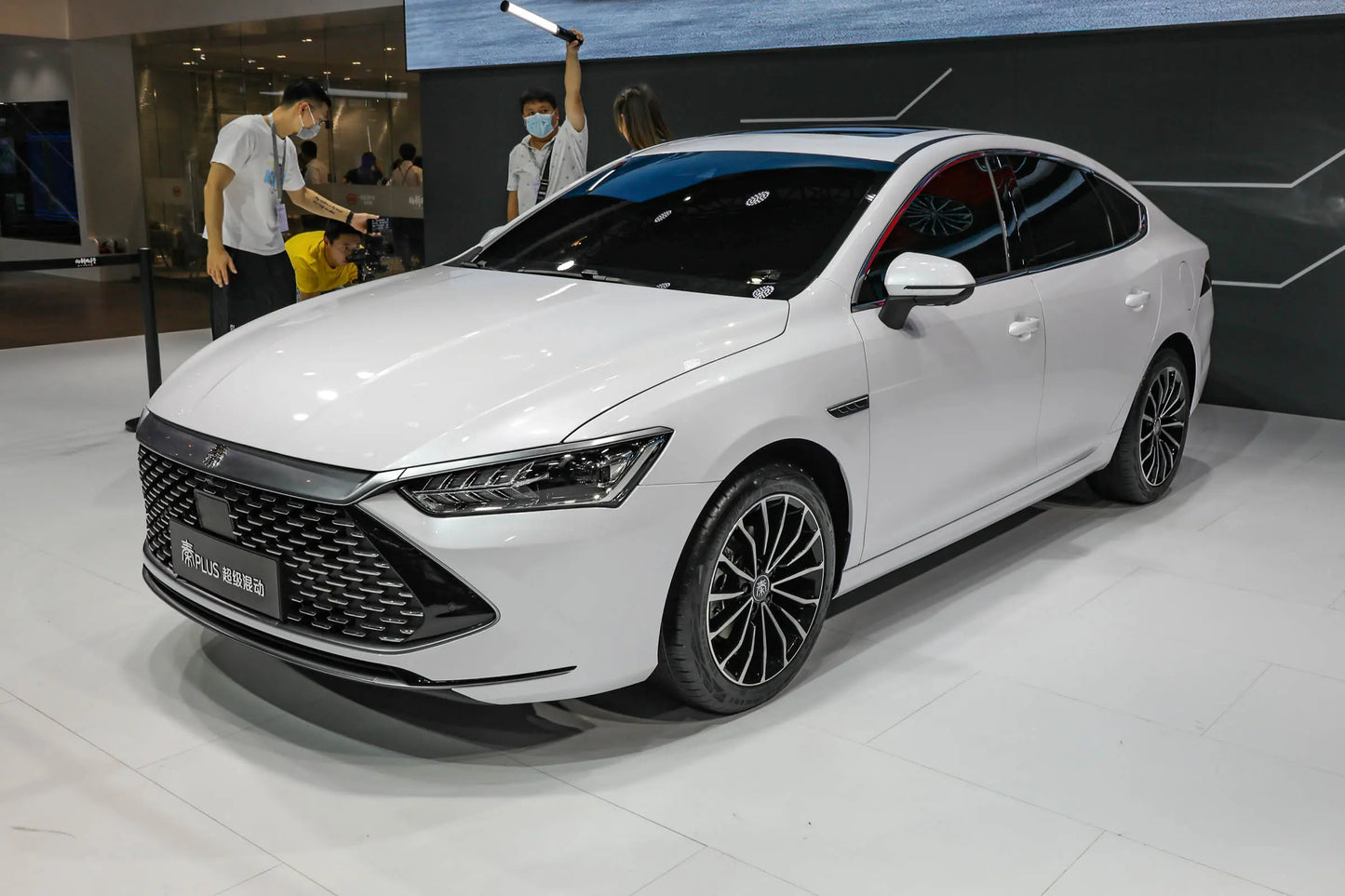
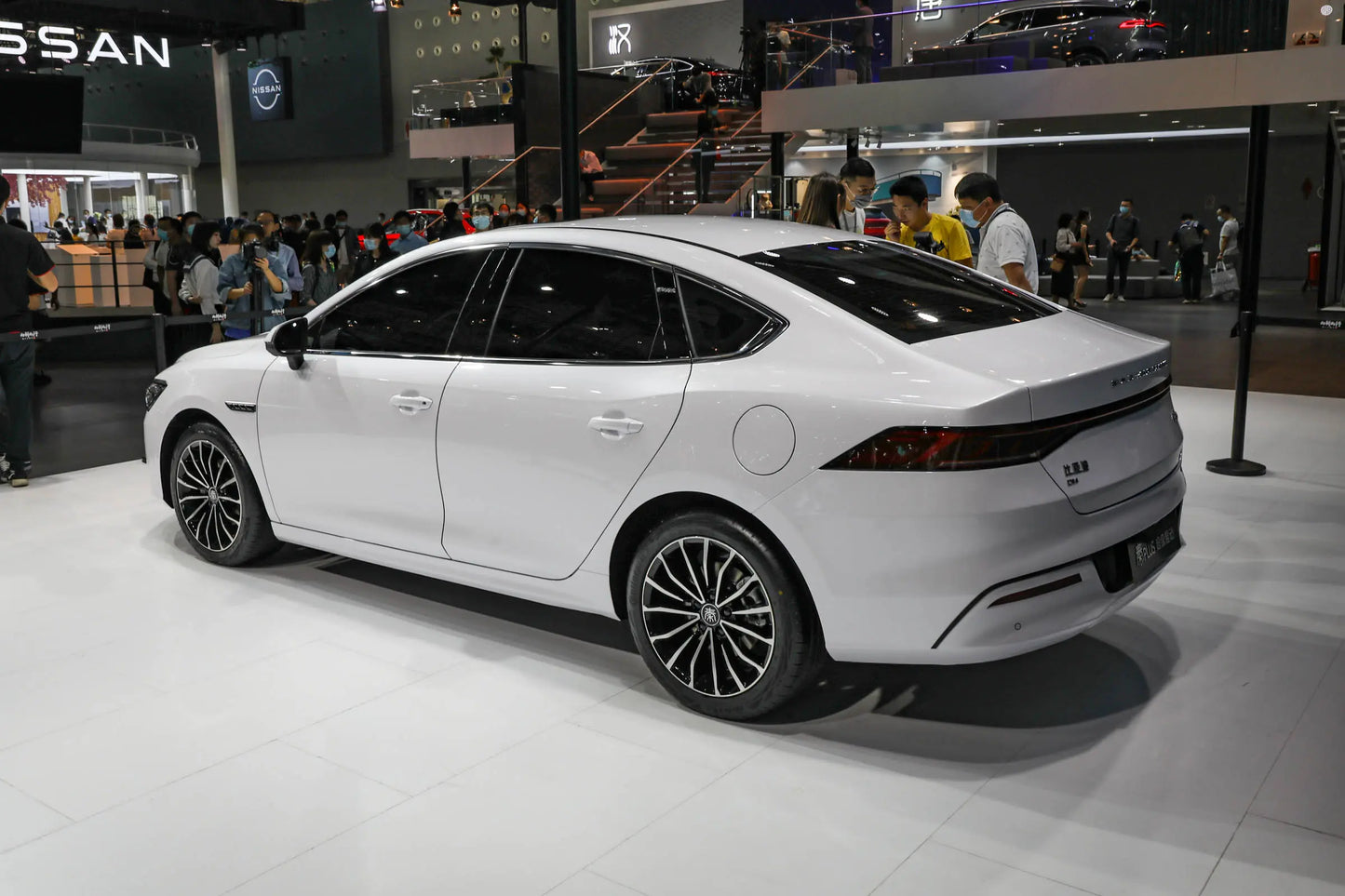
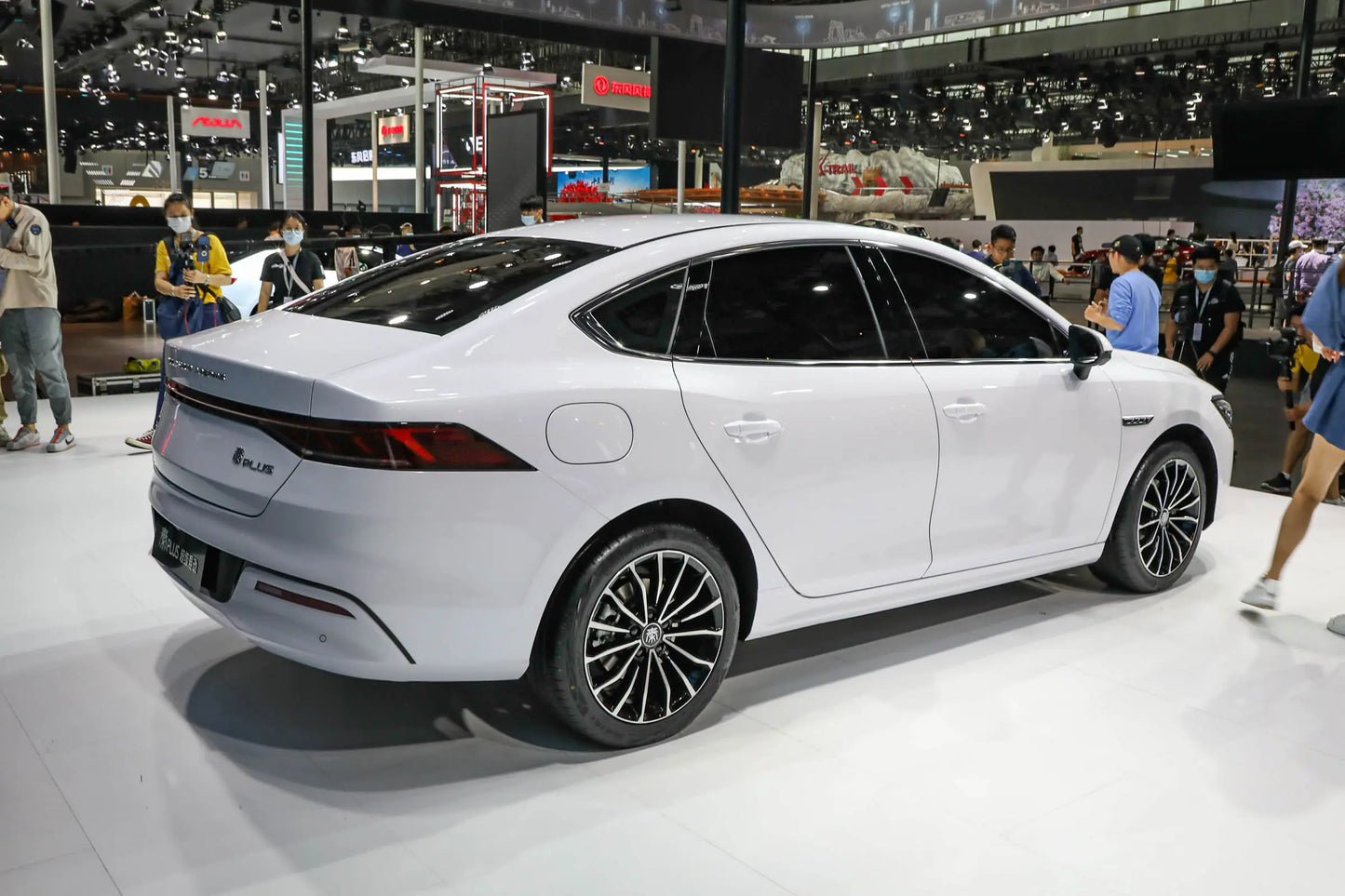
Vehicle Profile: BYD Qin PLUS EV

Model Highlights:
-
Efficient Powertrain & Range: Equipped with a 100kW front-mounted permanent magnet synchronous motor delivering 180N·m of peak torque, paired with a BYD Blade Battery. Offers a CLTC range of 420 km and an energy consumption of 12.0 kWh/100km, perfectly meeting daily commuting needs.
-
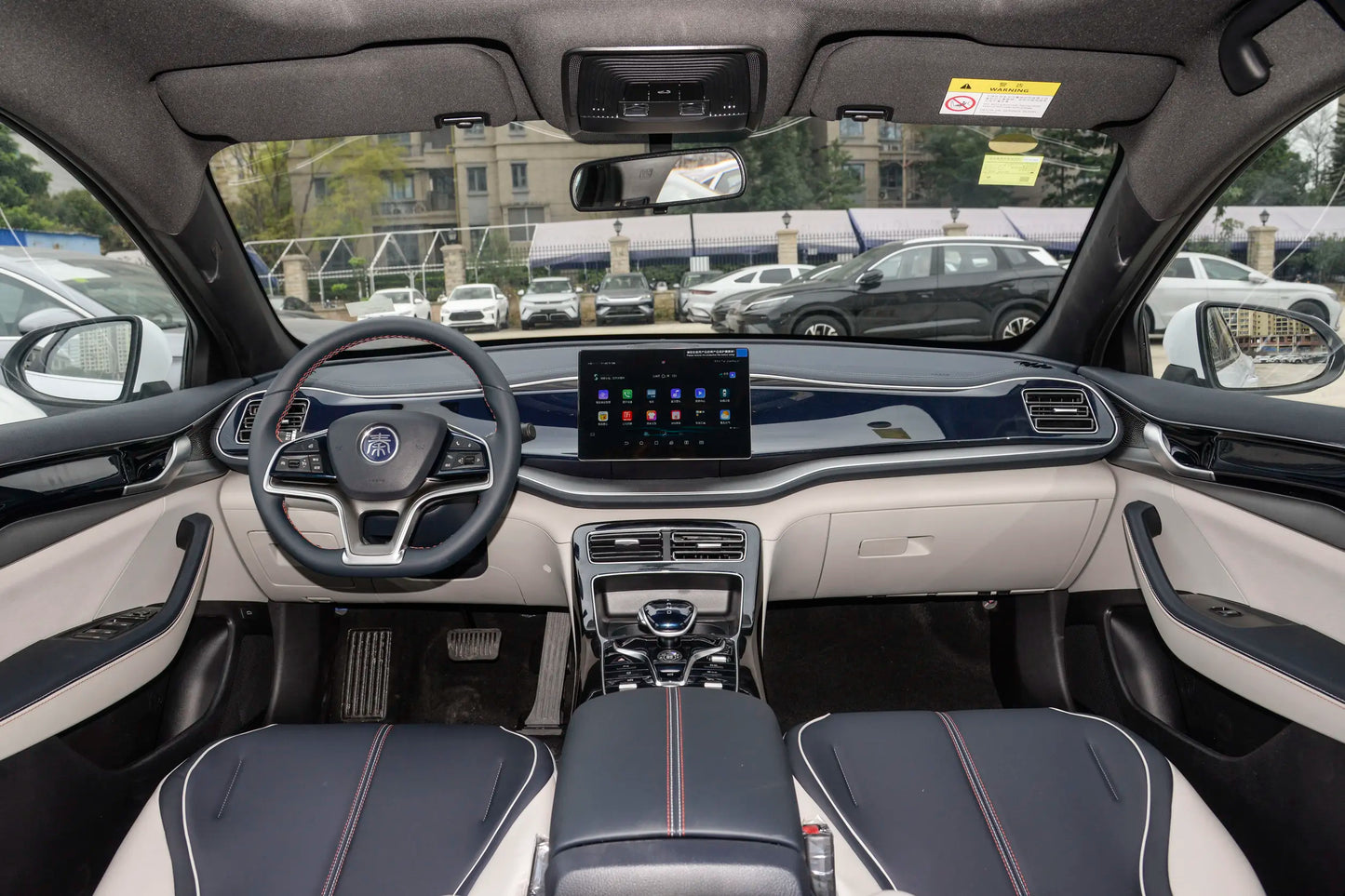
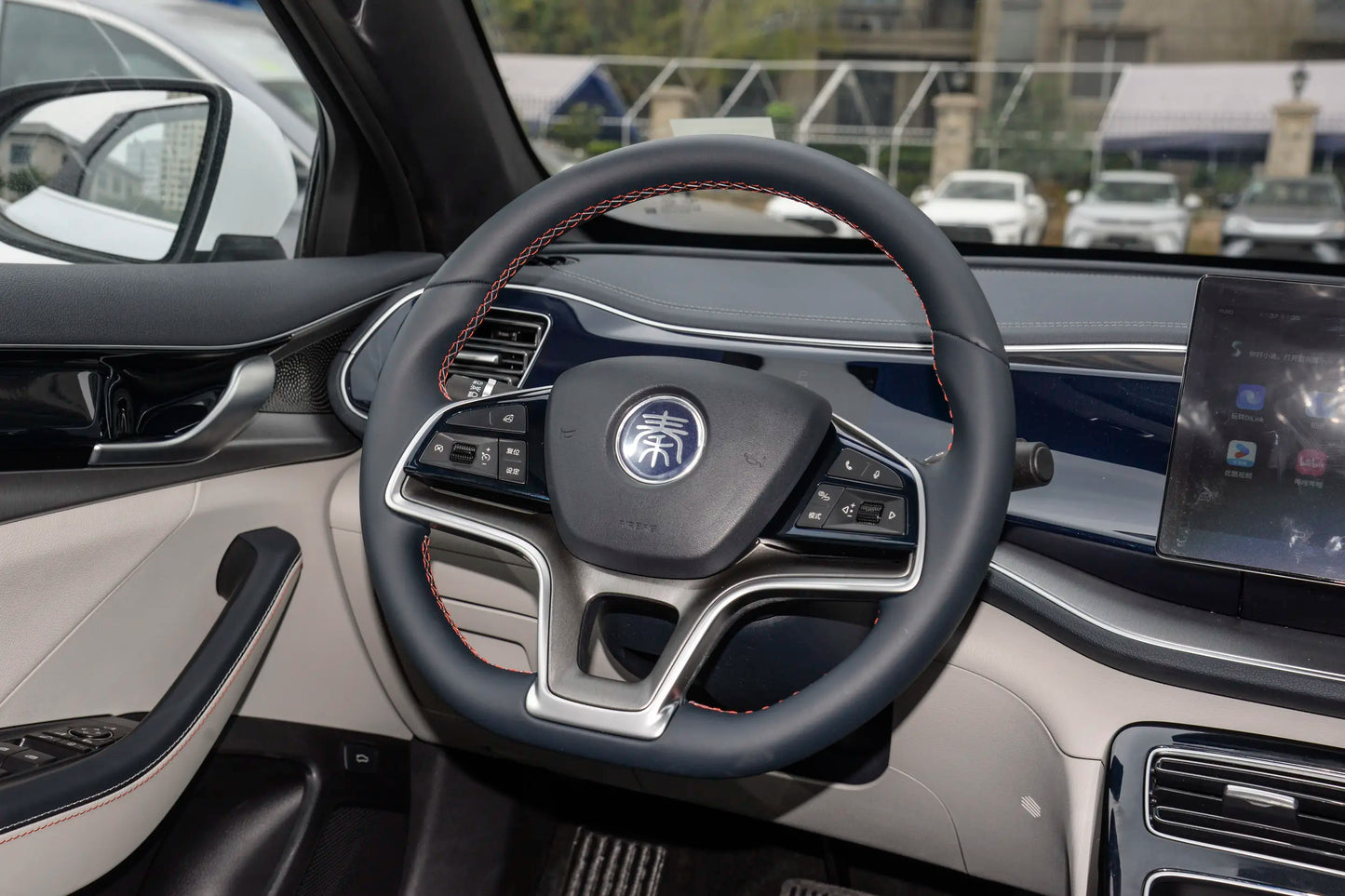
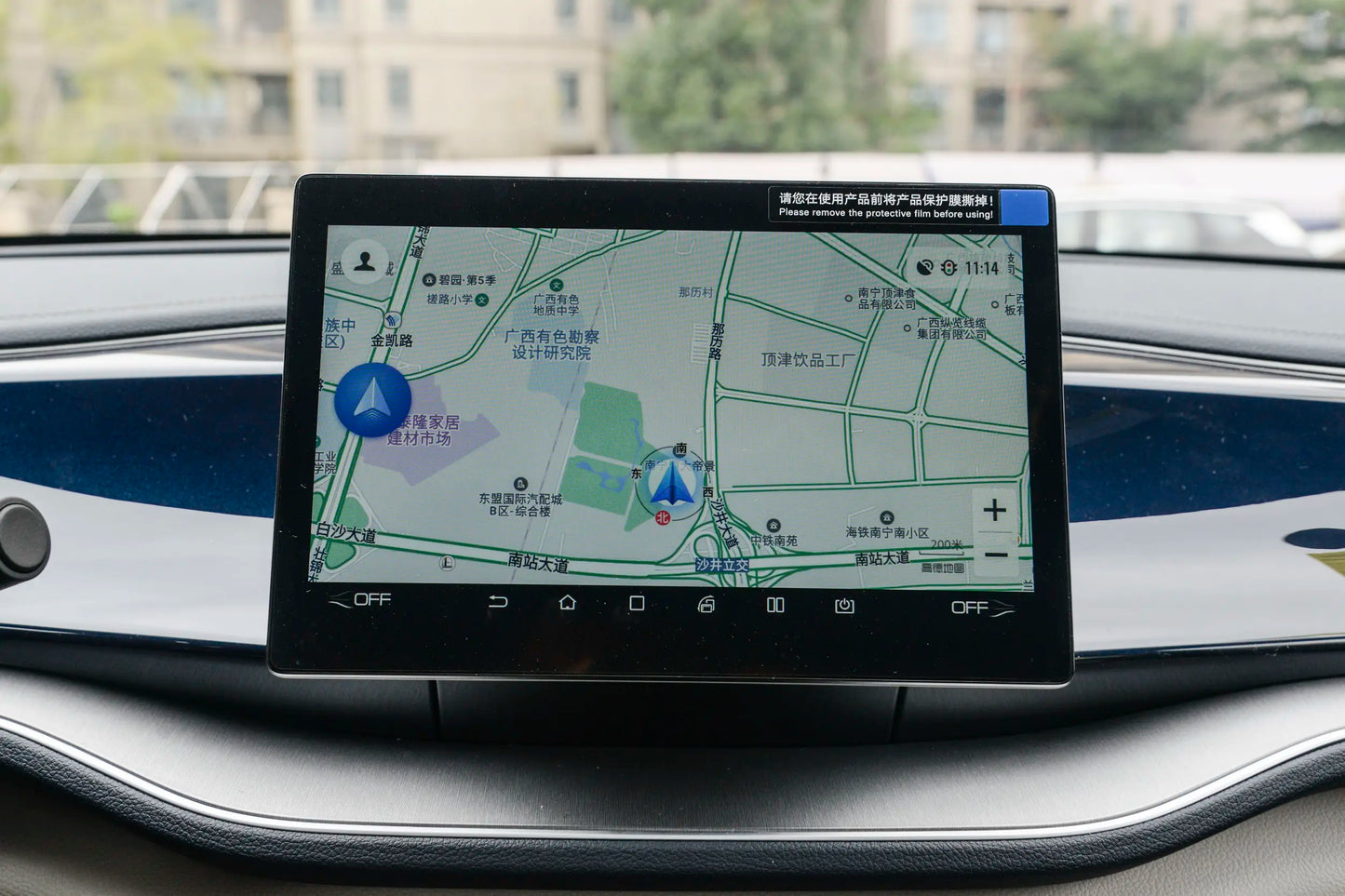
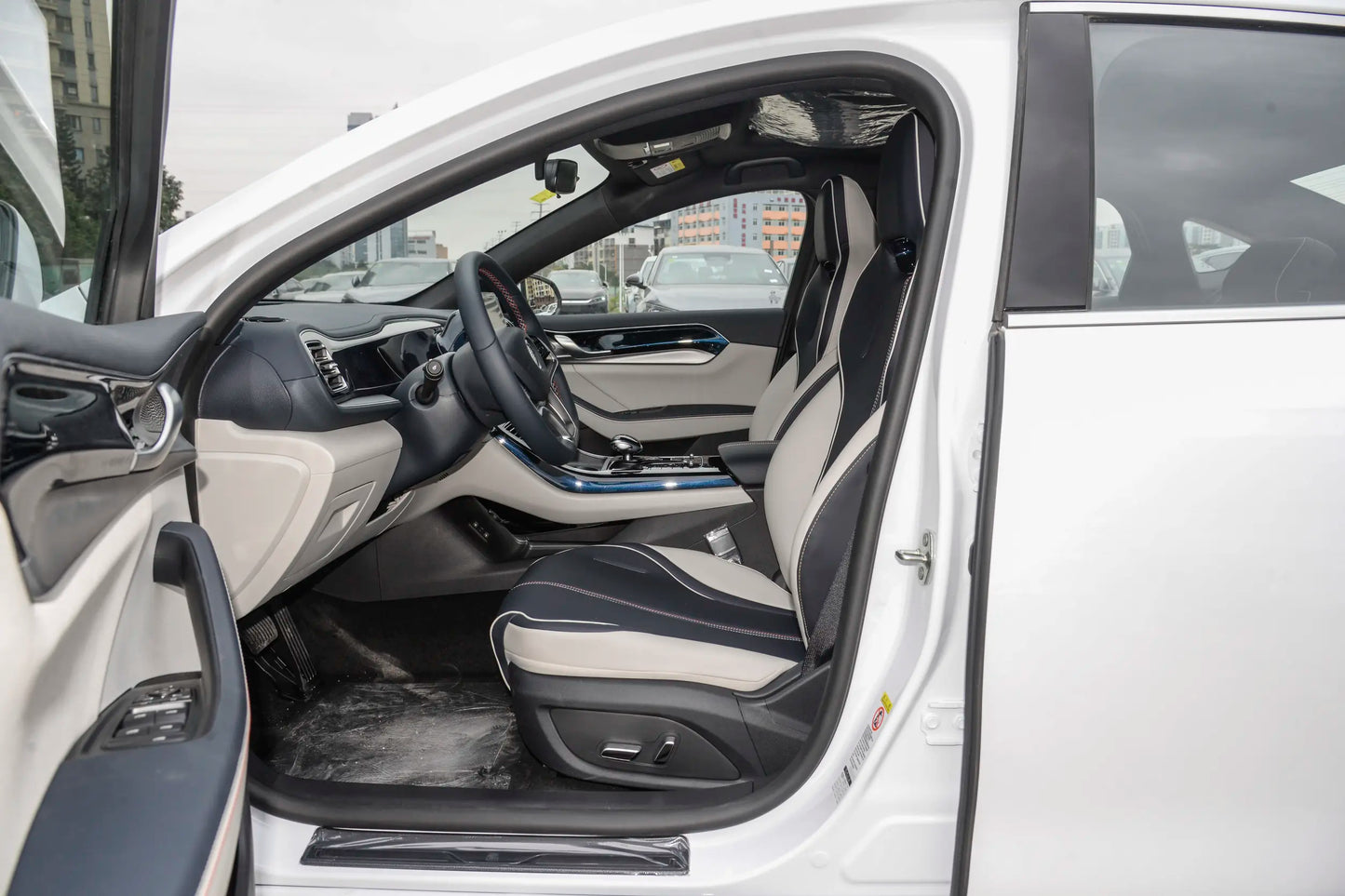
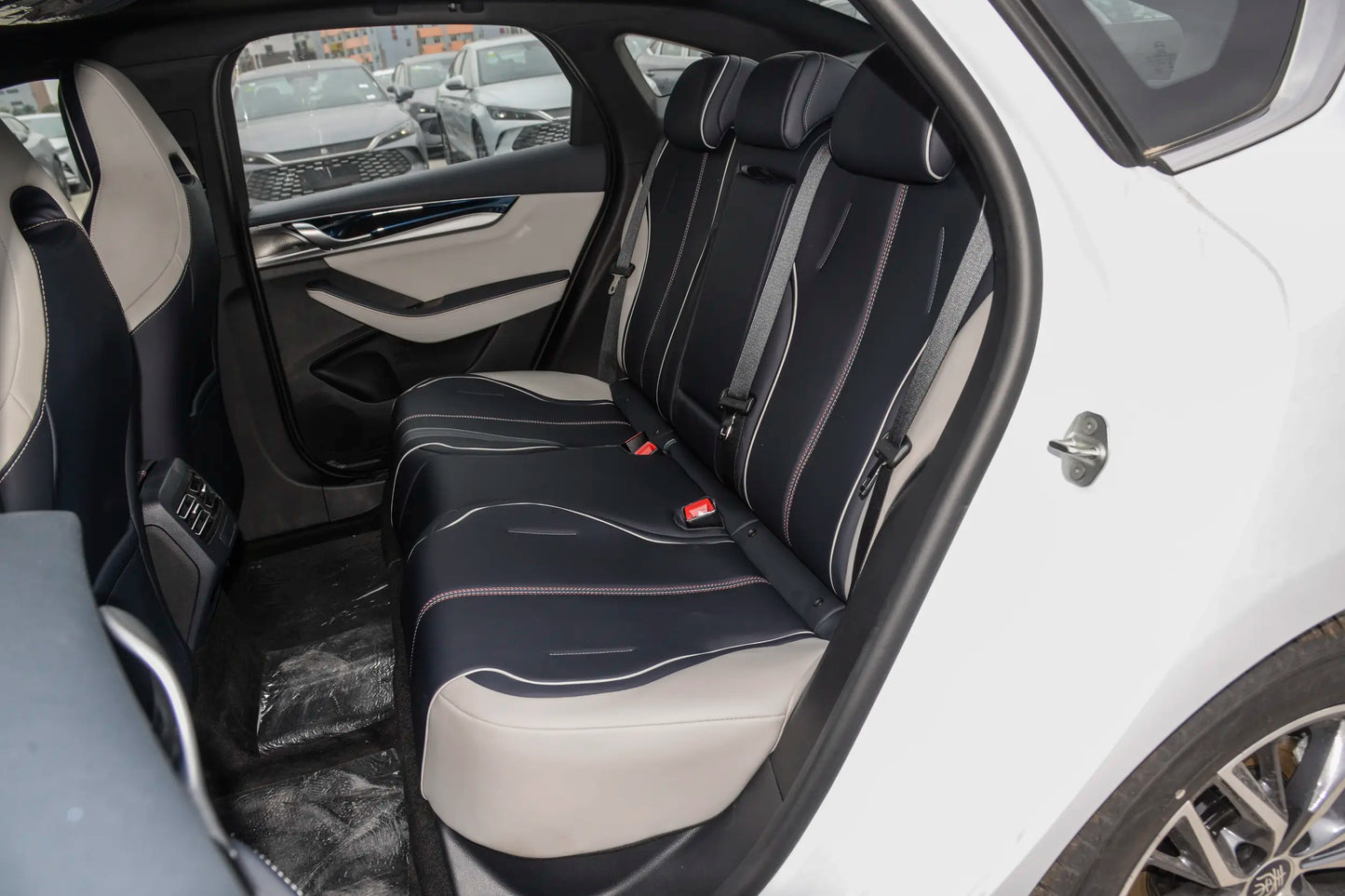
Comfort & Space: Features a 2,718mm wheelbase with a focus on generous rear legroom, enhancing passenger comfort. The interior includes an 8.8-inch embedded full LCD instrument cluster and a rotatable 10.6-inch adaptive floating central Pad.
-
Technology & Safety: Incorporates the DiLink intelligent connectivity system and is equipped with comprehensive active and passive safety features including Electronic Stability Program (ESP), Tire Pressure Monitoring System, and multiple airbags.
Please Note:
-
Charging Flexibility: The base variant does not come standard with DC fast charging; this feature requires an optional fast-charging package.
-
Interior Materials: To maintain competitive pricing, hard plastics are used in some interior areas.
-
High-Speed Energy Consumption: Energy consumption increases during sustained high-speed driving.
Vehicle Overview
The BYD Qin PLUS EV is a core all-electric sedan model in BYD's Dynasty Series. The 2025 model with a 420km range was officially launched in January 2025, primarily targeting family users and urban commuters who prioritize practicality and cost-effectiveness. With its precise range positioning and more accessible price point, this variant continues to maintain strong competitiveness in the compact electric sedan market.
The starting price of the 2025 BYD Qin PLUS EV 420km version is approximately $15,800 USD, with the top-tier model priced at around $19,800 USD. Its exceptional cost-performance ratio has made it a popular choice in the pure electric sedan market under the $20,000 price segment.
You can get a comprehensive overview of the vehicle's exterior and interior design through the following video:
Basic Information
Configuration
-
Model: BYD Qin PLUS EV 2025 420km Version
-
Range (CLTC): 420 km
-
Range (WLTP): 341 km (Reference: EV Range Converter, 2025)
-
Charging Time (DC Fast Charging): 0.5 hours (30% to 80%)
-
Energy Consumption: 12.0 kWh/100km
-
Battery Capacity: 47.5 kWh
-
Top Speed: 150 km/h
-
Dimensions (L×W×H): 4765 × 1837 × 1515 mm
Maintenance Costs and Manufacturer Services
Charging Cost
Calculated at the global average residential electricity price of USD 0.17/kWh (Global Petrol Prices, 2025).With an energy consumption of 12.0 kWh/100km, the estimated charging cost per 100 kilometers is approximately $2.04.
Maintenance Cost
The average annual maintenance cost for an electric vehicle is approximately 30%–40% that of a fuel-powered vehicle.
Manufacturer Services
The vehicle warranty period is 6 years or 150,000 km (DCAR, 2025).
Subsidies and Policies
| Examples | |
| Germany | Motor tax exemption for EVs with less than 50g CO2/km emissions or at least 60km range (80km from 2025) until 2030. Privileges for electric cars on German roads, e.g. car parking and bus lane use. (Government of Germany, 2012) |
| Switzerland | Legislative revision including support for recharging stations, an extension of tax exemptions for electric and hydrogen trucks until 2030. (Swiss Federal Government, 2023) |
| Thailand | Tax reductions and exemptions for EVs to promote their deployment (Government of Thailand, 2022) |
| United Kingdom | ZEV mandate: 80% of new cars and 70% of new vans sold in Great Britain will be zero emission by 2030, increasing to 100% by 2035. Around 300 000 public chargers expected as a minimum by 2030 (Government of the United Kingdom, 2023) |
| United States | Alternative Fuel Vehicle Refueling Property Credit offers tax credits up to 30% (up to USD 1 000 for residences or up to USD 100 000 for business) for the installation of alternative fuelling equipment in low-income communities or non-urban areas (Government of the United States, 2023) |
| Mexico | Signatory to COP26 ZEV Declaration to work towards all sales of new cars and vans being zero emission globally by 2040. (Government of Mexico, 2022) |
| United Arab Emirates | Increase EV charging stations to 10 000 in 2030 and 30 000 by 2050. (Government of Dubai, 2023) |
| Brazil | National Green Mobility and Innovation Program ("MOVER") (Government of Brazil, 2024) |
For more, please refer to Global EV Policy Explorer to check the EV policies in your location (Global EV Policy Explorer, 2025).
Competitive Comparison
We have selected four pure-electric compact sedans in a similar price range as the BYD Qin PLUS EV 2025 420km Leading Version for a detailed parameter comparison. The analysis reveals that the BYD Qin PLUS EV demonstrates balanced strengths in energy efficiency, practical features, and overall value when compared to the GAC AION S 2025 MAX 500, Geely Geometry A 2025 450km, and Changan Deepal SL03 2025.
-
Range & Energy Efficiency:While its CLTC range of 420km is lower than the AION S (500km) and Geometry A (450km), it achieves the best energy consumption among the rivals at just 12.0 kWh/100km, showcasing superior energy utilization efficiency.
-
Charging Performance:The DC fast charging time of 0.5 hours (30-80%) matches the AION S and is slightly better than the Geometry A (0.55 hours), positioning its refueling efficiency firmly within the mainstream standard.
-
Powertrain & Performance:With a maximum power of 100kW, its power delivery is tuned for smoothness and energy conservation, adequately meeting daily commuting needs. This is a more conservative approach compared to the AION S (130kW) and Geometry A (120kW).
-
Space & Practicality:With dimensions of 4765x1837x1515mm and a 2718mm wheelbase, it offers superior rear legroom compared to the Geometry A. The 450L trunk space is comparable to the AION S (453L), sufficiently addressing the practical needs of family use.
-
Technology & Features:It comes standard with a rotatable central touchscreen and the DiLink intelligent system. The unique rotating screen design provides a distinct edge in creating a tech-forward ambiance, and its voice recognition system has received widespread user acclaim.
-
Comfort & Convenience:It keeps pace with competitors by featuring power-adjustable seats for both driver and front passenger. The provision of 4 USB/Type-C ports (2 front, 2 rear) offers a balanced and practical configuration.
Summary:
The BYD Qin PLUS EV 420km version stands out for its exceptional energy economy, unique technological features, and outstanding overall value. While its absolute range figure is not class-leading, its well-rounded product strength and excellent cost-effectiveness make it a pragmatic and compelling choice for budget-conscious consumers in the compact electric sedan segment.
| Dimension | BYD Qin PLUS EV 2024 Champion Edition | GAC Aion S 2024 | Geely Geometry A 2024 | Changan Deepal SL03 2024 |
| Range (km) (CLTC) | 510km | 630km | 600km | 515km |
| Charging Time (hours) | Fast Charge 0.5h | Fast Charge 0.5h | Fast Charge 0.55h | Fast Charge 0.42h |
| Max Power (kW) | 100kW | 150kW | 150kW | 190kW |
| Max Torque (N·m) | 180N·m | 225N·m | 220N·m | 320N·m |
| Top Speed (km/h) | 150km/h | 160km/h | 165km/h | 170km/h |
| Dimensions (mm) | 4765×1837×1515mm | 4863×1860×1510mm | 4752×1804×1503mm | 4820×1890×1480mm |
| Seating Capacity | 5 Seats | 5 Seats | 5 Seats | 5 Seats |
| Luggage Capacity (L) | 450L | 453L | 430L | 473L |
| Energy Consumption (kWh/100km) | 12.5kWh | 13.1kWh | 13.5kWh | 12.3kWh |
| Battery Capacity (kWh) | 57.6kWh | 68kWh | 70kWh | 58.1kWh |
| Auto Hold | Standard | Standard | Standard | Standard |
| Driving Assist Camera | ● Rearview Camera ● 360° Panoramic View |
● Rearview Camera ● 360° Panoramic View |
● Rearview Camera ● 360° Panoramic View |
● Rearview Camera ● 360° Panoramic View |
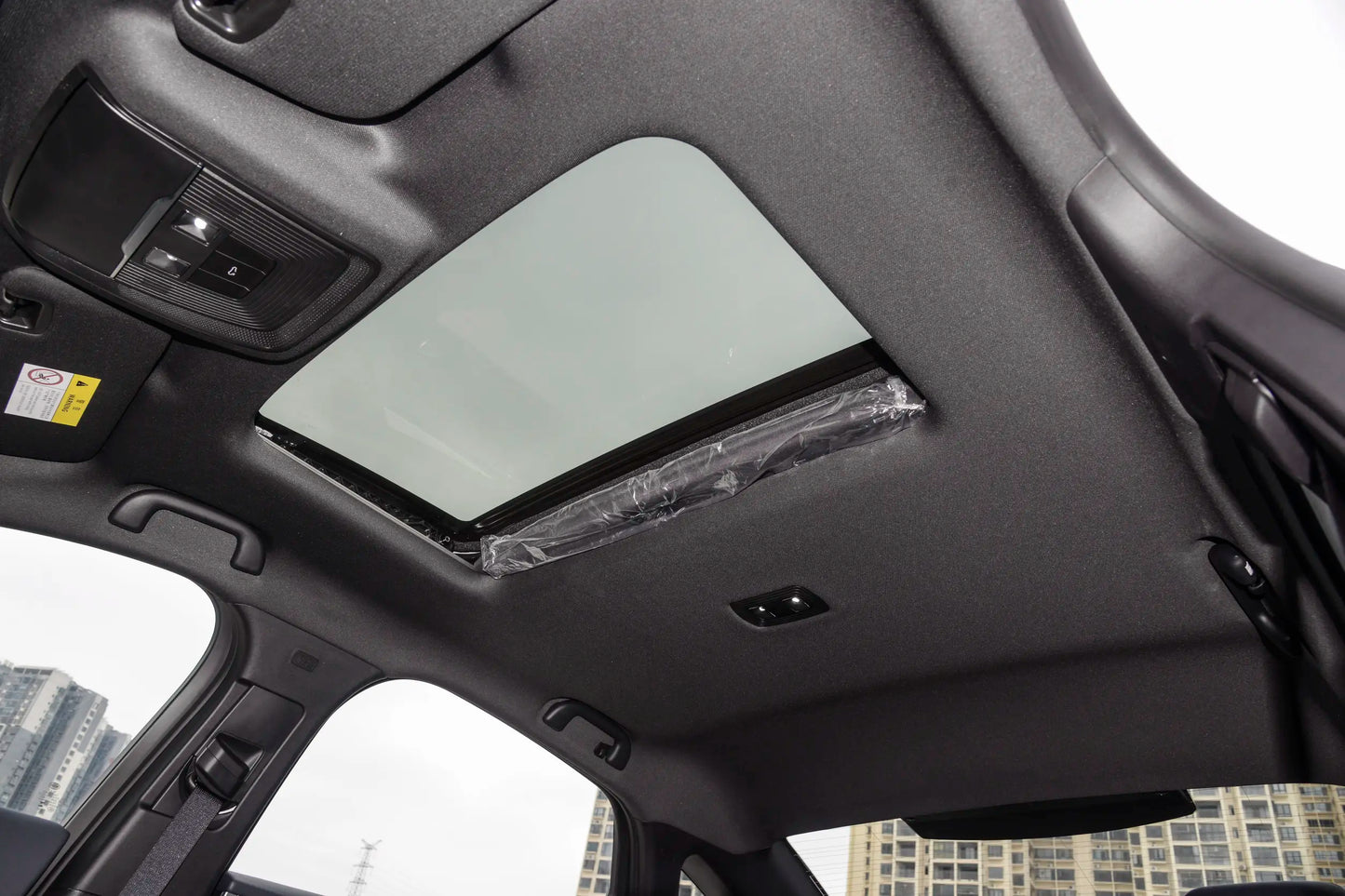
| Sunroof Type | Fixed Panoramic Sunroof | Fixed Panoramic Sunroof | Fixed Panoramic Sunroof | Fixed Panoramic Sunroof |
| Power Seats | ● Driver Seat ● Front Passenger Seat |
● Driver Seat ● Front Passenger Seat |
● Driver Seat ● Front Passenger Seat |
● Driver Seat ● Front Passenger Seat |
| Drive Mode Selection | ● Sport ● ECO/Economy ● Standard Comfort |
● Sport ● ECO/Economy ● Standard Comfort |
● Sport ● ECO/Economy ● Standard Comfort |
● Sport ● ECO/Economy ● Standard Comfort |
| Power Windows | ● Front Row ● Rear Row |
● Front Row ● Rear Row |
● Front Row ● Rear Row |
● Front Row ● Rear Row |
| USB/Type-C Port Quantity | ● Front Row: 2 ● Rear Row: 2 |
● Front Row: 2 ● Rear Row: 2 |
● Front Row: 2 ● Rear Row: 2 |
● Front Row: 2 ● Rear Row: 2 |
Real-world Review
Advantages:
-
The chassis tuning prioritizes comfort, effectively filtering out minor road imperfections.
-
High voice recognition accuracy and smooth multimedia system operation
Areas for Improvement:
-
Noticeable tire noise at high speeds.
-
The rear seat cushions are somewhat short, offering limited thigh support.
Internal & Third-party Tests:
-
Fast-charging tests show it can charge from 30% to 80% in 30 minutes, meeting expectations.
-
In automatic emergency braking tests, the system accurately identified vehicles and pedestrians and braked promptly.
Real User Reviews
To quantify the real-world user experience, we conducted a structured questionnaire survey in 2025 targeting owners of the BYD Qin PLUS EV 420km version on the highly influential DCAR automotive forum. A total of 856 valid questionnaires were collected. Through qualitative analysis of the feedback, we categorized the responses into 6 distinct positive feedback dimensions, comprising 598 specific statements, and 4 negative feedback dimensions, comprising 258 specific statements (DCAR, 2025).
Positive Feedback
Spacious Interior
Summary: Generous seating space front and rear, strong storage capacity, easily meeting family travel needs.
Reliable Range & Powertrain
Summary: Dependable range performance, smooth and stable power delivery, effectively reducing range anxiety.
Negative Feedback
Cramped Rear Seats & Small Trunk
Summary: Rear legroom is relatively limited, and trunk storage capacity is somewhat restricted.
Unstable High-Speed Performance
Summary: Significant energy consumption increase at high speeds, room for improvement in high-speed stability.
References
DCAR (2025). DCAR. Retrieved from https://www.dongchedi.com/auto/series/4899
EV Range converter (2025). EV Range converter. Retrieved from https://ev-range-standard-converter.web.app/
Global EV Policy Explorer (2025). Explore key policies and measures for EV deployment. Retrieved from https://www.iea.org/data-and-statistics/data-tools/global-ev-policy-explorer?utm_source=chatgpt.com
Global Petrol Prices (2025). World Average Electricity Prices, USD / kWh. Retrieved from https://www.globalpetrolprices.com/electricity_prices/