Isuzu D-MAX 2026 3.0T Auto 4WD Diesel Flagship Vehicle Profile: Hardcore Diesel Pickup with 560 N·m

Model Overview: Market Position & Credibility
The Isuzu D-MAX is a classic pickup from Japan's Isuzu, with a lineage tracing back to the first-generation Faster pickup launched in 1972, officially renamed D-MAX in 2002. When introduced to China by Jiangxi Isuzu in 2014, the D-MAX became China's first automatic-transmission pickup. As of 2026, the D-MAX has sold more than 5.3 million units cumulatively across 120+ countries and regions, making it one of the most influential pickups globally.
The 2026 3.0T model launched in March 2026 as a key addition to the lineup. Its core upgrade centers on the powertrain—the 4JJ3-TCX 3.0L inline-4 diesel engine (previously withdrawn from the domestic market over China 6b emissions, now returned compliant with China 6b). Compared with the current 1.9T model (130 kW, 410 N·m), power rises by 25 kW and torque by 150 N·m.
The D-MAX is positioned as a mid-to-high-end pickup covering commercial, family, and off-road use cases. It has long led pickup sales in overseas markets such as Thailand and carries broad global influence. It targets international mainstream pickups like the Ford Ranger, while facing increasingly fierce domestic competition (Great Wall Poer, Changan Hunter, etc.), staying competitive through the 3.0T diesel, MLOCK intelligent 4WD, and L2 driver assistance.
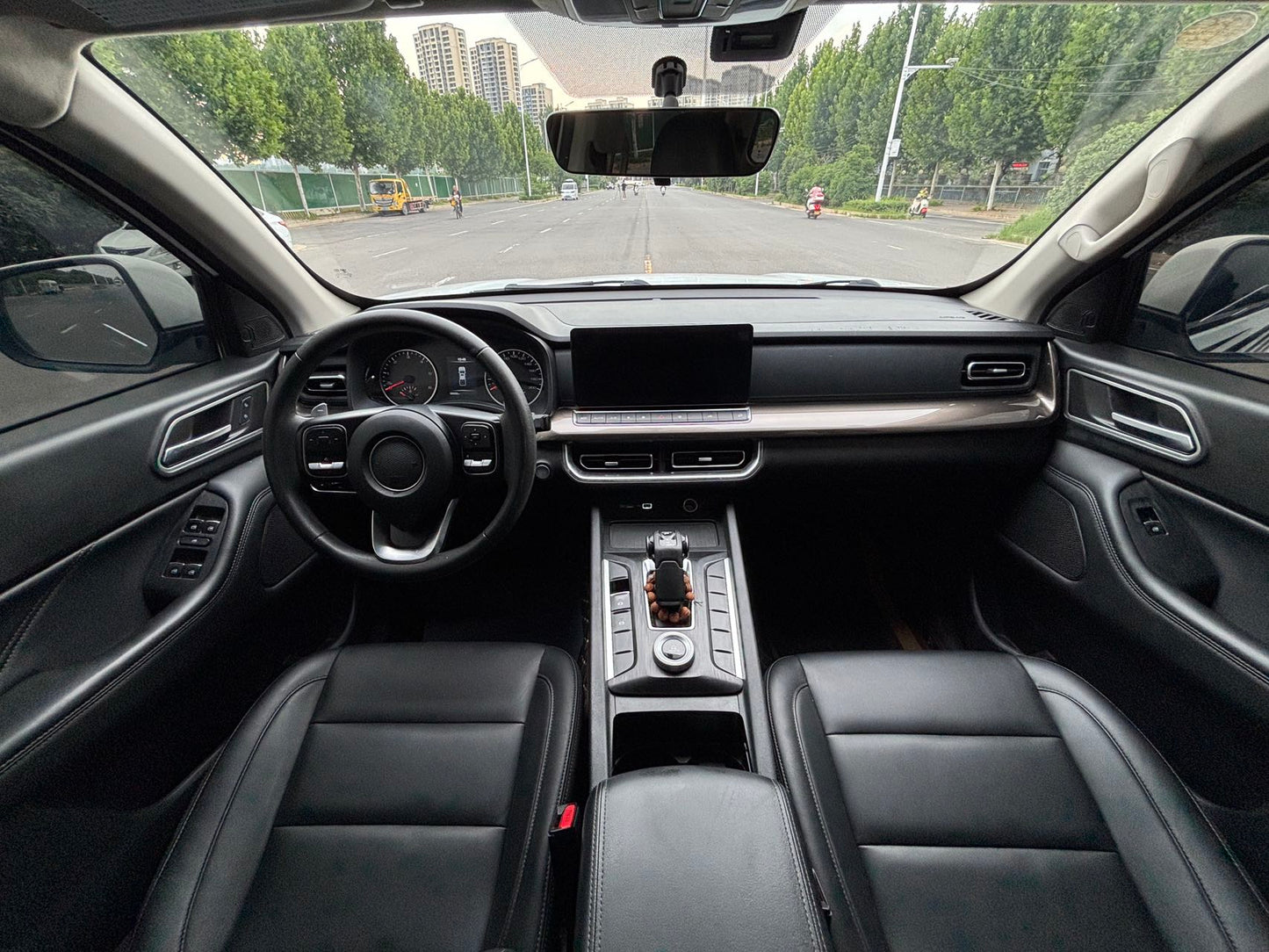
In design, the D-MAX continues its family's rugged style, with a large shield grille featuring the "ISUZU" badge and eagle-eye LED headlights for strong visual tension. The interior avoids the traditional "tool feel" of pickups, with extensive soft-touch materials on the dash, a 10.25-inch fully digital instrument cluster and 12.3-inch floating central touchscreen, bringing equipment close to family-SUV levels.
You can get a complete look at the vehicle's exterior and interior design through the following video:
Core Specifications
Model: Isuzu D-MAX 2026 3.0T Auto 4WD Diesel Flagship Powertrain type: Diesel Engine: 3.0T 211 hp L4 (4JJ3-TCX) Max power: 155 kW (211 hp) Peak torque: 560 N·m Transmission: 8-speed automatic (ZF 8AT) Top speed: 170 km/h Official 0-100 km/h: under 10 seconds Combined fuel consumption: approx. 8.6 L/100km Fuel grade: 0# diesel Fuel tank capacity: 76 L Dimensions (L×W×H): 5,280 × 1,900 × 1,850 mm Wheelbase: 3,125 mm Seating: 5 seats Body type: 4-door 5-seat two-row pickup (body-on-frame) Cargo bed size: 1,495 × 1,530 × 490 mm Max payload: 495 kg Drivetrain: Front-engine, AWD (MLOCK mechanically locking intelligent on-demand 4WD) Front suspension: Double-wishbone independent Rear suspension: Leaf-spring non-independent
Maintenance costs & manufacturer service: Full vehicle warranty is 3 years or 100,000 km. As a well-known commercial vehicle brand, Isuzu's after-sales network is broad, and its diesel engines are known for toughness and durability, with relatively long service intervals and controllable routine costs. Compared with petrol pickups, diesel engines enjoy a stronger reputation for long-term reliability.
Subsidy policy: As a conventional diesel pickup, the D-MAX does not qualify for China's NEV purchase tax exemption or new-energy subsidies. In overseas markets, some countries and regions levy higher environmental or emissions taxes on diesel vehicles (such as vehicle tax in parts of Europe or the UK's VED), with amounts varying by emissions and region. Consult the IEA Global EV Policy Explorer for the differing policies across countries.
Three Highlights & Three Caveats
Highlight 1: Class-leading 3.0T diesel power Powered by the Isuzu 4JJ3 3.0L turbocharged diesel engine, it delivers 155 kW (211 hp) and a peak torque of 560 N·m, mated to a ZF 8-speed automatic transmission. Its low-rpm torque is outstanding—380 N·m available from 1,000 rpm and peak torque at 1,500 rpm—so loading, climbing, and off-road recovery all feel effortless.
Highlight 2: Fully loaded hardcore off-road kit Built on a body-on-frame chassis, it features a BorgWarner MLOCK mechanically locking intelligent on-demand 4WD system, with 4L low-range torque multiplication of 2.64x. A rear differential lock is standard and the flagship adds a front differential lock, plus tank-turn and crawl control functions that substantially lower the barrier to serious off-roading.
Highlight 3: Excellent fuel economy and range As a diesel pickup, combined consumption is about 8.6 L/100km, and with the 76 L tank it can easily cover 800–900 km on a single fill. For frequent long-distance travel or overlanding, this is a very practical advantage, with running costs clearly below comparable petrol pickups.
Caveat 1: Long body, awkward in the city At 5,280 mm long, navigating narrow lanes, old neighborhoods, and tight parking requires more adaptation, and the turning radius is large—expect a learning curve at first.
Caveat 2: Diesel clatter and wind noise to accept The diesel engine is loud on cold starts and wind noise is noticeable above 120 km/h. Buyers chasing quiet and comfort should weigh this—it is inherent to a hardcore diesel pickup.
Caveat 3: No factory cargo-bed cover The rear bed has no standard cover, so storing valuables or items that shouldn't get dirty is inconvenient; adding a tonneau/cover for rain and theft protection means extra cost.
Ownership Costs & Service
Warranty policy: Full vehicle warranty is 3 years or 100,000 km. Isuzu's reliability reputation is strong, with low failure rates for core components like the diesel engine and transmission, inspiring long-term confidence in ownership. Some regional dealers offer extended warranties or service packages.
Maintenance costs: Diesel pickups have relatively longer service intervals, and routine maintenance (oil, oil filter, diesel filter, etc.) is moderately priced. Isuzu's mature powertrain is simple and reliable, keeping mid-to-late-stage costs manageable within the pickup category. Follow the official schedule to regularly replace the diesel filter and other parts to keep the powertrain and emissions system in good condition.
Real ownership cost analysis: As a diesel pickup, the ownership cost advantage lies in fuel. At 8.6 L/100km combined and 20,000 km per year, roughly 1,720 L of diesel is consumed; diesel generally costs less than petrol, making the long-distance fuel advantage clear. Pickup insurance and annual vehicle tax vary by local policy, but overall ownership cost is competitive among hardcore off-road pickups.
Fuel cost estimate (based on global average prices): Using the global average diesel price published by Global Petrol Prices, at about USD 1.3/L, 20,000 km per year at 8.6 L/100km yields an annual fuel cost of about USD 2,236. Using China's domestic 0# diesel price (about USD 1.0/L), annual fuel cost is about USD 1,720. Diesel is typically more stable and cheaper than petrol, so long-distance use is more economical.
Diesel prices are based on Global Petrol Prices global data for rough estimation only; actual costs vary by region and driving habits.
Competitors Comparison
In the domestic high-end pickup market, the Isuzu D-MAX's most direct rivals are the Great Wall Poer (Huopao Edition), Changan Hunter (Kaboom All-round), and Ford Ranger. The four pickups share a similar position but clearly different technical routes. The following points help you quickly grasp the differences:
-
Powertrain route: The D-MAX and Ranger are both diesel (3.0T/2.3T), the Poer Huopao uses a 3.0T twin-turbo V6 petrol (360 hp, the strongest), and the Hunter is a 2.0T range-extender plus dual-motor EREV (131 km EV range). The powertrain approaches are entirely different.
-
Size and space: The Ranger (5,410 mm) is longest with the largest 3,270 mm wheelbase; the Hunter (5,380 mm) and D-MAX (5,280 mm) sit in the middle; the Poer Huopao (4,963 mm) is shortest and is a 2-door 2-seat design, purely geared to off-road fun. The D-MAX and Hunter are standard 4-door 5-seat two-row.
-
Off-road capability: The D-MAX comes standard with a rear diff lock plus a front diff lock on the flagship, tank-turn, and crawl control—exceptionally robust off-road hardware; the Poer Huopao has tank-turn; the Hunter uses dual-motor 4WD (electrified); the Ranger uses conventional 4WD with Co-Pilot360.
-
Efficiency and use case: The Hunter EREV offers 131 km EV range and just 1.3 L/100km NEDC combined—the most economical for daily commuting; the diesel models (D-MAX, Ranger) are economical on long hauls; the petrol V6 Poer is powerful but its 10.9 L/100km NEDC means the highest fuel costs.
|
Comparison Item
|
D-MAX 2026 3.0T Auto 4WD Diesel Flagship
|
Great Wall Poer 2025 Huopao 3.0T Petrol Auto 4WD
|
Changan Hunter 2024 Kaboom All-round Dual-Motor 4WD Standard Box
|
Ford Ranger 2025 2.3T Diesel Explorer 4WD Auto Off-Road
|
|
Manufacturer
|
Jiangxi Isuzu
|
Great Wall Motor
|
Changan Automobile
|
Jiangling Ford
|
|
Class
|
Mid-size pickup
|
Mid-size pickup
|
Mid-size pickup
|
Mid-size pickup
|
|
Diesel
|
Petrol
|
Range-extender (EREV)
|
Diesel
|
|
|
Engine
|
3.0T 211 hp L4
|
3.0T 360 hp V6 twin-turbo
|
2.0T 190 hp L4 range extender
|
2.3T 186 hp L4
|
|
Electric motor
|
—
|
—
|
Range-extender 272 hp
|
—
|
|
Max power (kW)
|
155
|
265
|
200
|
137
|
|
Peak torque (N·m)
|
560
|
500
|
470 (engine 340)
|
470
|
|
Transmission
|
8-speed automatic
|
9-speed automatic
|
Single-speed (EV)
|
8-speed automatic
|
|
Dimensions (L×W×H, mm)
|
5,280×1,900×1,850
|
4,963×1,975×1,950
|
5,380×1,980×1,875
|
5,410×1,918×1,880
|
|
Wheelbase (mm)
|
3,125
|
2,745
|
3,180
|
3,270
|
|
Body type
|
4-door 5-seat two-row pickup
|
2-door 2-seat pickup
|
4-door 5-seat two-row pickup
|
4-door 5-seat pickup
|
|
Top speed (km/h)
|
170
|
160
|
160
|
—
|
|
EV range (km, CLTC)
|
—
|
—
|
131
|
—
|
|
NEDC combined fuel (L/100km)
|
8.6 (combined)
|
10.9
|
1.3
|
9.2
|
|
Power consumption (kWh/100km)
|
—
|
—
|
23.6
|
—
|
|
Cargo bed size (L×W×H, mm)
|
1,495×1,530×490
|
1,760×1,520×540
|
1,600×1,595×520
|
1,458×1,584×529
|
|
Max payload (kg)
|
495
|
385
|
—
|
—
|
|
Curb weight (kg)
|
—
|
2,285
|
—
|
2,385
|
|
Drivetrain
|
Front-engine AWD (on-demand)
|
Front-engine AWD (on-demand)
|
Front-engine AWD (dual-motor)
|
Front-engine AWD (on-demand)
|
|
Chassis
|
Body-on-frame
|
Body-on-frame
|
Body-on-frame
|
Body-on-frame
|
|
Front suspension
|
Double-wishbone independent
|
Double-wishbone independent
|
Double-wishbone independent
|
Double-wishbone independent
|
|
Rear suspension
|
Leaf-spring non-independent (solid axle)
|
Solid-axle non-independent
|
Solid-axle non-independent
|
Leaf-spring non-independent
|
|
Fuel tank capacity (L)
|
76
|
—
|
70
|
80
|
|
Rear diff lock
|
Standard
|
—
|
—
|
—
|
|
Tank-turn
|
Standard
|
Standard
|
—
|
—
|
|
Crawl control
|
Standard
|
Standard
|
—
|
—
|
|
Electronic parking brake
|
Standard
|
Standard
|
Standard
|
Standard
|
|
Front/Rear brakes
|
Ventilated disc/Solid disc
|
Ventilated disc/Solid disc
|
Ventilated disc/Solid disc
|
Ventilated disc/Solid disc
|
|
Digital instrument cluster
|
10.25-inch fully digital
|
Fully digital
|
Fully digital
|
Fully digital
|
|
Central touchscreen
|
12.3-inch
|
12.3-inch
|
12.3-inch
|
12.3-inch
|
|
360° camera
|
Standard
|
Standard
|
Standard
|
Standard
|
|
Wireless charging
|
Optional
|
Standard
|
Standard
|
Optional
|
|
Driver assistance
|
L2
|
L2
|
L2
|
Co-Pilot360
|
|
Front seat heating
|
Standard
|
Standard
|
Standard
|
Standard
|
Summary: The choice logic among these four pickups differs sharply. If you believe in the traditional hardcore off-road philosophy of "diesel + mechanical lock + body-on-frame," valuing reliability and long-haul economy, the D-MAX's 3.0T high-torque diesel, rear diff lock, and tank-turn are the most solid choice—but you must accept the long body and diesel clatter.
The Changan Hunter is the epitome of electrification, with an EREV layout balancing urban commuting (131 km EV range) and off-road recovery, at the lowest daily running cost—the pick for tech-oriented buyers. The Great Wall Poer Huopao offers the strongest on-paper power with its 3.0T V6 petrol (360 hp) and 2-door fun factor, but its thirst and niche use case narrow its appeal.
The Ford Ranger offers the longest wheelbase and Co-Pilot360, excelling on-road and in tech experience. Each has its strengths; the final decision comes down to how you weigh powertrain type, off-road depth, and daily use.
Expert Test Drive — Pros & Cons
Pros:
-
Diesel power exceeds on-paper figures: The 3.0T diesel's low-rpm torque is outstanding, providing ample pull at low rpm, paired with a smooth, efficient ZF 8AT for a better real-world feel than the specs suggest.
-
Off-road capability and solid chassis: Body-on-frame construction + mechanically locking 4WD + double-wishbone front suspension give excellent tracking off-road, strong body rigidity, and good overall stability.
-
Practical, comfortable seats and cabin: Seat bolstering and materials are well considered, the high driving position and sensible ergonomics reduce long-haul fatigue, and the cabin layout is functional.
Could be improved:
-
Harsh ride, average comfort: The leaf-spring non-independent rear suspension is firm on tarmac, and rear-seat comfort over bumps trails cars or some multi-link pickups.
-
Diesel clatter and highway wind noise: The diesel is loud on cold starts and during acceleration, and wind noise is obvious above 120 km/h; NVH is average.
-
Hard interior materials, some lack of polish: The cabin leans practical with more hard plastics, and luxury feel lags same-price rivals with stronger passenger-car refinement.
Test scenarios:
-
On/off-road handling: Body doesn't feel floaty during quick steering inputs, the suspension absorbs pothole impacts well, offering a "one with the vehicle, point where you look" feel with strong chassis integrity (Source: professional media test drive).
-
Loaded and off-road recovery: Power stays strong when fully loaded, low-rpm torque is ample, and together with the rear diff lock and crawl control it confidently handles complex off-road conditions (Source: professional media test; official 0-100 km/h under 10 seconds).
Real Owner Reviews
Positive feedback:
Power & recovery capability: Owners widely approve of the strong, responsive low-rpm diesel torque and its off-road recovery ability—the core value of a pickup.
"Power is instant and consumption is not high; using 4WD on rough roads and hauling gives real confidence, and the rear diff lock is especially effective for getting out of mud."
Handling & chassis: The chassis feels integrated, steering is precise, and off-road tracking is good—a key point owners recognize.
"Whether on tarmac or off-road, hard steering inputs don't make it float; it's one with the vehicle, point where you look. The second-generation chassis feels very solid, with no wallowing."
Fuel economy: Diesel consumption satisfies owners, and the 76 L tank gives long range with low long-distance costs.
"Consumption is 8.7 L/100km right now; one tank basically covers 800–900 km. Fuel is what everyone cares about on trips, and I'm very satisfied with this truck."
Negative feedback:
Long body, parking inconvenience: The long body requires adaptation when passing and parking in tight spaces—a commonly reported inconvenience.
"The body is fairly long, so passing and parking in narrow old-community lanes needs more getting used to; the first few weeks were a bit tough."
Noise & bed convenience: Diesel cold-start noise, highway wind noise, and the lack of a bed cover are the issues owners most often raise.
"The diesel is noisier on cold start, wind noise is obvious above 120 km/h; and the rear bed has no cover, so storing valuables is inconvenient and you need to fit one yourself."
References
-
Global Petrol Prices (2025). World Average Diesel Prices, USD / Liter. Retrieved from https://www.globalpetrolprices.com/diesel_prices/
-
IEA. Global EV Policy Explorer. Retrieved from https://www.iea.org/data-and-statistics/data-tools/global-ev-policy-explorer
-
Jiangxi Isuzu. D-MAX Specifications. Retrieved from https://www.isuzu-fjc.com/
-
Bitauto. Isuzu D-MAX Model Overview. Retrieved from https://www.bitauto.my/zh/wiki/五十铃D-MAX